

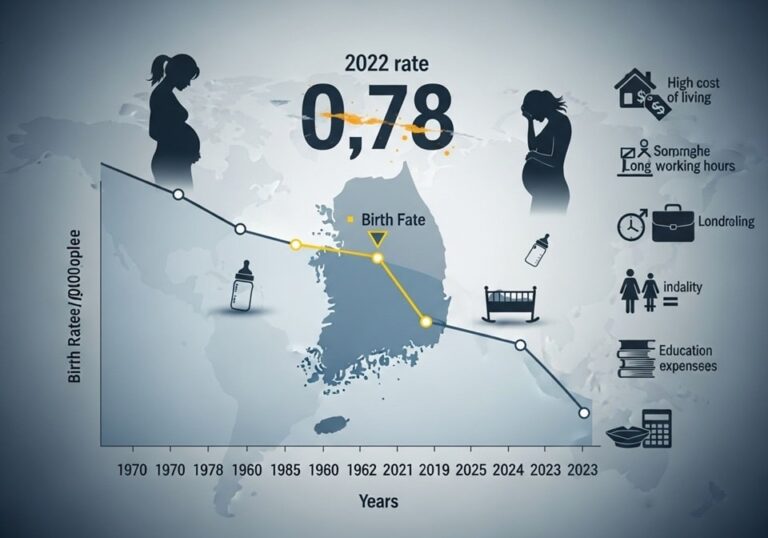
South Korea’s low birth rate is a complex issue influenced by a variety of economic, cultural, demographic, and policy factors. This article explores these factors in detail, providing insights into the challenges and potential solutions.
Economic Factors
Economic considerations play a significant role in the declining birth rate in South Korea. Several key economic factors contribute to this trend:
- High Costs of Child Care and Education: The cost of raising children in South Korea is among the highest in the world. This includes expenses related to education, which is highly competitive and often requires additional private tutoring.
- Housing Affordability: The high cost of housing, particularly in urban areas like Seoul, makes it difficult for young couples to afford larger living spaces necessary for raising children.
- Employment and Income Stability: Economic instability and the competitive job market contribute to delayed marriage and childbearing. Many young adults prioritize career establishment over starting a family.
- Gender Pay Gap: South Korea has one of the largest gender pay gaps among OECD countries, which discourages women from having children due to concerns about career progression and financial independence.
| Factor | Impact on Birth Rate | Statistical Data | Comparative Analysis |
|---|---|---|---|
| High Costs of Child Care and Education | Delays marriage and childbearing | Education expenses are among the highest in the OECD | Compared to other OECD countries, South Korea spends a higher percentage of household income on education |
| Housing Affordability | Limits family size | High urban housing costs | Similar trends in other major cities like Tokyo and Hong Kong |
| Employment and Income Stability | Prioritizes career over family | Youth unemployment rates and job market competitiveness | Comparable to other high-pressure economies |
| Gender Pay Gap | Discourages women from having children | Largest gender pay gap in the OECD | Higher than the OECD average |
For more detailed information on economic factors, refer to sources like OECD and BBC.
Cultural Factors
Cultural norms and societal expectations also significantly impact the birth rate in South Korea:
- Emphasis on Education and Career Success: South Korean society places a high value on education and career achievements, often at the expense of family life. This cultural emphasis can lead to delayed marriage and childbearing.
- Traditional Gender Roles: Despite advancements in gender equality, traditional expectations for women to prioritize their roles as wives and mothers persist. This can create conflicts for women balancing career and family responsibilities.
- Social Stigma: There is a social stigma associated with unmarried individuals and those who do not have children, which can influence personal decisions about family planning.
- Work Culture: The long working hours and high-pressure work environment in South Korea make it challenging for individuals to find time for family life.
| Factor | Impact on Birth Rate | Statistical Data | Comparative Analysis |
|---|---|---|---|
| Emphasis on Education and Career Success | Delays marriage and childbearing | High educational attainment rates | Similar trends in other East Asian countries |
| Traditional Gender Roles | Creates conflicts for working women | Persistent gender role expectations | Comparable to other conservative societies |
| Social Stigma | Influences family planning decisions | Social attitudes towards marriage and childbearing | Similar stigma in other traditional societies |
| Work Culture | Limits time for family life | Long working hours and high-pressure environment | Comparable to other high-pressure work cultures |
For more detailed information on cultural factors, refer to sources like CNN and The New York Times.
Demographic Factors
Demographic shifts in South Korea have profound implications for the birth rate:
- Aging Population: South Korea has one of the fastest-aging populations in the world. This demographic shift places a burden on younger generations to support the elderly, reducing their capacity to start families.
- Urbanization: The migration of young people to urban areas in search of better job opportunities has led to smaller living spaces and higher living costs, which are not conducive to raising children.
- Marriage Rates: The declining marriage rate in South Korea directly impacts the birth rate, as the majority of children are born within wedlock.
- Life Expectancy: Increased life expectancy means that the elderly population is living longer, requiring extended care and support from younger generations.
| Factor | Impact on Birth Rate | Statistical Data | Comparative Analysis |
|---|---|---|---|
| Aging Population | Reduces capacity to start families | One of the fastest-aging populations | Comparable to other developed nations with aging populations |
| Urbanization | Limits living spaces and increases costs | High urban migration rates | Similar trends in other urbanized countries |
| Marriage Rates | Directly impacts birth rate | Declining marriage rates | Comparable to other societies with low marriage rates |
| Life Expectancy | Requires extended care and support | Increased life expectancy rates | Similar to other developed nations |
For more detailed information on demographic factors, refer to sources like World Health Organization and Centers for Disease Control and Prevention.
Government Policies
The South Korean government has implemented various policies to address the low birth rate, with mixed results:
- Financial Incentives: The government offers financial incentives, such as cash bonuses for newborns and subsidies for childcare, to encourage childbearing. However, the effectiveness of these incentives has been limited.
- Parental Leave: Parental leave policies have been introduced to support working parents. However, the uptake of these policies has been low due to workplace culture and job security concerns.
- Childcare Services: The government has expanded childcare services to make it easier for parents to balance work and family responsibilities. Despite these efforts, the demand for childcare often exceeds the available supply.
- Housing Support: Housing support programs aim to provide affordable housing for families with children. However, the impact of these programs on the birth rate has been minimal.
| Policy | Impact on Birth Rate | Statistical Data | Comparative Analysis |
|---|---|---|---|
| Financial Incentives | Limited effectiveness | Cash bonuses and subsidies | Similar policies in other countries with low birth rates |
| Parental Leave | Low uptake due to workplace culture | Parental leave policies | Comparable to other countries with low uptake of parental leave |
| Childcare Services | Demand exceeds supply | Expanded childcare services | Similar challenges in other developed nations |
| Housing Support | Minimal impact on birth rate | Housing support programs | Comparable to other countries with housing support programs |
For more detailed information on government policies, refer to sources like The Korea Times and Institute of Labor Economics.
Conclusion
The low birth rate in South Korea is a multifaceted issue that requires a comprehensive approach to address. Economic, cultural, demographic, and policy factors all play a role in shaping the fertility landscape. By understanding these factors and implementing effective strategies, South Korea can work towards stabilizing its birth rate and ensuring a sustainable future.
