The intricate web of bloodlines and shifting loyalties in the world of Westeros has long captivated audiences, yet no revelation carried as much weight as the truth behind Jon Snow’s parentage. For years, viewers and readers alike were led to believe that Jon was the illegitimate son of Eddard Stark, the honorable Warden of the North. However, the culmination of the epic saga revealed a much more complex and historically significant reality. Jon Snow is not a bastard of Winterfell, but rather the legitimate son of Rhaegar Targaryen and Lyanna Stark. This revelation fundamentally changes his relationship with Daenerys Targaryen, shifting her role from a potential romantic partner to his biological paternal aunt. Understanding this connection requires a deep dive into the history of House Targaryen, the events of Robert’s Rebellion, and the specific genealogical markers that define the most powerful family in the Seven Kingdoms.
To grasp the gravity of this relationship, one must look back at the Targaryen family tree starting with King Aerys II, known as the Mad King. Aerys II had three children: Rhaegar, Viserys, and Daenerys. Rhaegar, the eldest and the heir apparent to the Iron Throne, was widely respected and loved by many, despite the shadow of his father’s growing instability. Daenerys, the youngest, was born during a great storm on Dragonstone after the fall of the dynasty, never having known her older brother Rhaegar, who died before her birth. Because Rhaegar and Daenerys are siblings, any child of Rhaegar would naturally be Daenerys’s nephew. This is the core of the biological link between Jon Snow and the Mother of Dragons, a link that remained hidden for decades under the guise of the name Jon Snow.
The concealment of Jon’s identity was a matter of life and death. Following the death of Rhaegar at the Battle of the Trident and the subsequent Sack of King’s Landing, the Targaryen dynasty was all but extinguished. Robert Baratheon, driven by a vengeful hatred for the Targaryens, sought to eliminate every remaining member of the bloodline. Had Jon’s true identity as the son of Rhaegar been known, Robert would have surely ordered his execution. Eddard Stark, honoring his sister Lyanna’s dying wish at the Tower of Joy, chose to protect the infant by claiming him as his own son. This sacrifice defined Jon’s life, shaping him into the man who would eventually lead the Night’s Watch, while keeping the secret of the “Song of Ice and Fire” buried in the crypts of Winterfell.
The legal status of Jon Snow’s birth is just as important as the biological reality. While many assumed that any child of Rhaegar and Lyanna would still be a bastard, historical records found at the Citadel by Samwell Tarly and Gilly revealed a crucial detail. High Septon Maynard’s personal diary documented that he had performed an annulment for Prince Rhaegar from his first wife, Elia Martell, and subsequently married him to Lyanna Stark in a secret ceremony in Dorne. This legal union meant that Jon Snow—born Aegon Targaryen—was a legitimate heir. In the eyes of Westerosi law, this placed him ahead of Daenerys in the line of succession for the Iron Throne, as the claim of a son of the crown prince typically supersedes that of the prince’s younger sister.
The dynamics of House Targaryen have always been influenced by the traditions of Old Valyria, where the practice of keeping the bloodline pure through intermarriage was common. For centuries, brothers married sisters and cousins married cousins to preserve the “blood of the dragon” and the ability to bond with and ride dragons. While the rest of Westeros viewed incest as a taboo and a sin before the Faith of the Seven, the Targaryens maintained an exceptional status due to their unique heritage. This cultural context explains why the romantic involvement between Jon and Daenerys, while shocking to some modern audiences, was historically consistent with Targaryen behavior, even if neither was aware of their kinship at the time their relationship began.
Rhaegar Targaryen’s motivations for his secret marriage to Lyanna Stark were rooted in prophecy rather than mere impulse. He was obsessed with the prophecy of “The Prince That Was Promised” and believed that his lineage must produce three heads of the dragon. Having already fathered two children with Elia Martell—Rhaenys and Aegon—he believed a third was necessary to fulfill the ancient lore. By uniting the blood of the dragon (Targaryen) with the blood of the first men (Stark), Rhaegar essentially created the literal embodiment of “A Song of Ice and Fire.” This union gave Jon Snow a unique genetic makeup that bridged the two most powerful forces in the narrative: the fire of the south and the ice of the north.
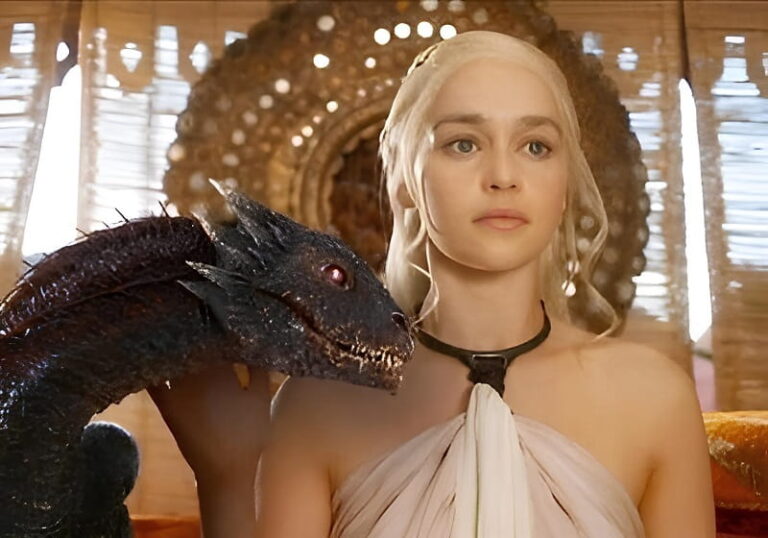
The physical characteristics of Jon Snow often led people away from the truth of his Targaryen heritage. Unlike Daenerys, who possesses the classic Valyrian features of silver-gold hair and violet eyes, Jon inherited the Stark look. He has the long face, dark hair, and grey eyes typical of the descendants of the North. This genetic dominance of the Stark side served as his ultimate shield. If Jon had been born with silver hair, Ned Stark would never have been able to pass him off as his bastard. In contrast, Daenerys is the visual archetype of her family, carrying the traits that have defined the Dragonlords for thousands of years. Their meeting at Dragonstone was a collision of these two distinct halves of the same royal house, though they initially stood as strangers and rivals.
Analyzing the family tree further requires looking at the siblings of Aerys II and the broader Targaryen ancestry. The lineage of Jon and Daenerys can be traced back through several generations of intermarriage, often involving the Velaryon family or other Targaryen kin. For example, their grandparents were Jaehaerys II and Shaera Targaryen, who were themselves brother and sister. This high level of consanguinity means that the genetic overlap between an aunt and a nephew in the Targaryen family is significantly higher than it would be in a standard human population. This shared DNA is what allows both Jon and Daenerys to claim the title of “dragon rider,” a feat Jon achieved when he mounted Rhaegal, a dragon named after his biological father.
The revelation of Jon’s true identity created a profound political and personal rift between him and Daenerys. For Daenerys, her entire identity was built upon the belief that she was the “Last Dragon” and the rightful heir to the Iron Throne. She had spent years wandering the Essosi wastes, surviving assassination attempts, and building an army based on this singular purpose. When Jon’s heritage came to light, it didn’t just change their family dynamic; it threatened the very foundation of her claim. To the lords of Westeros, a male heir with a proven track record of leadership in the North was a far more attractive prospect than a foreign queen arriving with an army of Dothraki and Unsullied. This tension highlighted the tragic nature of their connection, as the blood they shared became the very thing that drove them apart.
To understand the depth of this lineage, it is helpful to look at the specific individuals who comprise this section of the family tree and their roles in the history of Westeros:
- King Aerys II Targaryen (The Mad King): He was the last Targaryen king to sit on the Iron Throne before the rebellion. He was the father of Rhaegar, Viserys, and Daenerys, making him the paternal grandfather of Jon Snow and the father of Daenerys. His descent into madness and his execution of Rickard and Brandon Stark were the primary catalysts for the war that changed the world.
- Queen Rhaella Targaryen: The wife and sister of Aerys II, she was the mother of Rhaegar, Viserys, and Daenerys. She fled to Dragonstone during the end of the rebellion, where she died giving birth to Daenerys. Her role is often overlooked, but she is the shared grandmother of Jon Snow and the mother of his aunt, Daenerys.
- Prince Rhaegar Targaryen: The eldest son of Aerys II and the biological father of Jon Snow. He was the Crown Prince of the Seven Kingdoms and a figure of great complexity. His secret marriage to Lyanna Stark is the reason Jon Snow exists as a legitimate Targaryen rather than a Stark bastard.
- Lyanna Stark: The sister of Ned Stark and the biological mother of Jon Snow. Her “abduction” by Rhaegar was the public justification for Robert’s Rebellion, though the truth was that she went with him willingly out of love. She died shortly after giving birth to Jon in the Tower of Joy, leaving him in the care of her brother.
- Viserys Targaryen: The second son of Aerys II and the older brother of Daenerys. He spent his life in exile trying to reclaim the throne. He was Jon Snow’s paternal uncle, though he died long before Jon’s true identity was ever revealed or even suspected by the characters in Essos.
- Jon Snow (Aegon Targaryen): The son of Rhaegar and Lyanna, he represents the union of the North and the South. As the nephew of Daenerys, his existence creates a competing claim for the throne and serves as the ultimate fulfillment of the Targaryen prophecy regarding the “three heads of the dragon.”
The significance of the name “Aegon” cannot be understated in Targaryen history. It is the name of the Conqueror who first united the Seven Kingdoms. By naming his son Aegon, Rhaegar was signaling his belief that this child was destined for greatness and would likely be the hero of the prophecy he studied so intently. Interestingly, Rhaegar already had a son named Aegon by Elia Martell, who was tragically killed during the Sack of King’s Landing. The fact that he gave the same name to his son by Lyanna suggests a desperate or perhaps divinely inspired attempt to ensure the prophecy was fulfilled through a child who combined the attributes of the Starks and the Targaryens.
The impact of this revelation on the Stark family is equally significant. Ned Stark lived a lie for nearly two decades to protect Jon, compromising his legendary honor to keep a promise to his sister. This lie effectively shielded Jon from the “Game of Thrones” until he was ready to face it. Bran Stark’s role as the Three-Eyed Raven was essential in uncovering this truth, as he was able to witness the wedding of Rhaegar and Lyanna through his visions. This supernatural confirmation, combined with the physical evidence found by Samwell Tarly, provided the undeniable proof needed to convince Jon—and eventually Daenerys—of his true origins.
When Jon and Daenerys finally learned the truth, the reaction was polarized. Jon, ever the man of duty and honor, was less interested in the throne and more concerned with the moral implications of his relationship with his aunt. He was also deeply shaken by the knowledge that his father was not Ned Stark, the man he had modeled his entire life after. Daenerys, on the other hand, immediately saw the political threat. She recognized that the truth of Jon’s birth was a weapon that could be used by those who wished to see her fail. The tragedy of House Targaryen is that even when two of its members finally found each other, the weight of their history and the lure of the Iron Throne made a peaceful union impossible.
Looking at the broader implications, the Jon-Daenerys connection serves as a commentary on the nature of power and identity. For the majority of his life, Jon’s identity as a bastard was a source of shame and a driving force for his desire to prove himself. For Daenerys, her identity as the rightful queen was her source of strength. When these identities were challenged by the truth of their relationship, both characters were forced to confront who they were outside of their titles. Jon remained a man of the North at heart, while Daenerys’s fear of losing her destiny drove her toward the same madness that consumed her father.
The Targaryen history is filled with such internal conflicts. The “Dance of the Dragons,” a massive civil war that took place nearly 200 years before the events of the main series, was also sparked by competing claims to the throne between Targaryen family members. In that instance, Rhaenyra Targaryen and her half-brother Aegon II tore the realm apart. The conflict between Jon and Daenerys echoes this historical pattern, suggesting that the Targaryens are often their own worst enemies. Despite their shared blood and their shared goal of defeating the Night King, the inherent instability of their dynasty eventually led to its final collapse.
Beyond the biological and political, the connection between Jon and Daenerys is symbolic of the fundamental themes of the series. The “Song of Ice and Fire” is not just about the battle between the living and the dead; it is about the internal struggle of the human heart. Jon Snow, as the product of Stark (Ice) and Targaryen (Fire), embodies this struggle. His relationship with Daenerys (Pure Fire) forced him to choose between his family, his love, and his duty to the realm. In the end, his decision to prioritize the safety of the realm over his loyalty to his aunt/queen was the final act in the long and bloody history of House Targaryen.
The technicalities of the Targaryen succession are often debated by fans of the lore. Historically, the Great Council of 101 AC established a precedent that the Iron Throne could not pass to a woman or through a female line if a male heir was available. While this was not a strictly codified law, it was a powerful custom. Therefore, even if Daenerys had been the one to conquer Westeros, Jon’s existence as the legitimate son of the former Crown Prince would have made him the “rightful” king in the eyes of many traditionalist lords. This further complicated their relationship, as Daenerys’s quest for the throne was built on the premise that she was the only one left to claim it.
It is also worth noting the differences between the television adaptation and the source novels, “A Song of Ice and Fire.” In the books, the revelation of Jon’s parentage has not yet occurred, though the clues are laid out extensively. Book readers often look to the “Vision in the House of the Undying,” where Rhaegar is seen talking about the “Prince That Was Promised” and claiming that “the dragon has three heads.” This has led to speculation that there may be a third Targaryen still to be revealed, or that the three heads refer to Daenerys, Jon, and perhaps another character like Tyrion Lannister or a character from the books named Young Griff who claims to be the original Aegon (son of Elia).
The relationship between Jon and Daenerys also highlights the importance of Maester Aemon Targaryen, who served at the Wall. Aemon was the great-uncle of Daenerys and the great-great-uncle of Jon Snow. He lived his life in service to the Night’s Watch, having given up his claim to the throne decades earlier. He famously told Jon that “love is the death of duty,” a sentiment that would eventually become the defining theme of Jon’s final interaction with Daenerys. Aemon’s presence at the Wall for all those years, so close to his secret grand-nephew, adds a layer of poignant irony to the family history.
Pro Tips for Understanding Targaryen Genealogy
To master the complex history of the Targaryens and their connections, consider the following expert strategies for navigating the lore. These tips will help you keep track of the many characters and the intricate details of their relationships.
- Utilize Visual Family Trees: The Targaryen lineage is famous for its repetitive names and intermarriages. Keeping a visual chart nearby while reading the books or watching the series helps distinguish between the multiple Aegons, Rhaenyras, and Daenerys’s of the past. Focus specifically on the line starting from King Aegon V to see how the modern characters relate.
- Pay Attention to Hair and Eye Color: In the world created by George R.R. Martin, physical traits are almost always a clue to parentage. Valyrian features like silver hair and violet eyes are recessive in some cases but dominant in others. Comparing Jon Snow’s “Stark look” with the “Targaryen look” of his relatives provides deep insight into the genetic storytelling used throughout the series.
- Read “Fire & Blood” for Historical Context: To understand why the relationship between Jon and Daenerys is so significant, you must understand the precedents set by their ancestors. This historical text provides the background on Targaryen marriage customs and succession laws that directly impact the events of the main “Game of Thrones” timeline.
- Track the “Dragon Rider” Trait: Only those with sufficient Valyrian blood are typically able to bond with dragons. When a character who is not an “official” Targaryen successfully interacts with or rides a dragon, it is a definitive narrative signal of their secret heritage. Monitoring these interactions is a key way to verify genealogical theories.
- Cross-Reference Show Events with Book Lore: While the television show provides a clear answer to Jon’s parentage, the books offer more nuanced clues like the “Blue Flower in the Wall of Ice” vision. Combining both sources gives a more comprehensive view of the evidence supporting the R+L=J theory and its implications for the family tree.
Frequently Asked Questions About Jon and Daenerys
Is Jon Snow older than Daenerys?
Yes, Jon Snow is older than Daenerys Targaryen. Jon was born during the final stages of Robert’s Rebellion, shortly after the Battle of the Trident where his father, Rhaegar, was killed. Daenerys was born several months later on Dragonstone, during a massive storm that occurred while her mother, Queen Rhaella, was in exile. This makes Jon roughly nine months to a year older than his aunt.
Does Jon Snow have a better claim to the Iron Throne than Daenerys?
According to traditional Westerosi succession customs, yes. As the legitimate son of the Crown Prince (Rhaegar), Jon’s claim would technically come before that of Rhaegar’s younger sister (Daenerys). Since Rhaegar died before King Aerys II, his children become the next in line. However, in Westeros, “might makes right,” and the claim is often only as strong as the army backing it.
Why didn’t Ned Stark tell Jon the truth about his mother?
Ned Stark kept the secret to protect Jon’s life. Robert Baratheon was adamant about killing every Targaryen to ensure his hold on the throne. If Robert had known Jon was Rhaegar’s son, he would have had the infant killed. Ned prioritized his sister’s dying wish and Jon’s safety over the truth, even though it meant tarnishing his own reputation by claiming he had fathered a bastard.
Are there other Targaryens still alive in the story?
In the television series, Jon and Daenerys were the last two known Targaryens. However, in the “A Song of Ice and Fire” book series, there is a character known as “Young Griff” who claims to be Aegon Targaryen, the son of Rhaegar and Elia Martell who was supposedly killed as an infant. His true identity remains a subject of intense debate among fans and characters alike.
Did Rhaegar Targaryen kidnap Lyanna Stark?
While the official history of Robert’s Rebellion states that Rhaegar kidnapped and raped Lyanna, the truth revealed in the series is that they were in love and eloped. They were married in a secret ceremony after Rhaegar’s marriage to Elia Martell was annulled. This means their relationship was consensual and their child, Jon Snow, was legitimate.
Why can Jon Snow ride a dragon?
Jon can ride a dragon because of his Targaryen blood. Dragon-riding is a hereditary trait passed down through the bloodlines of Old Valyria. As the son of Prince Rhaegar Targaryen, Jon possesses the necessary “blood of the dragon” to bond with a dragon. He successfully bonded with Rhaegal, who was named after his biological father.
Conclusion
The relationship between Jon Snow and Daenerys Targaryen is one of the most significant and complex connections in modern fantasy literature. Their bond as nephew and aunt, hidden by years of war and secrecy, eventually came to light with devastating consequences. Jon’s identity as Aegon Targaryen, the son of Rhaegar Targaryen and Lyanna Stark, fundamentally shifted the power dynamics of Westeros, placing him as the legitimate heir to the Iron Throne. While their shared heritage allowed them to unite against the common threat of the White Walkers, the political and personal ramifications of their kinship ultimately led to the tragic end of the Targaryen dynasty. By understanding the intricate family tree and the history that shaped it, one gains a deeper appreciation for the “Song of Ice and Fire” and the inescapable weight of blood and legacy in the Seven Kingdoms.