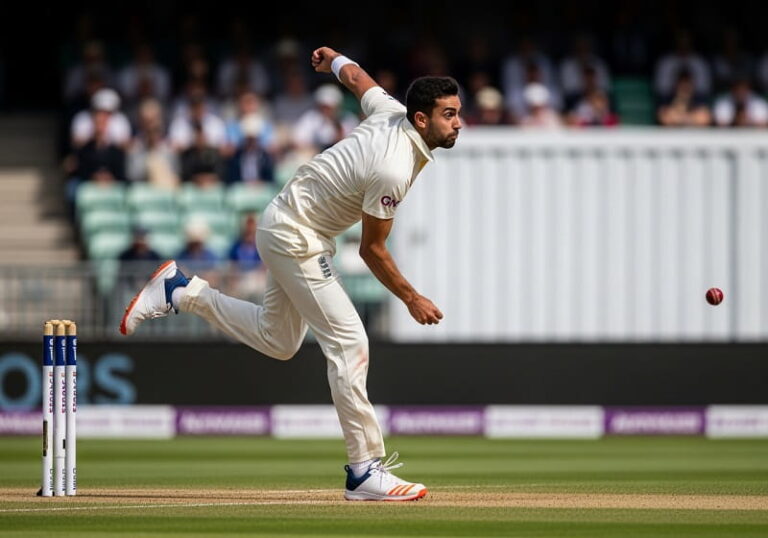
Raw pace has always held a special place in cricket. Long before analytics, biomechanics, and high-speed cameras, fast bowlers were feared for one simple reason: they could deliver the ball faster than the batter could react. Speed alone does not guarantee greatness, but when extreme pace is combined with accuracy, stamina, and tactical intelligence, it creates moments that define eras. Over decades of international cricket, a select group of bowlers have consistently pushed the limits of human capability, redefining what “fast” truly means on a cricket field.
This feature explores the fastest bowlers the sport has ever produced, examining how their pace was measured, the conditions that enabled it, and the lasting impact they had on the game. Rather than relying on mythology or exaggerated folklore, this analysis focuses on verified speed records, documented performances, and contextual evidence from international cricket history.
The evolution of fast bowling mirrors the evolution of the sport itself. Changes in pitch preparation, protective equipment, fitness standards, and ball technology have all influenced how pace is generated and sustained. Understanding these factors is essential when comparing bowlers from different generations.
How Bowling Speed Is Measured in Professional Cricket
Before comparing bowlers, it is critical to understand how speed measurements are recorded. Early eras relied on manual timing methods and visual estimation, which often inflated reported figures. Modern cricket benefits from radar-based speed guns integrated into broadcast systems, providing more reliable data.
Speed is typically measured at the point of release or shortly after the ball leaves the bowler’s hand. Environmental conditions such as altitude, humidity, and pitch hardness can influence readings, making absolute comparisons complex.
Despite these variables, officially recorded speeds in international matches offer the most dependable benchmark. When evaluating the fastest bowlers, repeated high-speed deliveries across multiple matches carry more weight than isolated readings.
Key Factors That Influence Bowling Speed
- Run-up momentum plays a major role, as longer and faster run-ups allow bowlers to convert kinetic energy into delivery speed, provided their action remains stable.
- Biomechanics determine how efficiently energy transfers from the legs through the torso and into the bowling arm, separating naturally fast bowlers from merely strong ones.
- Pitch conditions affect how bowlers attack, with hard, bouncy surfaces encouraging maximum pace more than slow or deteriorating wickets.
- Physical conditioning allows bowlers to sustain high speeds over spells rather than producing a single fast delivery followed by decline.
- Match context influences intent, as bowlers may push harder during short spells or hostile bursts compared to long, defensive spells.
Shoaib Akhtar: The Fastest Recorded Bowler Ever
Shoaib Akhtar stands alone when discussing pure pace. The Pakistani fast bowler officially recorded a delivery at 161.3 km/h during an international match, a figure that remains unmatched. His speed was not an occasional novelty; it was a defining feature of his career.
Akhtar’s action combined explosive leg drive with a powerful shoulder rotation, allowing him to generate extreme velocity without an unusually long run-up. At his peak, batters often appeared rushed even when anticipating short-pitched deliveries.
Beyond the raw numbers, Akhtar’s impact lay in his ability to intimidate and disrupt. Even experienced international batters altered their techniques when facing him, a testament to how speed alone can influence outcomes.
Brett Lee and the Art of Sustained Extreme Pace
Brett Lee represents a different kind of fast bowling excellence. While his top speeds marginally trailed Akhtar’s peak, Lee’s ability to consistently bowl above 150 km/h over long spells set him apart.
Lee’s fitness regime and smooth, repeatable action allowed him to maintain pace across formats. Unlike some speed merchants, he rarely sacrificed control, making him effective on both flat and lively pitches.
His career demonstrated that longevity at high speed requires discipline and adaptability, not just natural athleticism.
Jeff Thomson and the Fear Factor of the 1970s
Jeff Thomson emerged in an era with limited protective equipment and uncovered pitches, amplifying the danger of extreme pace. His slinging action generated exceptional speed, often leaving batters with little time to react.
While precise speed measurements from his era are scarce, multiple contemporaries and later analyses place Thomson comfortably among the fastest bowlers in history.
His partnership with Dennis Lillee defined Australian fast bowling dominance and reshaped how teams approached hostile bowling strategies.
Why Thomson’s Speed Was So Effective
- Unorthodox action made it difficult for batters to pick up the ball early, reducing reaction time.
- Natural bounce from his height and release point added perceived speed even on slower surfaces.
- Minimal protective gear in his era increased the psychological pressure on opposing batters.
- Aggressive tactics ensured that speed was used as a weapon rather than a spectacle.
- Team support allowed him to bowl short, hostile spells designed to maximize impact.
Mitchell Johnson and Modern-Age Hostility
Mitchell Johnson’s peak demonstrated how modern fast bowling blends speed with aggression. During his most dominant periods, Johnson regularly exceeded 150 km/h while generating steep bounce and lateral movement.
His left-arm angle added complexity, forcing batters to adjust footwork and shot selection under extreme pressure.
Johnson’s success highlighted how pace, when combined with confidence and tactical clarity, can overwhelm even technically sound opponents.
Other Fastest Bowlers Who Redefined Limits
Several bowlers consistently operated at the upper extremes of pace, even if they did not hold the absolute speed record. Their contributions shaped fast bowling across different eras and conditions.
Notable Names in Extreme Pace History
- Shaun Tait regularly crossed 150 km/h and relied on raw pace and bounce to disrupt batting lineups.
- Andy Roberts combined high speed with tactical variation, introducing strategic short-pitched bowling.
- Michael Holding delivered smooth, effortless pace that often appeared faster than the speed gun suggested.
- Fidel Edwards generated late acceleration through an elastic action, surprising batters with sudden bursts of speed.
- Umran Malik represents modern fast bowling evolution, consistently breaching the 150 km/h barrier in international cricket.
The Evolution of Fast Bowling Across Eras
Comparing fast bowlers across decades requires context. Early generations bowled on uncovered pitches with minimal protection, while modern players benefit from sports science and advanced recovery methods.
Today’s bowlers are monitored closely to manage workloads, reducing injury risk while maintaining peak speeds. This has extended careers but also changed how often bowlers push to their absolute limits.
The essence of fast bowling, however, remains unchanged: the ability to challenge reaction time and force errors through sheer pace.
Conclusion
The fastest bowlers in cricket history are more than speed merchants; they are athletes who combined physical gifts with skill, courage, and tactical awareness. From Jeff Thomson’s raw hostility to Shoaib Akhtar’s record-breaking pace and Brett Lee’s sustained velocity, each era has produced bowlers who expanded the boundaries of what seemed possible.
While technology and training continue to evolve, the fascination with extreme pace endures. Speed remains one of cricket’s most thrilling elements, ensuring that the legacy of the fastest bowlers will continue to inspire future generations.