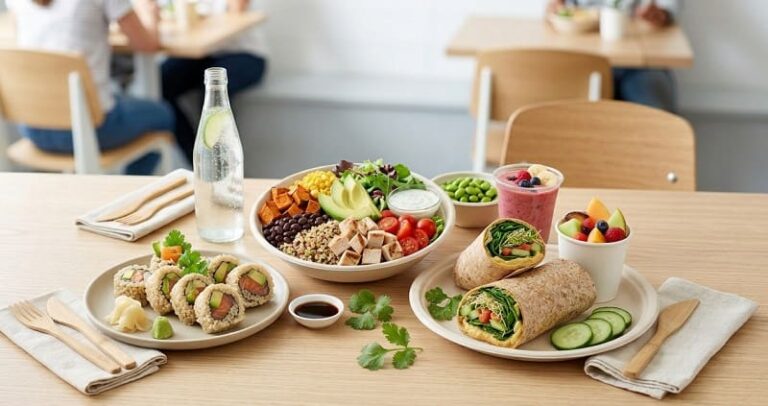
Finding genuinely nutritious options at fast food chains is far more realistic than most people assume. Between demanding work schedules, commutes, and packed daily routines, cooking a balanced meal at home every day is not always possible. The widespread belief that fast food and healthy eating cannot coexist is outdated. Several major chains now offer high-protein, lower-calorie menu items built around grilled proteins, legumes, and fresh produce — meals that support fitness goals without leaving you sluggish an hour later.
This guide covers twelve fast food and fast-casual chains that consistently deliver solid nutrition. Each section identifies specific menu items worth ordering and explains exactly why they earn a place in a health-conscious diet. The focus throughout is practical: protein counts, calorie ranges, and smart customization options that make a measurable difference at the counter.
Why Protein and Calorie Balance Matter at Fast Food Restaurants
Protein is the single most important macronutrient to prioritize when ordering fast food. It takes longer to digest than simple carbohydrates, which stabilizes blood sugar, reduces hunger between meals, and helps preserve lean muscle during periods of calorie restriction. Most nutrition professionals recommend at least 20 to 30 grams of protein per meal as a baseline for satiety and muscle support.
Calorie density is equally critical. Fast food portions tend to be generous, and high-calorie sauces, fried coatings, and oversized bread can push a seemingly reasonable meal past 1,000 calories. A useful benchmark when evaluating menu items is the protein-to-calorie ratio: aim for roughly one gram of protein for every 10 to 15 calories. A 300-calorie item should deliver at least 20 grams of protein to justify its place in the meal.
Keeping calories aligned with protein goals at fast food restaurants is entirely achievable with the right strategy. The chains listed below make that process straightforward, even on the busiest days.
How to Identify Genuinely Healthy Fast Food Options
Menu transparency is the first filter. Chains that publish complete nutrition information — calories, protein, fat, sodium, and fiber — in their apps and on their websites make smart ordering possible. Chains that obscure nutritional details are worth avoiding entirely.
Customization flexibility matters just as much. Chains that allow bowl builds, protein swaps, and ingredient removals give the customer direct control over the final nutritional profile. Loading up on non-starchy vegetables like lettuce, peppers, tomatoes, onions, and cucumbers can transform a mediocre menu item into a genuinely solid meal without adding cost.
Beyond protein and calories, sodium content deserves attention — most fast food items contain 800 to 1,200 milligrams of sodium or more. For anyone monitoring blood pressure or prone to water retention, balancing fast food meals with lower-sodium home-cooked options throughout the week is practical damage control. Fiber, which most fast food meals lack, is best supplemented through beans, whole grains, and substantial vegetable portions at chains that offer them.
The 12 Best Fast Food Chains for Healthy, High-Protein Meals
The following twelve chains stand out for consistently offering nutritious, high-protein options that deliver on both flavor and macros. They represent a range of cuisines and price points, making it practical to eat well regardless of location or budget.
1. Chick-fil-A
Chick-fil-A has built its reputation on chicken, and the grilled options on its menu are genuinely lean without sacrificing flavor. The chain marinates its grilled chicken before cooking, producing a juicier result than most competitors while keeping fat content minimal.
The 12-count Grilled Nuggets stand out as one of the most efficient high-protein fast food items available anywhere: 38 grams of protein at just 200 calories. That protein-to-calorie ratio is exceptional by any standard. Pairing them with a side salad keeps the total meal under 300 calories while delivering a nutritionally complete lunch. The Grilled Chicken Cool Wrap delivers 43 grams of protein at approximately 660 calories with cheese — removing the cheese brings it closer to 500 calories with no meaningful flavor loss.
For breakfast, the Egg White Grill offers 27 grams of protein at 300 calories. The grilled chicken breast and egg whites on a multigrain English muffin provide sustained energy without the heaviness of sausage-based breakfast sandwiches. It is one of the most nutritionally efficient fast food breakfast options currently available at any major chain.
2. Chipotle
Chipotle’s build-your-own format is one of the most powerful tools available for high-protein, controlled-calorie eating at a fast food chain. Every component is ordered separately, meaning the customer determines the final nutritional profile with complete accuracy.
A chicken burrito bowl with fajita vegetables, black beans, fresh salsa, and a small portion of brown grain rice delivers over 40 grams of protein at roughly 450 to 500 calories. The Balanced Macros Lifestyle Bowl — available through the app — combines organic grilled chicken, black beans, romaine, fresh tomato salsa, and guacamole for approximately 45 grams of protein with healthy fats from the avocado. Skipping rice reduces carbohydrates significantly for those managing blood sugar or following lower-carb protocols.
Vegetarians have a strong option in sofritas — seasoned braised tofu that delivers around 32 grams of protein in a standard bowl under 450 calories. Chipotle also publishes detailed ingredient sourcing and nutrition information, which supports informed decision-making at every visit.
3. CAVA
CAVA is one of the fastest-growing Mediterranean fast-casual chains in the country, and its build-your-own bowl format is tailor-made for high-protein, nutrient-dense eating. Nutrition professionals and dietitians consistently rate it among the top overall choices for healthy fast-casual dining.
A base of greens topped with grilled chicken, roasted sweet potatoes, hummus, and harissa delivers 35 to 40 grams of protein at under 550 calories, depending on toppings. The grilled chicken is herb-seasoned and genuinely flavorful — a level above typical fast food protein. CAVA’s falafel option provides a plant-based protein alternative with 13 grams of protein per serving, while the lemon herb tahini and harissa dressings add bold Mediterranean flavor without the calorie penalty of creamy dressings.
What sets CAVA apart is the sheer volume of fresh vegetable toppings available at no additional cost: cabbage slaw, tomato cucumber salad, pickled onions, banana peppers, and more. Loading a bowl with these additions adds fiber, micronutrients, and physical volume to the meal without meaningfully increasing calorie count.
4. Sweetgreen
Sweetgreen specializes in customizable salads and grain bowls with a transparent commitment to ingredient quality. Every item on the menu is built around whole, minimally processed ingredients, making it one of the most nutrition-aligned chains on this list.
The Chicken Pesto Parm bowl delivers 43 grams of protein at approximately 590 calories, combining warm roasted chicken, shaved parmesan, basil, and wild rice. For lower-calorie options, the Shroomami bowl provides 20 grams of protein at under 400 calories with roasted mushrooms, edamame, and cucumber over a grain base. The Harvest Bowl — one of the chain’s most popular items — hits 32 grams of protein at around 490 calories with roasted chicken, sweet potatoes, and apple slices over wild rice.
Sweetgreen’s nutrition calculator, available in the app and online, updates in real time as menu items are customized. This makes it one of the easiest chains to optimize for specific macro targets before placing an order.
5. Subway
Subway’s real advantage is customization depth. Any protein can be placed on any bread or converted to a salad bowl, and the range of fresh vegetable toppings is broader than most competitors. The nutritional outcome depends almost entirely on how the order is built.
The Oven-Roasted Turkey 6-inch on whole grain bread provides 23 grams of protein at approximately 280 calories. Loading it with spinach, tomatoes, peppers, and onions adds volume and micronutrients without meaningful calorie impact. Substituting mustard for mayonnaise keeps fat content low while maintaining flavor. The Rotisserie-Style Chicken sub bumps protein to 29 grams at around 320 calories and has a pulled texture that absorbs seasoning exceptionally well.
Converting any sub to a salad bowl by removing the bread drops the meal to roughly 200 calories while preserving all the protein. The Rotisserie-Style Chicken Bowl provides 31 grams of protein and 3 grams of fiber at just 220 calories — one of the most efficient options on Subway’s entire menu.
6. McDonald’s
McDonald’s is not the first chain that comes to mind for nutritious eating, but specific menu items hold up well under scrutiny. The key is knowing which items to order and which to bypass entirely.
The Artisan Grilled Chicken Sandwich delivers 37 grams of protein at 380 calories. The herb-seasoned grilled chicken breast is genuinely lean, and removing the mayo reduces the calorie count further without sacrificing the meal’s core protein content. The Egg McMuffin remains a solid breakfast option at 17 grams of protein and 310 calories — Canadian bacon and a whole egg on an English muffin provides a more nutritionally balanced fast food breakfast than most alternatives at the same price point.
For those prioritizing protein efficiency, a McDouble without the bun delivers 22 grams of protein at under 250 calories. McDonald’s mobile app supports full customization before arriving at the restaurant, which eliminates the friction of explaining modifications at the counter and ensures the order matches nutritional goals every time.
7. Wendy’s
Wendy’s commitment to fresh, never-frozen beef extends to quality standards across the menu. The grilled chicken items are reliably lean, and the chain’s salads are substantial enough to function as complete meals rather than token healthy options.
The Grilled Chicken Sandwich provides 34 grams of protein at 350 calories. Pairing it with Wendy’s chili adds bean-based protein, fiber, and iron for approximately 250 additional calories — making it one of the more nutritionally complete fast food meal combinations at any drive-thru. The Cobb Salad without dressing delivers 46 grams of protein at 420 calories, with contributions from grilled chicken, hard-boiled egg, and bacon. Using half the dressing packet rather than the full portion keeps the total meal well under 600 calories. This is one of the better choices for anyone focused on heart health, given the lean protein and vegetable base.
8. Panda Express
Panda Express introduced its Wok Smart label to identify menu items with at least 8 grams of protein per serving at under 300 calories. That designation makes navigation straightforward for health-conscious customers who prefer not to calculate macros on the spot.
The Grilled Teriyaki Chicken is the chain’s protein flagship: a single portion delivers over 35 grams of protein at approximately 300 calories. The teriyaki glaze adds flavor without excessive sugar when ordered without rice. String Bean Chicken Breast is a Wok Smart standout at 19 grams of protein and just 190 calories — the wok preparation keeps vegetables crisp and the sauce light rather than syrupy. Building a meal around two Wok Smart selections plus steamed vegetables instead of fried rice or noodles produces a nutritionally strong plate in the 500 to 600 calorie range with 40 or more grams of combined protein.
9. Taco Bell
Taco Bell’s Fresco customization option, which substitutes pico de gallo for cheese and sour cream on any item, meaningfully reduces calorie density without eliminating the chain’s signature bold flavors. Understanding this single option transforms the ordering experience for calorie-conscious customers.
The Cantina Chicken Bowl provides 24 to 25 grams of protein at approximately 490 to 530 calories, depending on the precise build. The slow-roasted chicken has better flavor depth than the chain’s standard seasoned beef, and the combination of beans, rice, and vegetables makes the bowl nutritionally complete. Ordering two Soft Tacos in Fresco style produces 20 grams of protein at under 300 calories — an efficient option for smaller appetites or as a complement to another protein source. Taco Bell’s bean burrito with rice removed delivers meaningful plant-based protein and fiber at under 380 calories and is among the most affordable high-fiber options at any major chain.
10. Popeyes
Popeyes built its brand on fried chicken, but the Blackened Tenders are the genuine nutritional standout on the menu. These are grilled tenders coated in a Cajun spice blend — no breading, no frying oil — which preserves protein content while eliminating the calorie penalty associated with the chain’s signature fried products.
A five-piece order of Blackened Tenders delivers 43 grams of protein at just 280 calories. The spice profile is assertive enough to make the tenders satisfying without any dipping sauce. Adding a side of green beans brings the full meal to approximately 330 calories with a complete nutritional profile. The Blackened Chicken Sandwich provides 32 grams of protein at 420 calories and can be ordered on lettuce at locations that accommodate the substitution, cutting calories further.
11. Panera Bread
Panera occupies the space between traditional fast food and sit-down dining, with a focus on ingredient sourcing transparency and cleaner preparation methods. The trade-off is slightly higher prices, but the nutritional quality of the top menu items justifies the cost for regular visitors.
The Green Goddess Cobb Salad with Chicken delivers 37 to 42 grams of protein at 460 to 510 calories depending on the precise build. Grilled chicken, hard-boiled egg, avocado, and mixed greens combine to create a meal with protein from multiple sources alongside healthy fats and substantial fiber from the vegetable base. Using half the included dressing rather than the full packet reduces the calorie count by 100 or more without significantly altering the flavor experience. The half Tuna Salad Sandwich on whole grain bread provides 20 grams of protein at approximately 250 calories — whole grain bread contributes fiber that white bread alternatives skip entirely.
12. Starbucks
Starbucks is primarily a coffee chain, but its protein boxes and bistro-style food items are consistently solid options when a full meal is needed. The refrigerated case at any Starbucks location holds several items that compete well with purpose-built meal prep on both protein content and calorie efficiency.
The Eggs and Cheese Protein Box provides 20 grams of protein at 460 calories from hard-boiled eggs, cheese, multigrain bread, and fruit. The Egg White and Red Pepper Sous Vide Egg Bites deliver 13 grams of protein at 170 calories per serving — two orders reach 26 grams of protein at 340 calories and function as a complete breakfast for moderate appetites. The sous vide preparation produces a creamy, dense texture that holds up well through the morning without the blood sugar spike associated with pastry-based fast food options. The Grilled Chicken and Cauliflower Tabbouleh Bowl offers 25 grams of protein at approximately 420 calories, with herb-seasoned chicken and cauliflower tabbouleh keeping the carbohydrate count moderate.
Which Fast Food Is the Healthiest Overall?
Based on consistent nutrition quality, customization flexibility, and ingredient transparency, CAVA and Sweetgreen rank as the top overall choices among major fast-casual chains. Both are built around whole ingredients, offer extensive customization, and publish detailed nutritional information for every menu item. Among traditional fast food chains, Chick-fil-A leads for protein efficiency, Chipotle leads for macros customization, and Wendy’s leads for complete meal combinations at a reasonable price point.
The honest answer is that “healthiest” depends on individual goals. For pure protein-to-calorie efficiency, Chick-fil-A’s Grilled Nuggets and Popeyes’ Blackened Tenders are hard to beat. For overall nutritional completeness — protein, fiber, healthy fats, and micronutrients in a single meal — CAVA and Sweetgreen bowls are the benchmark.
Can People with Type 2 Diabetes Eat Fast Food?
People managing type 2 diabetes can eat at fast food restaurants, but the ordering strategy matters significantly more than it does for the general population. The primary concerns are refined carbohydrates, which spike blood glucose rapidly, and sodium, which affects blood pressure — a common comorbidity in type 2 diabetes.
The safest approach for diabetics at fast food chains is to prioritize grilled proteins, skip or minimize rice and bread portions, load up on non-starchy vegetables, and avoid sugary beverages entirely. At Chipotle, a chicken bowl without rice and with extra vegetables provides substantial protein and fiber with minimal blood glucose impact. At Chick-fil-A, the Grilled Nuggets with a side salad is one of the lowest-carb, highest-protein combinations available at any major chain. Taco Bell’s Fresco-style protein bowls without rice are another viable option. Consulting a registered dietitian for individualized guidance is always advisable when managing type 2 diabetes alongside fast food consumption.
What to Eat at Fast Food When You Crave Junk Food
Food cravings for salty, fatty, or savory flavors are physiological signals, not failures of willpower. The most effective strategy is not to suppress the craving entirely but to redirect it toward menu items that satisfy the flavor profile without the calorie and nutritional cost of the obvious indulgences.
Craving something salty and satisfying? Popeyes’ Blackened Tenders hit the Cajun spice profile that fried chicken cravings are often really about, at a fraction of the calories. Craving a burger? A Wendy’s Grilled Chicken Sandwich with chili on the side delivers the savory, filling combination without the saturated fat of a double beef patty. Craving something creamy and rich? A CAVA bowl with hummus, tzatziki, and grilled protein satisfies that texture profile with far better macros than anything from the traditional fast food menu. Identifying what the craving is actually about — salt, fat, crunch, warmth — and finding a higher-protein version of that sensory experience is the most sustainable long-term approach.
Practical Ordering Strategies That Work at Any Chain
Choosing the right chain is only part of the equation. How an order is built determines whether the meal supports nutrition goals or quietly undermines them. These strategies apply consistently across every chain covered above.
Always select grilled proteins over fried. Grilling removes hundreds of calories from breading and frying oil while preserving protein content entirely. At Chick-fil-A and Popeyes, the grilled and blackened options deliver the chain’s signature flavor profile without the calorie cost of the fried menu. Swap high-calorie dressings and condiments for vinegar, mustard, or fresh salsa — a single full-portion dressing packet can add 200 to 300 calories to a salad that would otherwise be an excellent low-calorie option.
Load non-starchy vegetables aggressively at every opportunity. At Chipotle, CAVA, Subway, and Wendy’s, vegetables like spinach, peppers, tomatoes, and onions add volume and micronutrients at near-zero calorie cost. They make meals more physically filling and contribute vitamins and antioxidants that most fast food items lack entirely. Beans are an underutilized protein and fiber source at chains like Chipotle and Taco Bell — black beans and pinto beans slow digestion and extend satiety beyond what animal protein alone provides at the same calorie level. Weight loss outcomes are consistently better when fiber intake is maintained alongside protein goals.
Use mobile apps to review and customize orders before arriving. Most major chains allow full order customization in their apps with real-time nutrition updates as items are added or removed. This eliminates impulse decisions made under time pressure and ensures the final nutritional profile matches the actual goal. Consider doubling protein portions when calorie budgets allow — at Chipotle and Panda Express, adding an extra protein portion does not proportionally increase calories but significantly boosts protein content, which is especially useful on high-activity days.
Making Fast Food Work Within a Balanced Diet
Fast food consumed with attention to protein content, calorie density, and customization can fit into a nutritionally balanced diet without compromise. The twelve chains covered in this guide are not fallback options or guilty concessions — they are legitimate sources of high-quality protein and controlled-calorie meals that happen to be available at drive-throughs and counter-service locations nationwide.
The practical approach is to identify two or three reliable orders at the chains most accessible within a given daily routine, build familiarity with the customization options that produce the best nutritional outcomes, and treat those orders as defaults rather than starting fresh every visit. That consistency removes decision fatigue and makes healthy fast food ordering sustainable over the long term. Tracking orders for a week using a nutrition app provides useful feedback on whether the selected options are actually delivering the protein and calorie targets that support individual health goals — and fast food, ordered correctly, can contribute positively to all of them.
Conclusion
The twelve chains covered here — Chick-fil-A, Chipotle, CAVA, Sweetgreen, Subway, McDonald’s, Wendy’s, Panda Express, Taco Bell, Popeyes, Panera, and Starbucks — each offer menu items that deliver substantial protein at controlled calorie levels. None require nutritional compromise, specialized knowledge, or significant extra cost compared to standard menu ordering. They require only awareness of which items to select and how to customize orders effectively.
Grilled proteins, fresh vegetables, beans, and smart condiment choices are the consistent variables that separate a nutritionally strong fast food meal from a calorie-dense one. Mobile apps make the comparison and customization process faster and more precise than ever. With a few reliable go-to orders established at the chains most convenient to a given routine, eating well on a tight schedule becomes straightforward rather than exceptional.

Full-stack developer at Scylla Technologies (USA), working remotely from Bangladesh. Adobe Certified Magento Developer.