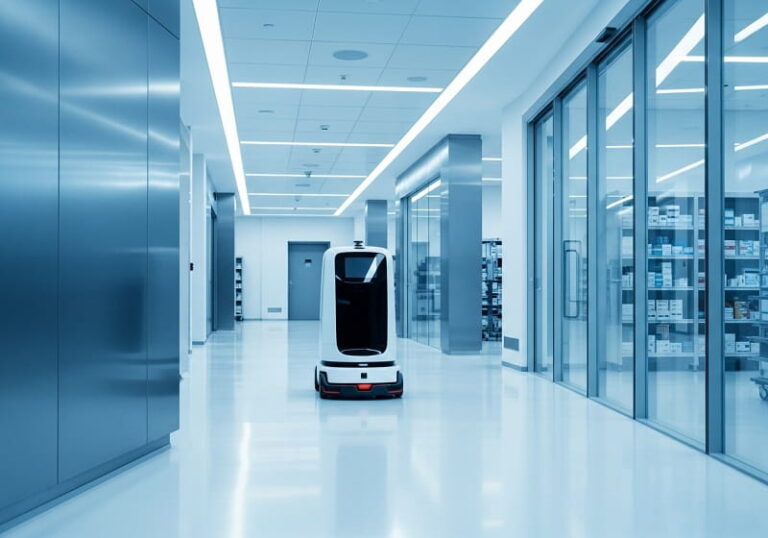
Hospital pharmacies across the United States are experiencing a transformative shift in medication distribution through the deployment of autonomous mobile robots. These sophisticated systems are revolutionizing how medications move from central pharmacies to patient bedsides, addressing critical challenges in healthcare delivery including medication errors, staff shortages, and operational inefficiencies. As the pharmacy automation market is projected to reach approximately eleven billion dollars by 2030, understanding the proper implementation of autonomous mobile robots has become essential for healthcare facilities seeking to enhance patient safety while optimizing operational workflows.
The integration of autonomous mobile robots into pharmacy distribution systems represents more than a technological upgrade—it fundamentally reshapes how healthcare facilities manage medication logistics. With over three hundred thousand pharmacy deliveries completed by leading robotic systems as of mid-2025, hospitals are discovering that successful AMR deployment requires careful planning, comprehensive staff training, and strategic alignment with existing clinical workflows. This guide provides healthcare administrators, pharmacy directors, and clinical operations managers with a detailed roadmap for implementing autonomous mobile robots in high-throughput pharmacy environments.
Understanding Autonomous Mobile Robots in Pharmacy Distribution
Autonomous mobile robots designed for pharmacy applications are sophisticated devices that navigate hospital environments independently, transporting medications, supplies, and equipment without continuous human guidance. Unlike traditional cart-based delivery systems or pneumatic tube networks, these robots utilize advanced sensors, mapping technologies, and artificial intelligence to navigate complex hospital layouts, operate elevators autonomously, and deliver medications directly to nursing stations or patient care areas. The technology has evolved significantly from early automated guided vehicles that required magnetic strips or wires for navigation to fully autonomous systems capable of dynamic route optimization and real-time obstacle avoidance.
Modern pharmacy AMRs incorporate multiple layers of safety features including collision avoidance sensors, emergency stop mechanisms, and secure compartmentalized storage that restricts access to authorized personnel only. These systems typically feature integrated barcode scanning capabilities, temperature monitoring for sensitive medications, and real-time tracking that provides complete chain-of-custody documentation. The robots communicate wirelessly with hospital information systems, pharmacy management software, and building infrastructure to coordinate deliveries, request elevator access, and navigate through doors equipped with automation interfaces.
Core Components and Technical Architecture
The technical architecture of pharmacy autonomous mobile robots consists of several integrated subsystems working in concert. The navigation system employs a combination of Light Detection and Ranging sensors, cameras, and simultaneous localization and mapping algorithms to create and update digital maps of the hospital environment. These maps enable the robot to determine its precise location within the facility and plan optimal routes to delivery destinations while accounting for real-time obstacles and traffic patterns. The perception system continuously monitors the robot’s surroundings, identifying people, equipment, and other obstacles to ensure safe navigation through busy hospital corridors.
Storage compartments within pharmacy AMRs are engineered with multiple security levels to accommodate different medication classifications. High-security compartments with biometric or PIN-code access control are designated for controlled substances and high-risk medications, while standard compartments serve routine medication deliveries. Many systems incorporate refrigerated compartments with temperature logging capabilities to maintain cold chain integrity for temperature-sensitive biologics and vaccines. The compartment design typically allows for simultaneous delivery of multiple medications to different destinations, maximizing efficiency by consolidating deliveries into single trips.
Integration with Hospital Information Systems
Successful AMR deployment requires seamless integration with multiple hospital information technology systems. The robots must interface with the electronic health record system to receive medication orders, the pharmacy information system to coordinate dispensing workflows, and the building management system to control elevators and automated doors. This integration enables automated workflow where medication orders trigger robotic delivery assignments without manual intervention. Advanced implementations incorporate real-time tracking dashboards that provide pharmacy staff and nurses with delivery status updates, estimated arrival times, and exception notifications.
The integration architecture typically employs Health Level Seven International messaging standards or Fast Healthcare Interoperability Resources application programming interfaces to ensure compatibility with diverse hospital IT ecosystems. Middleware platforms often serve as translation layers, converting data between the robot’s native protocols and hospital information systems. This approach allows facilities to implement AMR technology without requiring extensive modifications to existing clinical software applications. The integration must also account for network security requirements, ensuring that robot communications comply with HIPAA regulations and institutional cybersecurity policies.
Pre-Implementation Assessment and Planning
Before deploying autonomous mobile robots in pharmacy distribution, healthcare facilities must conduct comprehensive assessments of their operational needs, physical infrastructure, and organizational readiness. This assessment phase typically begins six to twelve months before anticipated robot deployment and involves multidisciplinary teams including pharmacy leadership, nursing administration, facilities management, information technology, and clinical operations staff. The assessment should quantify current medication delivery volumes, identify peak demand periods, map existing delivery routes, and document time requirements for manual delivery processes to establish baseline metrics for post-implementation comparison.
Infrastructure evaluation is critical to successful AMR implementation. Facilities teams must assess hallway widths, door clearances, elevator capacities, and floor surface conditions to ensure compatibility with robot specifications. Many hospitals conduct three-dimensional laser scanning of their facilities to create detailed digital models that inform robot deployment planning. This scanning process identifies potential navigation challenges such as narrow corridors, complex intersections, and areas with frequent congestion. The assessment should also evaluate Wi-Fi coverage throughout anticipated robot travel paths, as reliable wireless connectivity is essential for robot operation and monitoring.
Workflow Analysis and Process Mapping
Understanding current medication distribution workflows provides the foundation for effective AMR integration. Pharmacy departments should document existing processes through detailed workflow mapping exercises that capture every step from prescription receipt through medication delivery to nursing units. This mapping should identify handoff points, verification procedures, documentation requirements, and average time intervals between process steps. Time-motion studies conducted over representative periods reveal patterns in delivery demand, helping planners determine optimal robot fleet sizing and deployment strategies.
The workflow analysis must extend beyond pharmacy operations to include nursing unit procedures for receiving and processing medication deliveries. Interviews with nursing staff reveal preferences for delivery timing, storage locations, and notification methods. Understanding these preferences enables robot implementation teams to design delivery protocols that align with nursing workflows rather than disrupting established care routines. Many facilities discover during this analysis that standardizing medication delivery processes across nursing units simplifies robot deployment and improves overall efficiency.
Vendor Selection and Technology Evaluation
Selecting appropriate autonomous mobile robot technology requires careful evaluation of multiple vendors and system capabilities. Healthcare facilities should develop detailed requirements specifications that address their specific operational needs, physical environment characteristics, and integration requirements. Key evaluation criteria include payload capacity, delivery speed, battery life, navigation reliability, security features, and software capabilities. Facilities should request demonstrations in hospital environments similar to their own and seek references from institutions with comparable operational profiles.
The vendor selection process should assess not only the robot technology itself but also the company’s implementation support capabilities, maintenance services, and long-term viability. Questions about training programs, technical support availability, software update frequency, and spare parts inventory help predict the total cost of ownership and operational reliability. Evaluation teams should review the vendor’s experience with healthcare implementations, regulatory compliance track record, and customer satisfaction metrics. Site visits to facilities with operational AMR systems provide valuable insights into real-world performance and implementation challenges.
Implementation Strategy and Deployment Phases
Successful autonomous mobile robot implementation follows a phased approach that minimizes operational disruption while allowing staff to adapt gradually to new workflows. The typical deployment progresses through pilot testing, limited rollout, and full-scale implementation over a period of three to six months. During the pilot phase, facilities deploy one or two robots to serve a limited number of nursing units, allowing pharmacy and nursing staff to become familiar with the technology while implementation teams refine workflows and address unforeseen challenges. This controlled introduction provides opportunities to gather user feedback, identify process improvements, and build organizational confidence in the technology.
The pilot phase should include clearly defined success metrics and decision criteria for proceeding to broader deployment. Key performance indicators typically include delivery completion rates, delivery time reliability, user satisfaction scores, and incident frequency. Regular review meetings during the pilot allow stakeholders to discuss experiences, share concerns, and collaboratively develop solutions to emerging issues. Documentation of lessons learned during the pilot phase informs training programs and standard operating procedures for subsequent deployment phases.
Site Preparation and Infrastructure Modifications
Physical preparation of the hospital environment is essential for reliable robot operation. Facilities teams must install or upgrade Wi-Fi access points to ensure consistent network coverage throughout robot travel paths, with particular attention to elevators and stairwells where signal strength often weakens. Elevator integration requires installation of specialized control interfaces that allow robots to call elevators, select floors, and detect when doors open and close. Many facilities upgrade to modern elevator control systems as part of AMR implementation to enable these automated interfaces.
Door automation represents another critical infrastructure consideration. While some autonomous mobile robots can operate door-opening mechanisms designed for accessibility compliance, high-traffic areas may benefit from automatic doors triggered by robot approach. Facilities should evaluate floor surfaces along robot routes, repairing uneven transitions, securing loose floor coverings, and ensuring adequate drainage to prevent water accumulation. Charging station placement requires electrical infrastructure upgrades in locations that allow robots to recharge without obstructing hospital traffic while remaining accessible for pharmacy deliveries.
Staff Training and Change Management
Comprehensive training programs are fundamental to successful autonomous mobile robot implementation. Training must address both technical operation and workflow integration, reaching all staff members who will interact with the robots including pharmacy technicians, pharmacists, nurses, and security personnel. Pharmacy staff training focuses on loading medications into robot compartments, initiating deliveries through the robot’s software interface, responding to delivery exceptions, and performing basic troubleshooting. Hands-on practice sessions allow staff to develop confidence operating the robots before they enter routine clinical use.
Nursing staff training emphasizes receiving deliveries, accessing secured compartments, verifying medication orders, and documenting medication receipt in clinical systems. Training should address workflows for both routine scheduled deliveries and urgent medication requests. Many facilities create quick reference guides and video tutorials that staff can access when questions arise during actual robot use. Super-user programs designate particularly proficient staff members as resources for their colleagues, providing peer support that complements formal training.
Change management activities extend beyond technical training to address cultural adaptation and workflow redesign. Town hall meetings, departmental presentations, and one-on-one discussions help staff understand the rationale for AMR implementation and how the technology will affect their daily work. Addressing concerns about job security, workload changes, and technology reliability builds trust and reduces resistance to change. Leadership visibility and active participation in training sessions demonstrates organizational commitment to successful implementation.
Operational Protocols and Standard Operating Procedures
Establishing clear operational protocols ensures consistent, safe, and efficient robot utilization. Standard operating procedures should address routine delivery processes, urgent medication requests, controlled substance handling, temperature-sensitive medication protocols, and exception management. These procedures must integrate with existing pharmacy policies while accommodating the unique capabilities and limitations of autonomous mobile robots. Documentation should specify which medication types are suitable for robot delivery, which require traditional delivery methods, and criteria for determining delivery priority levels.
Medication loading protocols define how pharmacy staff prepare medications for robot transport, including packaging requirements, labeling standards, and compartment assignment rules. For controlled substances, procedures must comply with regulatory requirements for chain-of-custody documentation, typically incorporating barcode scanning at both loading and unloading to create electronic audit trails. Temperature-sensitive medications require protocols for validating refrigerated compartment temperatures before loading and monitoring temperature excursions during transport.
Delivery Scheduling and Queue Management
Optimizing delivery schedules maximizes autonomous mobile robot efficiency while meeting clinical care needs. Facilities typically establish scheduled delivery runs to each nursing unit at defined intervals, supplemented by on-demand deliveries for urgent medication requests. The scheduling strategy must balance delivery timeliness with operational efficiency, as excessive on-demand deliveries reduce the benefits of batching multiple medications into consolidated trips. Advanced scheduling algorithms can optimize delivery sequences to minimize total travel time while respecting medication urgency levels and nursing unit preferences.
Queue management becomes increasingly important as delivery volumes grow. Priority systems should distinguish between routine scheduled medications, time-sensitive doses that must reach patients by specific times, and true emergencies requiring immediate delivery. The robot management software must handle these priorities appropriately, sometimes interrupting lower-priority deliveries to accommodate urgent requests. Clear communication protocols inform pharmacy and nursing staff when delivery queues are congested, allowing them to make informed decisions about using alternative delivery methods for truly time-critical medications.
Security and Controlled Substance Compliance
Handling controlled substances through autonomous mobile robot systems requires stringent security measures and comprehensive documentation. Robot compartments designated for controlled substances must employ tamper-evident seals and access controls that create audit trails documenting every compartment opening. Biometric authentication, personal identification numbers, or proximity badge readers restrict access to authorized personnel only. The robot management system should integrate with the pharmacy’s controlled substance tracking software, automatically documenting chain of custody transfers and flagging discrepancies for investigation.
Compliance with Drug Enforcement Administration regulations demands meticulous record-keeping throughout the robotic delivery process. Electronic logs must capture the identity of pharmacy staff loading controlled substances, timestamps for robot departure and arrival, identification of nursing staff receiving the medications, and any exceptions or delays. Regular audits of these records verify compliance and identify process improvements. Some facilities implement video recording in robot loading areas as an additional security measure, though this must be balanced against privacy considerations and data storage requirements.
Safety Protocols and Risk Mitigation
Ensuring patient and staff safety during autonomous mobile robot operations requires multi-layered safety protocols. Robot manufacturers incorporate numerous safety features including emergency stop buttons, obstacle detection sensors, and speed governors that automatically reduce velocity in crowded areas. However, operational protocols must complement these technical safeguards. Facilities should establish clear right-of-way rules for robot-human interactions, designating appropriate travel speeds in different areas and specifying how robots should respond to congested corridors or emergency situations.
Infection control protocols address concerns about robots potentially transmitting pathogens between hospital areas. Regular cleaning schedules using approved disinfectants prevent robots from becoming vectors for healthcare-associated infections. Some facilities implement automated ultraviolet disinfection cycles when robots return to charging stations. Protocols should specify increased cleaning frequency during infectious disease outbreaks and prohibit robot travel to isolation units or other restricted areas. Clear labeling on robots reminds staff about appropriate cleaning procedures and last disinfection timestamps.
Emergency Response and Contingency Planning
Comprehensive contingency plans ensure medication delivery continuity when autonomous mobile robots are unavailable due to technical issues, maintenance, or emergencies. These plans should detail backup delivery procedures, communication protocols for notifying affected nursing units, and processes for prioritizing critical medication deliveries. During fire alarms or other emergencies, robots must either automatically return to safe positions or receive manual override commands from authorized personnel. Staff training includes emergency procedures so that appropriate responses become automatic rather than requiring consultation of documentation during stressful situations.
Technical failure response protocols define troubleshooting steps, escalation procedures, and service response expectations. When robots malfunction during deliveries, pharmacy staff must quickly determine whether medications can be safely retrieved from the robot or if alternative delivery methods are required. The robot management system should provide diagnostic information to help technical support personnel identify and resolve issues remotely when possible. Scheduled preventive maintenance programs minimize unexpected failures, but operational plans must accommodate both planned and unplanned robot unavailability.
Performance Monitoring and Quality Improvement
Systematic performance monitoring enables healthcare facilities to assess autonomous mobile robot effectiveness and identify improvement opportunities. Key performance indicators should track delivery completion rates, average delivery times, on-time performance relative to scheduled delivery windows, and robot utilization rates. Comparing these metrics to baseline measurements from manual delivery processes quantifies the operational impact of AMR implementation. Monthly reporting and trending analysis reveal patterns that might indicate system issues, workflow inefficiencies, or training needs.
User satisfaction surveys provide qualitative insights complementing quantitative metrics. Regular feedback collection from pharmacy staff and nurses reveals practical challenges, identifies workflow friction points, and uncovers opportunities for process optimization. Questions should address ease of use, reliability, impact on workload, and overall satisfaction with the robot system. Analyzing feedback themes helps prioritize system enhancements and training improvements. Some facilities convene regular user groups bringing together pharmacy and nursing representatives to discuss experiences and collaboratively develop solutions to recurring issues.
Medication Error Reduction and Patient Safety Outcomes
Evaluating medication safety impacts represents a critical component of AMR performance assessment. Facilities should track medication errors related to delivery processes, comparing error rates before and after robot implementation. Research has demonstrated that automated dispensing systems can reduce medication errors by fifty to ninety percent depending on implementation quality and the types of errors measured. Documentation should capture whether errors occurred during manual processes, automated processes, or transitions between systems. This granular analysis helps target specific improvement interventions.
Patient safety benefits extend beyond error reduction to include more reliable medication delivery timing. Robots provide consistent delivery schedules unaffected by competing staff priorities or workflow interruptions that delay manual deliveries. This reliability is particularly valuable for time-critical medications such as antibiotics where delayed administration can compromise therapeutic effectiveness. Tracking the percentage of doses delivered within required time windows provides objective evidence of timing improvements. Some facilities have documented that autonomous mobile robots enable earlier patient discharge by ensuring medications reach patients consistently for bedside delivery programs.
Return on Investment Analysis
Calculating return on investment for autonomous mobile robot systems requires comprehensive accounting of both costs and benefits. Direct costs include robot purchase or lease expenses, infrastructure modifications, software licensing, training, and ongoing maintenance. Indirect costs encompass temporary productivity losses during implementation and staff time devoted to change management activities. Benefits include labor savings from reducing pharmacy technician delivery time, increased pharmacist availability for clinical services, reduced medication errors and their associated costs, and improved operational efficiency enabling higher patient volumes without proportional staff increases.
Many facilities achieve positive return on investment within two to four years of implementation. The calculation depends heavily on the pharmacy’s baseline labor allocation to medication delivery, the volume of deliveries automated, and the organization’s ability to redeploy freed staff time to revenue-generating clinical activities. Quantifying error reduction benefits requires estimating the costs of medication errors including additional treatment, extended lengths of stay, and liability exposure. While some cost categories involve assumptions and estimates, systematic ROI analysis provides important insights for future automation investments and helps justify implementation costs to organizational leadership.
Advanced Applications and Future Developments
As autonomous mobile robot technology matures, healthcare facilities are exploring advanced applications beyond basic medication delivery. Some hospitals deploy robots for specimen transport between nursing units and laboratories, supply delivery to operating rooms, and even meal service to patient rooms. These expanded applications maximize robot utilization throughout the day, improving return on investment by amortizing infrastructure costs across multiple use cases. Cross-departmental implementations require coordination among pharmacy, laboratory, materials management, and food service to establish priorities when delivery requests compete for limited robot capacity.
Integration with automated dispensing cabinets represents an emerging frontier in pharmacy automation. In this model, autonomous mobile robots stock medications into unit-based cabinets, combining the efficiency of centralized pharmacy processing with the convenience of decentralized medication access. The robot delivers medications that the automated dispensing cabinet’s internal systems then organize for patient-specific retrieval by nursing staff. This integration reduces nursing time spent retrieving medications from central pharmacies while maintaining pharmacy oversight of medication distribution.
Artificial Intelligence and Predictive Analytics
Artificial intelligence applications are enhancing autonomous mobile robot capabilities beyond basic navigation and delivery. Machine learning algorithms analyze historical delivery patterns to predict future demand, enabling proactive scheduling that positions robots optimally to minimize response times. Predictive maintenance systems monitor robot performance metrics to identify developing mechanical or software issues before failures occur, scheduling preventive interventions during low-demand periods. Natural language processing capabilities are emerging that allow clinical staff to request deliveries through voice commands or text messages rather than formal system interfaces.
Advanced analytics platforms aggregate data from robot operations, pharmacy information systems, and electronic health records to identify inefficiencies and optimization opportunities. These systems might detect that particular nursing units consistently experience delivery delays during shift changes, prompting schedule adjustments. Pattern analysis could reveal that certain medication combinations are frequently ordered together, suggesting opportunities for pre-packaging to accelerate fulfillment. As these analytical capabilities mature, they will enable increasingly autonomous optimization with minimal human intervention required.
Regulatory Compliance and Accreditation Considerations
Healthcare facilities implementing autonomous mobile robots must ensure compliance with multiple regulatory frameworks and accreditation standards. The Joint Commission and other accrediting bodies have developed medication management standards that apply to automated delivery systems. These standards address medication security, chain of custody documentation, environmental controls for medication storage, and staff competency verification. Facilities should review applicable standards early in the implementation planning process to ensure that robot deployment strategies and operational protocols satisfy all requirements.
State pharmacy regulations may impose specific requirements for automated medication distribution systems. Some jurisdictions require pharmacist oversight of automated systems, mandating that licensed pharmacists maintain ultimate responsibility for medication safety even when robots perform physical delivery functions. Documentation requirements vary by state, with some requiring electronic signatures or specific audit trail elements. Consulting with state pharmacy boards during implementation planning helps avoid compliance issues that could necessitate costly system modifications after deployment.
Privacy and Data Security Obligations
Autonomous mobile robot systems process protected health information as they transport medications linked to specific patients and clinical orders. Compliance with the Health Insurance Portability and Accountability Act requires safeguards protecting this information from unauthorized access or disclosure. Encryption of data transmitted between robots and hospital information systems prevents interception of patient information. Access controls ensure that only authorized personnel can view delivery assignments and patient identifiers. Business associate agreements with robot vendors formalize their responsibilities for protecting patient data and complying with HIPAA requirements.
Data retention policies must address how long the system maintains delivery records, access logs, and other documentation. While some data must be preserved for regulatory compliance or legal discovery purposes, excessive retention increases privacy risks and storage costs. Facilities should establish clear policies defining retention periods for different data categories and implement automated purging processes. Regular security assessments, including vulnerability scanning and penetration testing, verify that robot systems maintain adequate protection against evolving cyber threats.
Conclusion
The deployment of autonomous mobile robots in hospital pharmacy distribution systems represents a significant advancement in medication management technology, offering substantial benefits in patient safety, operational efficiency, and staff satisfaction. Successful implementation requires careful planning, comprehensive staff engagement, and systematic attention to workflow integration, safety protocols, and regulatory compliance. Healthcare facilities that approach AMR deployment as a strategic initiative rather than simply a technology purchase position themselves to maximize the benefits while minimizing implementation challenges and operational disruptions.
As the pharmacy automation market continues its rapid growth, autonomous mobile robot capabilities will expand through artificial intelligence integration, enhanced sensors, and improved software platforms. Healthcare organizations that establish strong foundations through thoughtful implementation of current AMR technology will be well-positioned to adopt these advances as they emerge. The evidence base demonstrating medication error reduction, delivery time improvements, and labor optimization through robot deployment continues strengthening, making autonomous mobile robots an increasingly compelling investment for hospitals seeking to enhance medication distribution while freeing pharmacy professionals to focus on clinical services that leverage their expertise and directly benefit patient care outcomes.