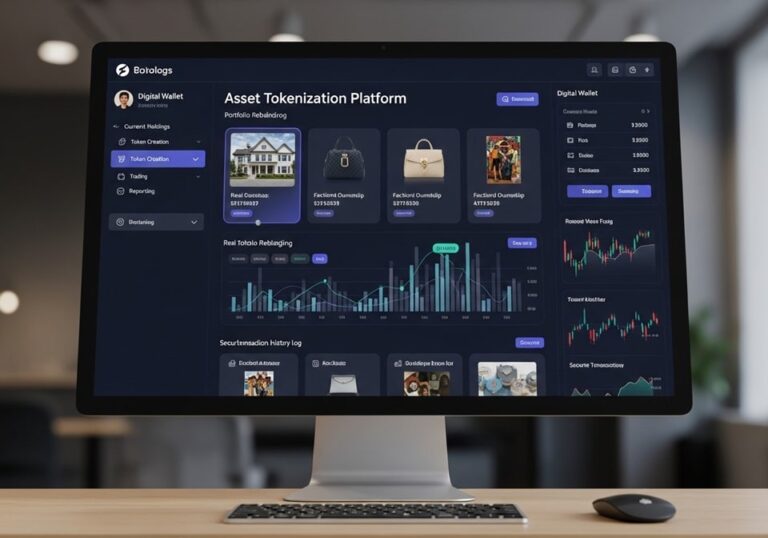
In recent years, the concept of converting traditional, real-world assets into blockchain-based digital tokens — known as asset tokenization — has gained traction as a way to unlock liquidity, improve accessibility, and democratize investments. Building a robust asset tokenization platform is more than just minting tokens: it requires careful legal structuring, technical architecture, compliance integration, and operational design. This guide walks you through everything needed to create a secure, compliant, and efficient asset tokenization platform, explaining core concepts, essential components, and important practical considerations.
What Is Asset Tokenization and Why It Matters
Asset tokenization refers to the process of converting ownership rights or claims to a physical or traditional asset — such as real estate, art, commodities, or private equity — into digital tokens recorded on a blockchain. These tokens can represent fractional ownership shares or rights to future income, and can be traded, transferred, or held by investors in a transparent, programmable manner.
This model unlocks several advantages over conventional asset ownership and trading. First, it significantly enhances liquidity: assets that are ordinarily illiquid — like a commercial property or a private loan portfolio — become divisible and tradable. Second, tokenization enables fractional ownership, allowing investors with smaller capital amounts to participate, thereby democratizing access. Third, blockchain’s immutable ledger provides transparency and security, reducing fraud risk and improving trust in ownership records. Additionally, smart contracts can automate compliance, payouts, and transfers, streamlining operations.
Because of these benefits, asset tokenization stands to transform how people invest in—and access—real-world value. Rather than being reserved for institutions or wealthy individuals, many asset classes become accessible to a much wider pool of retail and global investors.

Core Components of a Tokenization Platform
Designing and developing a tokenization platform involves aligning both legal and technical frameworks. Here are the major building blocks every such platform needs:
- Blockchain Infrastructure: The backbone of the platform. This could be a layer-1 blockchain or a layer-2 network built for scalability. The choice of blockchain impacts transaction costs, speed, security, and compatibility with smart contracts.
- Smart Contracts & Tokenization Engine: Smart contracts encode the logic for token minting, fractionalization, transfer rules, dividend or revenue distribution, and compliance features (e.g., investor eligibility, transfer restrictions, lock-ups).
- Legal & Custodial Structure: A legally compliant structure — often via a Special Purpose Vehicle (SPV) — holds the underlying asset. Custody must be clearly defined, with regulatory-grade oversight, especially when tokenizing physical assets or financial instruments.
- Compliance & Regulatory Integration: Built-in Know Your Customer (KYC), Anti-Money Laundering (AML), investor accreditation checks, and possibly jurisdiction-based transfer restrictions are essential. Without compliance, tokenized assets risk being classified as unregulated or illegal.
- Marketplace / Secondary Trading System: For tokens to deliver liquidity, there must be a functioning secondary market—either peer-to-peer, via exchanges, or through liquidity pools—allowing holders to trade tokens after the initial issuance.
- Payment & Settlement Systems: Support for fiat and/or cryptocurrency payments, possibly stablecoins, and real-time settlement mechanisms to enable seamless trading, distributions, and liquidity flows.
- Analytics, Reporting & Management Tools: Dashboards for asset issuers and investors to track asset value, distributions, transaction history, ownership changes, and compliance status.
- Security Protocols & Custody Models: Whether custodial (third-party escrow or trust) or non-custodial (users hold private keys), strong security — multi-signature wallets, encryption, audits — is non-negotiable, particularly when real-world value is at stake.
Why Each Component Matters
The blockchain and smart-contract layer ensure that tokens are programmable, transparent, and transferable. The legal and custodial structures provide the real-world legitimacy — without them, tokens may have no enforceable claim on an underlying asset. Compliance integration is vital for regulatory acceptance, especially across jurisdictions. A trading marketplace creates the liquidity by allowing token holders to exit or enter positions, while payments and settlements ensure that transfers and distributions occur smoothly. Analytics and management tools build trust by offering visibility into asset performance. Finally, robust security protects both token holders and issuers from theft, fraud, and mismanagement.
Step-by-Step Guide to Building an Asset Tokenization Platform
Step 1: Choose and Analyze the Asset to Tokenize
Begin with selecting an appropriate asset. Tokenization works best for assets that are valuable yet illiquid — for example, real estate (commercial or residential), private equity, private debt portfolios, fine art, commodities, and other high-value assets. The asset should have a clean title and transparent ownership history. Perform thorough legal due diligence, including verifying ownership, liens, encumbrances, and any regulatory restrictions.
Once due diligence is complete, set up a legally recognized entity, often an SPV (Special Purpose Vehicle), to hold the asset. This entity ensures that token holders have enforceable rights and separates the asset from other liabilities of the issuer.
Step 2: Define Token Structure and Smart Contract Logic
With the SPV in place, design your tokenization model. Decide whether tokens will represent fractional ownership (equity tokens), revenue-sharing rights (e.g., rental income, dividends), or usage rights. Define token supply, decimal precision (fractional units), lock-up periods, transferability, lock-in conditions, and compliance constraints.
Then, develop the smart contracts specifying: total supply; distribution logic; investor eligibility and KYC/AML verification; transfer rules (e.g., whitelist, geographic restrictions); revenue distribution logic; and token redemption or buy-back mechanisms if applicable. Test smart contracts rigorously to ensure security and accuracy.
Step 3: Select Blockchain Network and Infrastructure
Choose an underlying blockchain that balances decentralization, security, cost, and scalability. For many projects, a widely adopted blockchain (like Ethereum) or a compatible layer-2 solution is ideal. The network should support smart contracts, token standards (e.g., ERC-20 for fungible tokens, ERC-721/1155 for non-fungible or fractionalized tokens), and ideally have established tools for compliance and security audits.
Step 4: Build or Integrate Custody & Compliance Systems
Work with regulated custodians or escrow providers to hold underlying assets when required (like real estate, art, or private credit). Implement compliance layers: KYC/AML verification for investors, whitelisting for transfers, lock-up logic where needed, and mechanisms to record compliance throughout the token’s lifecycle. Ensure transparency through audit trails and regular reporting.
Step 5: Launch Token Issuance and Distribution
With legal, technical, and compliance layers ready, you can mint and issue tokens. Use a well-documented and transparent issuance process — clearly outlining offering terms, token rights, vesting (if any), and compliance policies. Distribute tokens via private sale, public offering, or whitelist-based allocation depending on your target investors and regulatory requirements.
Step 6: Enable Secondary Trading & Liquidity
To fulfill one of the main promises of tokenization — liquidity — you need a functioning secondary market. This could be a centralized exchange, a decentralized exchange (DEX), peer-to-peer trading platform, or liquidity pools. Ensure the platform supports trading of your token standard, and put in place mechanisms (e.g., buy-back, redemption, or approved transfer lists) to maintain liquidity and compliance over time.
Step 7: Implement Payment, Settlement & Revenue Distribution Systems
If your tokens represent revenue-sharing (e.g., rental income, dividends), integrate automated distribution mechanisms via smart contracts. Enable payments in fiat or stablecoins for global accessibility. Ensure that settlement systems — for transfers, redemptions, or payouts — are reliable and transparent, with clear record-keeping.
Step 8: Provide Analytics, Reporting & Ongoing Management
Create dashboards for both issuers and investors. These should track ownership, token transfers, historical performance, asset valuations, upcoming distributions, compliance status, and other relevant metrics. For long-term trust and user adoption, regular audits and transparent reporting are vital.
Step 9: Secure Infrastructure and Maintain Custody Best Practices
Security must be prioritized. Use multi-signature wallets or custodial solutions, encrypt sensitive data, and ensure regular smart contract audits. Adopt best practices for key management, data backup, and disaster recovery. If custody is non-custodial, provide users with secure wallet guidance and clear disclaimers. Regularly review and update security protocols as the regulatory and technological environment evolves.
Benefits and Challenges: What You Gain — And What to Watch Out For
Building an asset tokenization platform offers many potential benefits, especially when done correctly. But there are important challenges and trade-offs to consider.
Key Benefits
- Improved Liquidity: Illiquid assets like real estate, private equity, or art become tradable and fractional, opening them to a larger pool of investors.
- Fractional Ownership & Democratization: High-value assets become accessible to retail investors and those with limited capital, promoting financial inclusion.
- Transparency and Security: Blockchain’s immutable ledger and smart contracts provide transparent, traceable, and secure ownership records and transactions.
- Operational Efficiency & Cost Reduction: By cutting out intermediaries (e.g., brokers, custodians, manual paperwork), tokenization reduces transaction costs, speeds up settlement, and automates processes via smart contracts.
- Global Market Access: Token holders anywhere in the world can invest, trade, or hold—without traditional constraints like geography, local brokerages, or high entry costs.
- Programmability and Automatic Distribution: Smart contracts enable automated dividend or revenue sharing, compliance enforcement, and lifecycle management of tokens.
Challenges & Risks
- Regulatory Uncertainty: Legal frameworks for tokenized assets vary widely across jurisdictions. Unclear or evolving regulations can pose risks to both issuers and investors.
- Liquidity Risk: Without a robust secondary market, tokens may remain hard to trade or sell — defeating the purpose of tokenization.
- Legal & Custody Complexity: Reconciling digital tokens with real-world legal claims often demands complex legal structures (e.g., SPVs, custodians), which can be expensive and time-consuming.
- Security Risks: Smart contract bugs, hacks, private key loss, or custody failures can lead to loss of assets or tokens.
- Valuation and Transparency Challenges: For some asset types (e.g., art, private equity), fair and dynamic valuation is difficult, which can lead to mispricing or investor disputes.
Pro Tips for Building a Robust, Investor-Ready Tokenization Platform
- Engage Legal and Compliance Advisors Early — Before token minting or public offering, collaborate with legal experts to structure SPVs, define investor eligibility, and ensure compliance with KYC/AML and securities laws in target jurisdictions.
- Audit Smart Contracts Thoroughly — Use external audit firms and conduct internal peer reviews to minimize vulnerabilities and ensure contract logic works as intended under all conditions.
- Design for Liquidity from Day One — Plan secondary markets, trading venues, or liquidity pools before token issuance. Avoid launching tokens without a clear path to tradability.
- Use Hybrid Custody Models Where Appropriate — For high-value real-world assets, combining custodial and non-custodial approaches can balance security with user autonomy. Invest in secure key-management and escrow infrastructure.
- Provide Clear Investor Documentation & Transparency — Issue whitepapers, SPV agreements, disclosure documents, and regular reports so investors know exactly what rights the token represents and what they can expect in terms of distributions, redemptions, or exit options.
- Plan for Valuation & Reporting Mechanisms — Especially for illiquid or non-standard assets (art, private equity), build or integrate asset-valuation frameworks and regular appraisal/reporting processes to maintain investor trust and fair market valuation.
Frequently Asked Questions (FAQ)
What types of assets can be tokenized?
Almost any asset that has verifiable ownership and value — including real estate (residential or commercial), private equity, private loans or credit portfolios, art and collectibles, commodities (gold, precious metals), infrastructure projects, intellectual property (royalties, patents), and more — can in principle be tokenized. The feasibility depends on legal clarity, valuation, and custodial arrangements.
Does tokenization guarantee liquidity?
No — tokenization creates the potential for liquidity by dividing assets into tradeable tokens, but actual liquidity depends on the existence of a secondary market. Without exchanges, liquidity pools, or demand from buyers, tokens may remain illiquid regardless of their blockchain representation.
Is blockchain required for tokenization?
While blockchain is the primary technology for modern tokenization — because it provides immutability, transparency, smart-contract programmability, and decentralized trading — similar tokenization systems could theoretically exist on other secure distributed ledgers. However, blockchain remains the dominant and most widely adopted infrastructure.
How do investors know they really own a real-world asset?
Ownership is enforced via legal structure. Typically, an SPV holds the actual asset, and tokens represent shares or claims on that SPV. Legal agreements, audit disclosures, and custody arrangements ensure that token holders’ rights are enforceable according to jurisdictional law, not just digital ownership on a ledger.
What about regulatory and compliance risks?
Regulatory risk is one of the biggest challenges. Securities laws, property laws, tax regulations, and cross-border transaction rules vary by jurisdiction. A token offering may be considered a security offering in many jurisdictions, requiring registration or exemption. Therefore, compliance with KYC/AML, investor eligibility, transfer restrictions, and disclosure requirements is critical.
Conclusion
Asset tokenization has the potential to transform traditional finance by enabling liquidity, fractional ownership, and global access to assets that were once reserved for institutions or high-net-worth individuals. However, building a successful tokenization platform demands a rigorous approach: careful legal structuring, robust technical architecture, compliance integration, secure custody, and a well-designed path for secondary trading and liquidity. By combining blockchain’s transparency and programmability with solid legal and operational foundations, it is possible to create platforms that democratize access to real-world assets, reduce inefficiencies, and open new investment opportunities. Yet enterprises and investors should proceed with caution — assessing legal, regulatory, valuation and security challenges before diving in. Done right, asset tokenization can bridge real-world value and digital finance in a way that is secure, transparent, and inclusive.