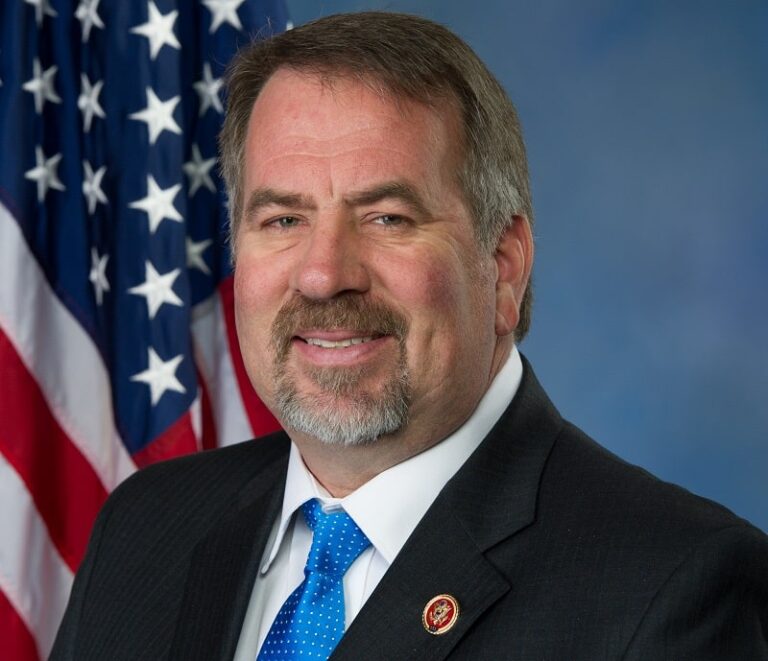
WASHINGTON, D.C. — California Republican Rep. Doug LaMalfa, a seven-term congressman and prominent advocate for rural America, died suddenly on January 6, 2026, at the age of 65. His death, confirmed by House GOP leadership, has sent shockwaves through Capitol Hill, narrowing the Republicans’ already razor-thin House majority to 218-213 and raising urgent questions about the political future of his Northern California district.
LaMalfa, a rice farmer and former state lawmaker, represented California’s 1st Congressional District since 2013. His passing marks the fourth death of a sitting House member during the 119th Congress, further destabilizing a chamber already grappling with internal divisions and a precarious balance of power.
A Legacy of Public Service and Controversy
Doug LaMalfa was born on July 2, 1960, in Oroville, California, and spent his life deeply rooted in the state’s agricultural community. A fourth-generation rice farmer, he inherited his family’s farm and became a vocal advocate for water rights, forestry management, and rural economic development. His political career began in the California State Assembly in 2002, followed by a brief tenure in the State Senate before his election to the U.S. House of Representatives in 2012.
Throughout his 13 years in Congress, LaMalfa served on the House Agriculture, Natural Resources, and Transportation Committees. He chaired the Congressional Western Caucus, a group dedicated to promoting conservative policies on land use, energy, and environmental regulation. His staunch support for former President Donald Trump—whom he backed “100% of the time,” according to Trump’s remarks on Tuesday—cemented his reputation as a loyalist within the GOP.
However, LaMalfa’s career was not without controversy. Critics frequently pointed to his receipt of over $1.7 million in agricultural subsidies for his family farm, which they argued presented a conflict of interest given his role on the Agriculture Committee. In 2023, he was the sole California Republican to vote in favor of an amendment to prohibit security assistance to Ukraine, a move that drew both praise from isolationist factions and condemnation from pro-Ukraine advocates.
Political Ramifications: A House Majority Hanging by a Thread
LaMalfa’s death comes at a critical juncture for House Republicans, who now hold just 218 seats compared to the Democrats’ 213. The loss of his seat—even temporarily—threatens to paralyze Speaker Mike Johnson’s (R-La.) ability to pass partisan legislation, as he can afford to lose only two GOP votes on any given bill. The situation is further complicated by the recent resignation of Rep. Marjorie Taylor Greene (R-Ga.), which reduced the GOP’s majority to a single seat.
Under California law, Governor Gavin Newsom (D) will call a special election to fill LaMalfa’s vacancy. Political analysts suggest the timing of this election could be strategically aligned with the state’s regularly scheduled primary in June 2026, potentially saving costs but also influencing voter turnout. The district, which was redrawn in 2024 to favor Democrats, presents a challenging battleground for Republicans. In the 2024 presidential election, the district voted for Trump by a 25-point margin, but recent demographic shifts and redistricting have made it more competitive.
“This is a seismic event for the House GOP,” said Kyle Kondik, managing editor of Sabato’s Crystal Ball at the University of Virginia. “Losing LaMalfa not only removes a reliable conservative vote but also forces Republicans to defend a seat in increasingly hostile territory. If Democrats flip this district in the special election, it could spell disaster for Johnson’s speakership.”
Key Political and Procedural Implications
- Special Election Timeline: Governor Newsom has 14 days to call a special election, which must be held within 120–180 days. Given the district’s new Democratic lean, both parties are expected to pour resources into the race, making it one of the most closely watched contests of 2026.
- House Majority Dynamics: With a 218-213 split, Republicans can no longer afford defections on party-line votes. This places immense pressure on Johnson to maintain unity, particularly among the GOP’s far-right faction, which has repeatedly bucked leadership.
- Policy Gridlock: The loss of LaMalfa’s vote could stall Republican priorities, including spending bills, immigration reform, and investigations into the Biden administration. Democrats, emboldened by the shifting balance, may push for bipartisan compromises or force votes on contentious issues.
- Redistricting Fallout: LaMalfa’s district was one of several redrawn under California’s Proposition 50, which aimed to reduce partisan gerrymandering. His death tests whether these new boundaries will hold or if legal challenges could emerge.
- Trump’s Influence: As a Trump ally, LaMalfa’s absence may weaken the former president’s sway in the House, particularly on issues like Ukraine aid, farm policy, and election integrity, where LaMalfa was a vocal supporter.
Reactions from Capitol Hill and Beyond
News of LaMalfa’s death prompted an outpouring of tributes from colleagues on both sides of the aisle. House Majority Whip Tom Emmer (R-Minn.) called LaMalfa “a loving father and husband, and staunch advocate for his constituents and rural America,” while former House Speaker Kevin McCarthy (R-Calif.), who roomed with LaMalfa in the state legislature, described him as “a fantastic person” and a “true friend.”
President Trump, speaking at a House GOP conference on Tuesday, praised LaMalfa’s loyalty: “He was a fantastic person. He voted with me 100% of the time.” Democratic leaders, including House Minority Leader Hakeem Jeffries (D-N.Y.), offered condolences to LaMalfa’s family and acknowledged his dedication to public service, despite ideological differences.
In California, local officials and agricultural groups mourned the loss of a champion for the state’s farming communities. “Doug understood the struggles of rural America like few others,” said Jamie Johansson, president of the California Farm Bureau. “His voice on water policy and forest management will be sorely missed.”
Notable Tributes and Statements
- Rep. Tom Emmer (R-Minn.): “Jacquie and I are devastated about the sudden loss of our friend, Congressman Doug LaMalfa. Doug was a loving father and husband, and staunch advocate for his constituents and rural America. Our prayers are with Doug’s wife, Jill, and their children.”
- Former Speaker Kevin McCarthy (R-Calif.): “I am devastated. Doug was more than a colleague; he was a true friend. We served together in Sacramento and Washington, and his passion for California’s farmers and rural communities was unmatched.”
- President Donald Trump: “He was a fantastic person. He voted with me 100% of the time. A great loss for the Republican Party and for America.”
- House Minority Leader Hakeem Jeffries (D-N.Y.): “On behalf of House Democrats, I extend our deepest condolences to the family and loved ones of Congressman Doug LaMalfa. While we often disagreed on policy, his commitment to his district was evident.”
- California Farm Bureau President Jamie Johansson: “Doug’s leadership on agricultural issues was invaluable. He fought tirelessly for water rights and sensible environmental policies that balanced the needs of farmers and conservation.”
The Road Ahead: Special Election and District Dynamics
LaMalfa’s district, which stretches from Redding to the northern outskirts of Sacramento, is a microcosm of California’s political diversity. Historically a Republican stronghold, the redrawn boundaries have introduced more urban and suburban voters, creating an opportunity for Democrats to compete. In 2024, the district’s voter registration was 38% Republican, 36% Democratic, and 22% unaffiliated, according to the California Secretary of State.
Potential candidates for the special election include:
- Republican Contenders: State Senator Brian Dahle, who ran against Newsom in the 2021 recall election, and Assemblyman James Gallagher, a rising star in the state GOP, are considered front-runners. Both have strong ties to the district’s agricultural community.
- Democratic Challengers: Former state Senator Jim Nielsen, who switched parties in 2025, and Chico Mayor Andrew Coolidge, a progressive favorite, are rumored to be considering bids. Their campaigns would likely focus on healthcare, climate change, and infrastructure.
Analysts predict the race will hinge on turnout and national political trends. “If the special election coincides with the June primary, we could see higher Democratic engagement, especially if there’s a contentious presidential primary still ongoing,” said Paul Mitchell, a California-based political data expert. “But if it’s held separately, Republicans might have the edge due to their stronger ground game in rural areas.”
Key Issues Likely to Dominate the Campaign
- Water Rights and Agriculture: LaMalfa was a fierce advocate for increasing water allocations to farmers, a stance that resonated deeply in his district. His successor will need to address ongoing drought conditions and federal water policies.
- Healthcare Access: Rural healthcare shortages have been a persistent issue in Northern California. Candidates will likely propose solutions ranging from expanding telemedicine to increasing funding for rural hospitals.
- Forest Management and Wildfires: With wildfires ravaging the region in recent years, forestry policy—including logging regulations and fire prevention funding—will be a major topic.
- Immigration and Border Security: LaMalfa supported strict immigration policies, a position that may appeal to his base but could alienate the district’s growing Latino population.
- Economic Development: Revitalizing the local economy, particularly in the wake of pandemic-related setbacks, will be a priority for all candidates.
Conclusion: A Pivotal Moment for Congress and California
The sudden death of Rep. Doug LaMalfa has created a political earthquake in Washington and California. His absence leaves a void in the House GOP’s ranks, complicates Speaker Johnson’s already tenuous grip on power, and sets the stage for a high-stakes special election that could reshape the balance of Congress. For Northern California, the loss of a dedicated advocate for rural issues underscores the challenges facing agricultural communities in an era of climate change and partisan polarization.
As both parties prepare for the battle to succeed LaMalfa, his legacy as a champion of farmers, a Trump ally, and a polarizing figure in California politics will loom large. The outcome of the special election will not only determine the future of his district but could also signal broader trends in the 2026 midterms, where control of the House—and the direction of the nation—hangs in the balance.

Full-stack developer at Scylla Technologies (USA), working remotely from Bangladesh. Adobe Certified Magento Developer.