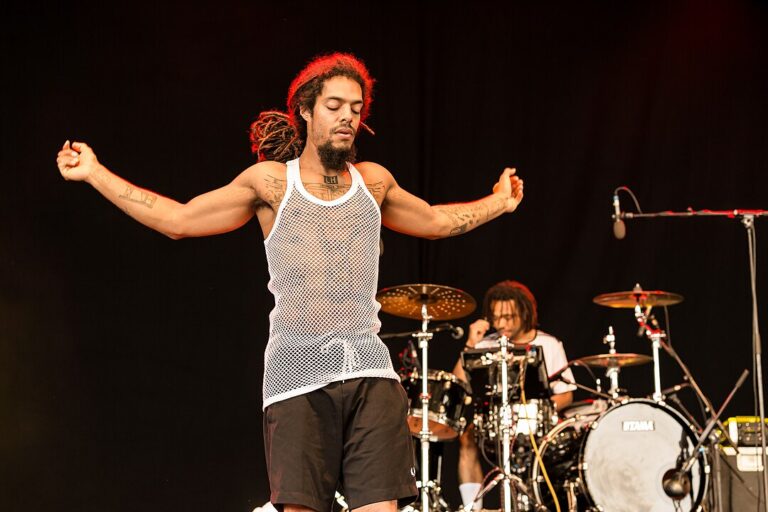
The British punk-rap duo Bob Vylan has become the center of an international controversy following their performance at the Glastonbury Festival on June 28, 2025. The United States State Department revoked the band’s visas, United Talent Agency terminated their representation, and UK police launched a criminal investigation after frontman Bobby Vylan led crowds in chants against the Israeli Defense Forces during the festival’s live broadcast. The incident has sparked heated debates about freedom of expression, hate speech, and the boundaries of political activism in music.
The controversy erupted when Bobby Vylan, whose real name is Pascal Robinson-Foster, led thousands of festival-goers in chanting “death, death to the IDF” while performing on the West Holts Stage. The performance was broadcast live on BBC iPlayer, reaching millions of viewers across the United Kingdom and internationally. The duo also encouraged the crowd to chant “free, free Palestine” and used the phrase “from the river to the sea, Palestine must be, will be, inshallah, will be free.” Multiple attendees waved Palestinian flags during the performance, creating a politically charged atmosphere that would soon reverberate across government offices and entertainment industry boardrooms.
Immediate Government and Industry Response
The response from authorities and industry leaders was swift and unequivocal. US Deputy Secretary of State Christopher Landau announced on social media platform X that the State Department had revoked visas for all members of Bob Vylan. Landau stated that the decision was made in light of their hateful tirade at Glastonbury, including leading the crowd in death chants. He emphasized that foreigners who glorify violence and hatred are not welcome visitors to the United States, signaling a hardline stance from the Trump administration on what it characterizes as antisemitic rhetoric.
United Talent Agency moved quickly to distance itself from the controversy. The Beverly Hills-based talent agency dropped Bob Vylan as clients following urgent discussions among senior executives over the weekend. The band’s profile was removed from UTA’s official website, though the agency declined to provide an official comment on the decision. Industry sources confirmed that the move was made decisively after executives reviewed footage of the Glastonbury performance and assessed the potential reputational risks.
UK Prime Minister Keir Starmer condemned the chants as appalling hate speech, demanding explanations from the BBC about how such content was allowed to be broadcast. British police in Avon and Somerset confirmed they are reviewing video footage from the performance to determine whether any criminal offenses were committed under public order or hate crime legislation. The investigation treats the incident as a public order matter, with authorities examining whether the chants constitute incitement to violence under UK law.
BBC and Glastonbury Festival Respond to Backlash
The BBC faced intense criticism for broadcasting the performance live without intervention. The corporation issued a statement expressing regret for not pulling the livestream during Bobby Vylan’s controversial remarks. BBC officials acknowledged that with hindsight, they should have cut away from the performance as it was happening. The broadcaster stated that the antisemitic sentiments expressed by Bob Vylan were utterly unacceptable and have no place on BBC airwaves, while emphasizing their commitment to standing firmly against incitement to violence.
Broadcasting regulator Ofcom received at least 150 formal complaints about the incident and stated it was very concerned about the live broadcast. The BBC removed Bob Vylan’s complete performance from iPlayer and announced it would not be made available on any of their platforms. The corporation’s editorial guidelines typically allow for warnings to be displayed during controversial content, but officials determined that the nature of the chants warranted complete removal rather than contextual framing.
Glastonbury Festival organizers, including co-organizer Emily Eavis, expressed being appalled by the duo’s statements. An Instagram statement from festival leadership clarified that Glastonbury does not endorse all personal views expressed by performing artists and emphasized that the chants crossed a line. The statement declared there is no place at Glastonbury for antisemitism, hate speech, or incitement to violence, prompting the organization to urgently remind everyone involved in festival production about these standards. The Israeli Embassy in the UK described the rhetoric as inflammatory and hateful, stating they were deeply disturbed by what transpired on the festival stage.
Bob Vylan’s Background and Musical Identity
Bob Vylan emerged from the underground London music scene in 2017 as a provocative duo combining punk rock, grime, hip-hop, and reggae influences. The group consists of vocalist and guitarist Bobby Vylan and drummer Bobbie Vylan, both of whom use stage names to maintain privacy in what they describe as a surveillance-heavy society. Bobby Vylan, born Pascal Robinson-Foster around 1991, grew up between Ipswich and London’s Stepney Green area, immersed in UK grime and punk subcultures that would profoundly shape his artistic voice.
Before forming Bob Vylan, Robinson-Foster established himself as a performance poet under the name Nee Hi and was part of a grime collective called Ear 2 da Street. He began experimenting with music production using PlayStation’s Music 2000 as a teenager, fostering a lifelong passion for genre fusion. The duo’s formation came after Bobby and Bobbie met in a London bar and quickly recognized their shared vision for confrontational, socially conscious music. They debuted just two weeks after their initial meeting, embracing a fiercely independent DIY approach through their own label, Ghost Theatre.
The band’s lyrics consistently address systemic racism, police brutality, economic inequality, and right-wing politics, particularly focusing on issues faced by Black men in Europe. Bobby Vylan has spoken openly about using music to promote positive self-image and process trauma related to racism and identity. He maintains a daily practice of reciting affirmations about Black identity with his daughter, viewing this as essential to building resilience in the face of discrimination. The duo’s refusal to compromise extends to their lifestyle choices, including following a vegan diet and abstaining from alcohol and smoking, which they view as necessary for maintaining the health and energy required for activism.
Musical Career and Critical Recognition
Bob Vylan’s independent approach initially led to industry rejection, with their debut album being deemed too extreme by major labels. The duo responded by self-releasing their first album, We Live Here, on June 5, 2020, personally delivering copies to record stores and booking their own shows. The album addressed police violence and racism with unflinching directness, establishing the band’s reputation for uncompromising political commentary. Their DIY ethos and raw energy quickly built a cult following in the underground punk and grime scenes.
The band’s breakthrough came with their second studio album, Bob Vylan Presents the Price of Life, released on April 22, 2022. The album entered the UK Albums Chart at number 18 and simultaneously topped the Official Vinyl Albums Chart, making them the first independent band to land a self-released album in the UK Top 20. This commercial success was accompanied by significant critical acclaim, with the album winning Best Album at the Kerrang Awards and earning the duo the inaugural Best Alternative Music Act award at the MOBO Awards in 2022. The MOBO recognition was particularly meaningful, as it represented the first time alternative music had been specifically recognized at the ceremony.
Their discography has expanded to include four studio albums, with their most recent release, Humble as the Sun, arriving on April 5, 2024. The album received a Metacritic score of 82 out of 100, with critics praising the duo’s ability to blend punk fury with hip-hop sensibility while maintaining thematic boldness. Bob Vylan has supported major acts including The Offspring, Biffy Clyro, and The Hives, performing at prominent festivals such as Reading and Leeds. Their live performances are known for confrontational stage presence and intense energy, with the band frequently using shows as platforms for political messaging.
History of Controversial Statements and Activism
The Glastonbury controversy is far from Bob Vylan’s first brush with controversy over political statements in their music and performances. The band has built their identity around provocative lyrics that deliberately challenge authority and social norms. Their 2021 single England’s Ending and 2019 single Lynch Your Leaders contained explicit calls for violence against the British monarchy, with one song including the lyrics kill the fucking queen and another declaring burn Britannia, kill the queen. The artwork for Lynch Your Leaders featured an image of Queen Elizabeth II alongside a noose, leaving little ambiguity about the song’s message.
At a music festival in Blackpool in 2023, Bobby Vylan told crowds that the only good pig is a dead pig, referring to police officers. The band’s 2021 album We Live Here features extensive content focused on Bobby Vylan’s personal experiences with racism, police interactions, and xenophobia in the United Kingdom. An article in the academic journal Recherches anglaises et nord-américaines described the band as treading the fine line between insight and incitement, acknowledging both the social commentary value of their work and the potential for their rhetoric to inspire violence.
Bob Vylan has been outspoken in their support for Palestine for years before the Glastonbury incident. In a 2024 interview with The Guardian, Bobby Vylan revealed he attended his first pro-Palestine protest at age 15, establishing a long-standing commitment to the cause. The duo criticized fellow punk bands Idles and Sleaford Mods at a November 2023 show in Dublin, alleging that both groups called themselves left-wing but refused to speak up for Palestinians. This pattern of using performances as platforms for Palestinian advocacy culminated in the Glastonbury chants that would ultimately cost them their US tour.
Impact on Planned US Tour and Future Performances
The visa revocations have effectively canceled Bob Vylan’s planned 16-date North American tour, which was scheduled to begin on October 24, 2025, in Spokane, Washington. The duo was set to support Canadian-American artist grandson on his Inertia Tour, performing in major cities including Seattle, San Francisco, Chicago, New York, Philadelphia, Washington DC, Atlanta, Dallas, San Diego, and Los Angeles. The tour represented a significant opportunity for Bob Vylan to expand their international audience and establish a foothold in the American alternative music market.
Beyond the canceled US dates, Bob Vylan’s European and UK performance schedule faces uncertainty. The band is scheduled to perform at Paradiso in Amsterdam on September 12, 2025, supporting Gogol Bordello. A spokesperson for Paradiso confirmed they are discussing internally whether the Glastonbury statements will have consequences for the performance. RADAR Festival in Manchester and Boardmasters in Newquay, Cornwall are also under pressure to clarify whether Bob Vylan will be allowed to perform at their events in the coming weeks.
Venues across Europe are reportedly holding urgent discussions about whether to proceed with scheduled Bob Vylan appearances. The controversy has created a dilemma for festival organizers and venue operators who must balance artistic freedom with concerns about potential backlash, security risks, and accusations of platforming hate speech. Some venues may face pressure from sponsors, local governments, or advocacy groups to cancel performances, while others may view such cancellations as censorship that violates principles of free expression in artistic contexts.
Band’s Response and Defiant Stance
Bobby Vylan addressed the controversy directly through Instagram posts that demonstrated no willingness to apologize or moderate his position. In one post captioned “I said what I said,” he acknowledged receiving an overwhelming volume of messages expressing both support and hatred. Rather than backing down, Vylan framed his actions as setting an example for younger generations about speaking up for change. He wrote that teaching children to voice their demands for change is the only way to make the world better, comparing his daughter’s willingness to critique her school dinners to his own willingness to challenge foreign policy.
In subsequent statements, Bobby Vylan dismissed criticism by stating that many people would prefer to believe a punk band is the number one threat to world peace rather than addressing actual systemic violence. He clarified that Bob Vylan advocates for the dismantling of what he characterized as a violent military machine, referring to the Israeli military’s operations in Gaza. The band’s position is that criticism of Israeli military actions and support for Palestinian statehood should not be conflated with antisemitism or hatred of Jewish people more broadly.
Vylan also posted Instagram stories during the controversy, including one showing himself eating vegan ice cream with the caption noting that while Zionists are crying on social media, he was enjoying his evening. This defiant tone extended to statements about the band’s previous employment experiences, with Bobby Vylan recounting working for a record label boss who strongly supported Israel and whose name appeared on a list of music industry executives who privately lobbied for Irish rap group Kneecap to be removed from Glastonbury’s lineup. These statements suggest the band views the backlash as part of a broader pattern of industry suppression of pro-Palestinian voices.
Broader Context of Israel-Palestine Activism in Music
Bob Vylan’s controversy must be understood within the broader context of increased Israel-Palestine activism at major music festivals during 2025. Irish-language hip-hop trio Kneecap also performed at Glastonbury 2025, appearing immediately after Bob Vylan and joining in pro-Palestinian chants including Free Palestine and Free Mo Chara. The latter reference was to group member Liam Óg Ó hAnnaidh, who performs as Mo Chara and faces terrorism charges in the UK for allegedly displaying a Hezbollah flag during a London concert in November 2024. Kneecap has denied the charges, with Ó hAnnaidh currently out on unconditional bail pending a court hearing.
Before Glastonbury, UK Prime Minister Keir Starmer stated it was not appropriate for Kneecap to perform at the festival given the pending charges against one member. Despite this pressure, Glastonbury organizers allowed the performance to proceed, though the BBC decided not to broadcast Kneecap’s set live and later added edited footage to iPlayer. During their performance, Kneecap’s Mo Chara told crowds that recent events had been stressful but that it was nothing compared to what the Palestinian people are going through, drawing explicit connections between their own legal troubles and the broader Palestinian struggle.
Several other acts at Glastonbury 2025 made statements supporting Palestine and criticizing Israel during their sets, including Irish artists CMAT and Inhaler. This pattern indicates a growing willingness among musicians, particularly from Ireland and the UK, to use major festival platforms for explicit political advocacy on the Israel-Palestine issue. The Glastonbury incident follows similar controversy at Coachella in April 2025, when Kneecap posted “Fuck Israel, Free Palestine” on stage, drawing criticism from Jewish music executives and advocacy groups but also demonstrating that such activism has become increasingly common at international festivals.
Legal and Policy Implications
The Trump administration’s decision to revoke Bob Vylan’s visas reflects aggressive visa restriction and revocation policies targeting alleged support of terrorism and antisemitism. In April 2025, immigration officials announced they would screen visa applicants’ social media accounts for antisemitic content, establishing new standards for who may enter the United States. Leo Terrell, who chairs the Justice Department’s task force to combat antisemitism, publicly praised the State Department for moving quickly on the Bob Vylan case, stating that the Trump Administration will not allow antisemitism to exist in the country.
Republican politicians including Senator Ted Cruz of Texas and Representative Randy Fine of Florida publicly advocated for denying Bob Vylan entry to the United States. Cruz reposted video of the Glastonbury incident with commentary describing it as truly sick and claiming it represents the base of the Democratic Party, attempting to score political points from the controversy. The advocacy group StopAntisemitism flagged Bob Vylan’s scheduled US performances and called for visa denial or rescission, with Fine responding “On it” to indicate he would pursue governmental action. This coordination between advocacy groups and elected officials demonstrates how the issue has become politicized beyond questions of artistic expression.
The UK criminal investigation raises questions about the boundaries of free speech and political expression under British law. Avon and Somerset Police are reviewing whether the chants constitute offenses under public order or hate crime legislation. The investigation must balance recognition of political speech protections against potential incitement to violence considerations. Legal experts note that UK hate speech laws are more restrictive than US First Amendment protections, but successful prosecution would require demonstrating that the chants were likely to incite immediate unlawful action rather than merely expressing controversial political views. The outcome of this investigation could set precedents for how political statements at concerts and festivals are policed in the future.
Industry Impact and Artist Solidarity
The decision by United Talent Agency to drop Bob Vylan reflects broader tensions in the entertainment industry regarding Israel-Palestine activism. UTA previously dropped actor Susan Sarandon after she spoke at a pro-Palestine rally in November 2023, establishing a pattern of the agency declining to represent clients who make controversial statements on this issue. The swift nature of UTA’s decision suggests significant concern about reputational risk and potential loss of other clients or business relationships that might result from continued association with Bob Vylan.
The controversy has divided opinion within the music industry. Some artists and industry figures have expressed support for Bob Vylan’s right to political expression, arguing that punishing musicians for taking stands on human rights issues sets a dangerous precedent for artistic freedom. Others have condemned the specific language used by the band, particularly the death chant, as crossing a line from political criticism into dangerous rhetoric that could inspire violence. This division reflects broader societal splits about how to discuss the Israel-Palestine conflict and what constitutes legitimate criticism versus antisemitic hate speech.
The financial implications for Bob Vylan are substantial. The canceled North American tour represents significant lost revenue from ticket sales, merchandise, and potential growth in their US audience. The loss of their talent agency means the band must now handle booking and business affairs independently or find new representation willing to work with them despite the controversy. However, the publicity surrounding the incident may also increase their profile among audiences who share their political views, potentially expanding their fanbase even as it closes certain doors in the mainstream industry.
Public Discourse and Social Media Reaction
Social media reaction to the Bob Vylan controversy has been intensely polarized, reflecting broader divisions over the Israel-Palestine conflict. Supporters of the band argue that death to the IDF refers specifically to opposition to military actions in Gaza rather than hatred of Israeli people generally, and that conflating anti-military sentiment with antisemitism is deliberately misleading. They point to the United Nations and various human rights organizations describing Israel’s actions in Gaza as potential genocide, arguing that strong language is justified in response to what they view as mass atrocities.
Critics counter that chanting for death to any group, even a military force, constitutes incitement to violence and crosses the line from political protest to hate speech. They argue that the phrase from the river to the sea has been used by groups calling for the elimination of Israel as a state, making its use inherently threatening to Jewish people. Jewish advocacy groups and some political leaders characterize the Glastonbury chants as antisemitic not because they criticize Israeli policy but because they allegedly call for violence against Jews and deny Israel’s right to exist.
The controversy has reignited debates about cancel culture, free speech, and the boundaries of acceptable political discourse. Some commentators view the visa revocation and agency dropping as appropriate consequences for dangerous rhetoric, while others see these actions as disproportionate punishment that will have chilling effects on political expression in music. The incident has become a flashpoint in broader culture war battles, with each side using Bob Vylan’s case to illustrate their concerns about either the rise of antisemitism or the suppression of Palestinian advocacy.
Conclusion
The Bob Vylan Glastonbury controversy represents a collision of artistic expression, political activism, and institutional gatekeeping that will likely have lasting implications for how politically charged performances are handled in the future. The swift and coordinated response from the US government, United Talent Agency, the BBC, and UK law enforcement demonstrates the power of institutions to impose consequences on artists who cross perceived boundaries in their political advocacy. The revocation of US visas effectively ends Bob Vylan’s planned American tour and signals that the Trump administration views certain forms of pro-Palestinian activism as grounds for excluding foreign nationals from entering the country.
For Bob Vylan, the controversy has simultaneously closed and opened doors. The loss of their talent agency representation and ability to perform in the United States represents significant professional setbacks that will impact their career trajectory and earning potential. The criminal investigation in the UK adds legal uncertainty that could result in prosecution and further restrictions on their activities. However, the international attention has also elevated their profile and solidified their reputation as uncompromising political activists willing to sacrifice commercial success for ideological principles. Their defiant response suggests they view these consequences as validation rather than deterrent, believing their message matters more than industry acceptance.
The incident raises fundamental questions about where lines should be drawn between legitimate political expression and dangerous incitement in artistic contexts. As Israel-Palestine activism becomes increasingly prominent at major music festivals and concerts, venues, broadcasters, and government agencies will continue grappling with how to balance artistic freedom against concerns about hate speech and public safety. The Bob Vylan case will likely be cited by both sides of this debate as evidence for their respective positions, with no consensus emerging about whether the responses were appropriate or represented overreach that threatens free expression in music and cultural spaces.

Full-stack developer at Scylla Technologies (USA), working remotely from Bangladesh. Adobe Certified Magento Developer.