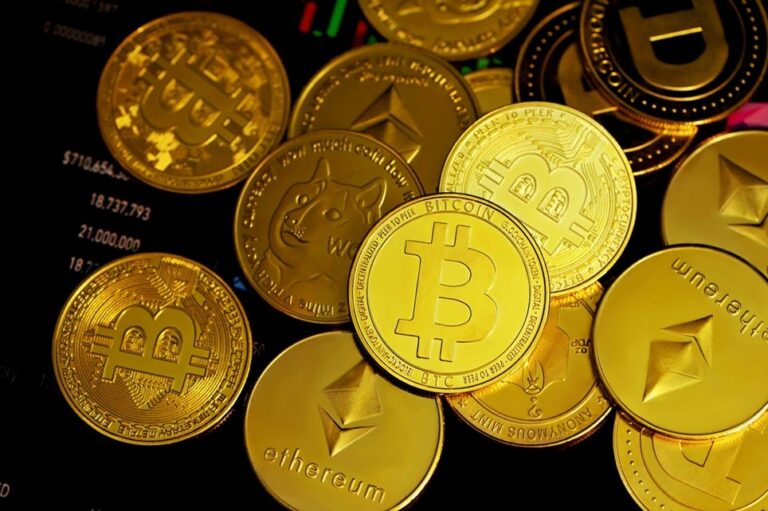
Bitcoin (BTC) is the world’s first decentralized cryptocurrency, a digital asset launched in 2009 that operates without a central bank or government authority. Created by the pseudonymous developer Satoshi Nakamoto, Bitcoin introduced blockchain technology as a way to record transactions transparently and securely across a distributed network. As of 2026, BTC remains the largest cryptocurrency by market capitalization and continues to influence global finance, monetary policy debates, and digital asset innovation.
Over the past decade, Bitcoin has evolved from an obscure cryptography experiment into a mainstream financial instrument. Institutional investors, publicly traded companies, and even governments have engaged with Bitcoin in various capacities. From exchange-traded funds to corporate treasury allocations, BTC now plays a measurable role in capital markets.
Understanding Bitcoin requires more than simply tracking its price. It involves grasping its underlying technology, economic design, regulatory landscape, investment risks, and long-term implications for the global financial system. This comprehensive guide explains how Bitcoin works, why it has value, how it is regulated, and what investors should consider before entering the market.
What Is Bitcoin and Why Was It Created?
The Origin of Bitcoin
Bitcoin was introduced in a white paper titled “Bitcoin: A Peer-to-Peer Electronic Cash System” in October 2008. The paper proposed a digital currency that would allow online payments to be sent directly from one party to another without going through a financial institution. The first Bitcoin block, known as the Genesis Block, was mined in January 2009.
The system was designed in response to the global financial crisis of 2008. Embedded in the first block was a newspaper headline referencing bank bailouts, signaling dissatisfaction with centralized financial systems. Bitcoin’s core innovation was eliminating the need for trusted intermediaries.
Unlike traditional currencies issued by central banks, Bitcoin operates on a decentralized network of computers called nodes. These nodes collectively validate transactions and maintain the integrity of the ledger.
How Bitcoin Works
Blockchain Technology
Bitcoin runs on a blockchain, a distributed ledger that records every transaction ever made. Transactions are grouped into blocks, verified by network participants, and added to a chronological chain. Once recorded, entries cannot easily be altered, making the system tamper-resistant.
Each transaction is verified through cryptographic processes. Users control Bitcoin through private keys, which grant access to digital wallets. Losing a private key typically means losing access to the associated Bitcoin permanently.
Mining and Supply Mechanism
New Bitcoin is created through a process called mining. Miners use powerful computers to solve complex mathematical puzzles, validating transactions in the process. As compensation, they receive newly minted BTC and transaction fees.
Bitcoin has a fixed supply cap of 21 million coins. This scarcity is central to its value proposition. Approximately every four years, the network undergoes a halving, reducing the mining reward by 50%. This controlled supply issuance contrasts with fiat currencies, which central banks can expand.
Why Bitcoin Has Value
Bitcoin derives value from a combination of scarcity, network adoption, security, and perceived utility. While it does not produce cash flows like stocks or bonds, supporters argue that its decentralized design and predictable supply make it a hedge against inflation and currency debasement.
Several factors contribute to Bitcoin’s valuation:
- Fixed Supply: With only 21 million coins ever to exist, Bitcoin’s scarcity mirrors precious metals like gold. This limited issuance schedule attracts investors seeking protection from monetary expansion.
- Decentralization: No single authority controls Bitcoin. The distributed network reduces censorship risk and increases resilience compared to centralized financial systems.
- Global Accessibility: Anyone with internet access can send or receive Bitcoin without relying on traditional banking infrastructure. This feature is particularly relevant in regions with unstable currencies.
- Security Through Cryptography: The network’s proof-of-work consensus mechanism makes altering past transactions computationally impractical, enhancing trust in the system.
- Institutional Adoption: Asset managers, hedge funds, and corporations have added Bitcoin exposure to portfolios, reinforcing its legitimacy within financial markets.
- Market Liquidity: BTC trades 24/7 on global exchanges, providing continuous price discovery and deep liquidity compared to many alternative digital assets.
Bitcoin Price Volatility and Market Cycles
Bitcoin is known for significant price volatility. Historically, it has experienced multi-year bull markets followed by steep corrections. Price movements often correlate with macroeconomic conditions, liquidity cycles, regulatory developments, and investor sentiment.
Major catalysts influencing Bitcoin’s price include interest rate changes, institutional inflows, regulatory clarity, and technological upgrades. For example, increased regulatory approval of cryptocurrency exchange-traded products has historically boosted market confidence.
Despite dramatic drawdowns in past cycles, Bitcoin has consistently recovered to new highs over the long term. However, past performance does not guarantee future results, and volatility remains a defining characteristic of the asset class.
Regulatory Landscape in the United States and Globally
Regulation plays a crucial role in Bitcoin’s adoption and market stability. In the United States, oversight is shared among agencies including the Securities and Exchange Commission (SEC), the Commodity Futures Trading Commission (CFTC), and the Financial Crimes Enforcement Network (FinCEN).
Bitcoin is generally treated as a commodity rather than a security in the U.S., distinguishing it from many other digital tokens. This classification has implications for taxation, trading oversight, and compliance requirements.
Globally, regulatory approaches vary. Some countries have embraced Bitcoin with clear licensing frameworks for exchanges, while others have imposed restrictions. El Salvador notably adopted Bitcoin as legal tender in 2021, marking a historic milestone in national-level cryptocurrency integration.
How to Buy and Store Bitcoin
Buying BTC
Bitcoin can be purchased through cryptocurrency exchanges, brokerage platforms, and certain financial apps. Investors typically create an account, complete identity verification, deposit funds, and execute a market or limit order.
Spot Bitcoin exchange-traded products also allow investors to gain exposure without directly holding the asset. These products trade on regulated stock exchanges, offering traditional brokerage access.
Storage Options
After purchase, Bitcoin can be stored in various wallet types:
- Hot Wallets: Software-based wallets connected to the internet. They provide convenience but carry higher cybersecurity risk.
- Cold Wallets: Hardware devices that store private keys offline. These are considered more secure for long-term storage.
- Custodial Accounts: Exchanges or financial institutions hold the Bitcoin on behalf of users. While convenient, this introduces counterparty risk.
- Multi-Signature Wallets: Require multiple approvals for transactions, enhancing security for institutional or shared holdings.
- Paper Wallets: Physical printouts of private keys, though less common today due to usability risks.
Risks Associated With Bitcoin Investment
Bitcoin offers potential upside but carries significant risk. Investors must assess their risk tolerance and conduct thorough research before allocating capital.
- Market Volatility: BTC prices can fluctuate dramatically within short timeframes, exposing investors to rapid gains or losses.
- Regulatory Uncertainty: Shifting regulatory policies may impact exchange operations, taxation, or investor protections.
- Security Threats: Exchange hacks, phishing attacks, and private key loss can result in irreversible asset loss.
- Technological Risks: Although Bitcoin’s network is robust, unforeseen vulnerabilities could emerge.
- Macroeconomic Sensitivity: Liquidity tightening, rising interest rates, and risk-off market conditions often pressure cryptocurrency valuations.
- Environmental Concerns: Bitcoin mining consumes substantial electricity, prompting debates over sustainability and regulatory scrutiny.
Bitcoin’s Role in the Global Financial System
Digital Gold Narrative
Bitcoin is often compared to gold due to its scarcity and store-of-value characteristics. Some institutional investors refer to BTC as “digital gold,” arguing it provides portfolio diversification benefits.
Correlation studies have shown that Bitcoin’s relationship with equities and commodities fluctuates over time. In certain periods, it behaves like a risk asset; in others, it demonstrates relative independence.
Institutional and Corporate Adoption
Public companies have allocated portions of their treasury reserves to Bitcoin, citing inflation hedging strategies. Asset management firms have launched regulated investment products to meet client demand.
Additionally, financial infrastructure firms have integrated Bitcoin custody and payment capabilities, reflecting broader ecosystem maturation.
Environmental and Energy Considerations
Bitcoin mining’s energy consumption has drawn scrutiny from policymakers and environmental advocates. The proof-of-work mechanism requires significant computational power, leading to high electricity usage.
Industry participants argue that mining increasingly utilizes renewable energy sources and contributes to grid stabilization in some regions. Critics contend that energy intensity remains a structural concern requiring policy oversight.
Future Outlook for Bitcoin
Bitcoin’s future trajectory depends on technological development, regulatory clarity, macroeconomic conditions, and adoption trends. Continued institutional engagement may enhance market stability, while regulatory crackdowns could dampen growth.
Network upgrades, scaling solutions, and second-layer technologies aim to improve transaction efficiency and reduce fees. Meanwhile, global economic uncertainty continues to influence investor interest in alternative stores of value.
Conclusion
Bitcoin (BTC) represents a transformative innovation in digital finance, combining cryptographic security, decentralized governance, and programmed scarcity. Since its launch in 2009, it has evolved from a niche technological experiment into a globally recognized financial asset. While it offers potential benefits such as inflation hedging, diversification, and financial inclusion, it also carries substantial risks including volatility, regulatory uncertainty, and cybersecurity threats. Investors considering Bitcoin must evaluate its role within their broader portfolio strategy, understand its underlying technology, and remain aware of regulatory and macroeconomic developments shaping the digital asset landscape. As the cryptocurrency ecosystem matures, Bitcoin continues to serve as the benchmark against which all other digital assets are measured.