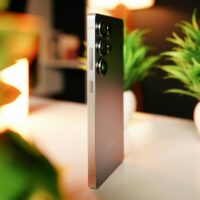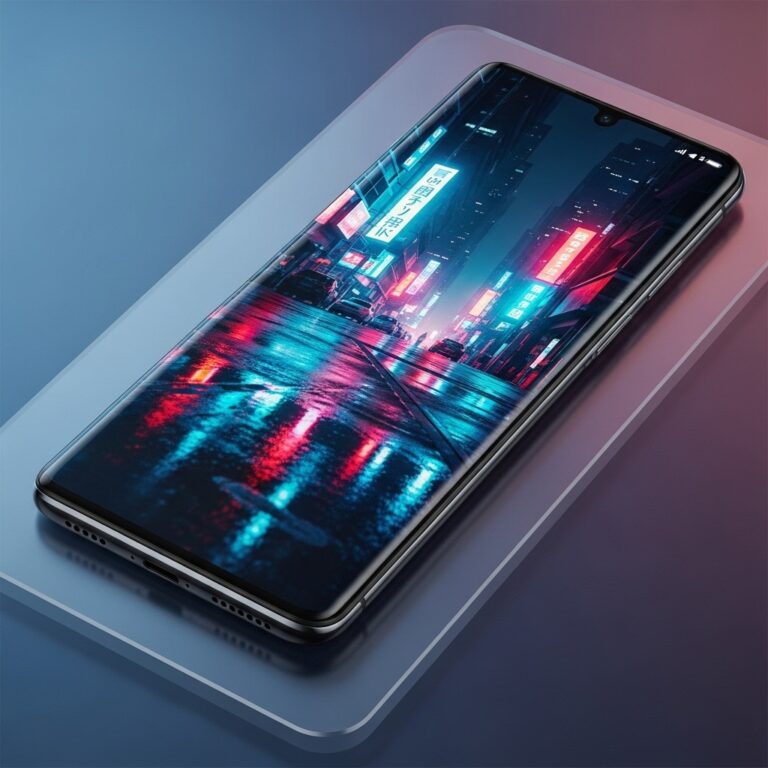
The smartphone landscape has undergone a radical transformation since the first commercial implementation of curved edge displays nearly a decade ago. What began as a bold experimental niche has matured into a hallmark of premium engineering, blending aesthetic elegance with ergonomic functionality. These displays, often referred to as “waterfall” or “infinite” screens, eliminate traditional side bezels to create an immersive viewing experience that makes hardware seem to disappear behind the content. For power users and design enthusiasts in the USA and Europe, the wraparound glass is not just about visual flair; it facilitates smoother gesture navigation and makes even the most substantial flagship devices feel remarkably slim in the palm of one’s hand.
As we move through 2026, the technology behind these panels has evolved to address early criticisms regarding durability and accidental touch inputs. Modern iterations utilize advanced palm-rejection algorithms and tougher glass compositions like Gorilla Armor to ensure that the curve remains a benefit rather than a liability. Whether you are a mobile gamer seeking edge-to-edge immersion or a professional who appreciates the sophisticated “infinity” look for productivity apps, the current market offers a diverse range of devices that push the boundaries of display physics. Selecting the right one requires looking beyond the glass to the underlying panel quality, refresh rates, and the ecosystem that supports such high-end hardware.
Choosing a phone with a curved display in today’s market involves balancing high-peak brightness with color accuracy and energy efficiency. Most leading manufacturers have moved toward LTPO OLED technology, which allows the screen to dynamically adjust its refresh rate, saving battery life without sacrificing the fluid motion that users expect from a premium device. This guide explores the absolute best smartphones currently available that feature these striking curved displays, providing a detailed look at their specifications, real-world performance, and the unique value they bring to the table for different types of users across the globe.
The Top Smartphones Featuring Curved Edge Displays
Samsung Galaxy S24 Ultra
The Samsung Galaxy S24 Ultra remains the gold standard for those who demand a sophisticated, subtle curve that prioritizes productivity and stylus integration. While Samsung has flattened the display significantly compared to previous generations, it retains a refined micro-curvature at the extreme edges to maintain the series’ iconic ergonomic feel. This device is the ultimate choice for power users who require the S Pen for precision tasks, as the slight edge taper ensures the phone fits comfortably in the hand during long note-taking sessions. Its current price is $1,299.99 as sourced from the official Samsung US website on March 3, 2026. The glass provides an incredibly immersive experience with industry-leading anti-reflective properties that make it readable even under direct midday sun, though some purists may find the reduced curve less “dramatic” than older models.
- 6.8-inch Dynamic AMOLED 2X Display
- Snapdragon 8 Gen 3 for Galaxy Chipset
- Integrated S Pen Stylus Support
- 200MP Main Camera System
- 5000mAh Battery with 45W Charging
Where to buy: Official Samsung Store, Amazon, Best Buy, and major telecommunication carriers.
Motorola Edge+ (2025 Edition)
Motorola has leaned heavily into the “Endless Edge” philosophy, offering one of the most aggressive and visually stunning curves currently available on the market. The Motorola Edge+ is designed specifically for users who want their phone to look like a seamless slab of glass where the display wraps nearly halfway around the sides of the chassis. This design choice makes the 165Hz refresh rate feel even faster as animations appear to flow over the sides of the device. It is currently priced at $799.99 on the Motorola official website as of March 3, 2026. While the dramatic curve is a visual triumph, users should be aware that finding compatible tempered glass screen protectors can be more challenging than for flatter devices, and the ultra-slim side rails offer less surface area for a traditional grip.
- 6.7-inch pOLED Endless Edge Display
- 165Hz Ultra-Smooth Refresh Rate
- Snapdragon 8 Gen 3 Processor
- 50MP Triple Camera Array
- 125W TurboPower Wired Charging
Where to buy: Motorola.com, Amazon, and select European retailers like MediaMarkt.
Xiaomi 14 Ultra
The Xiaomi 14 Ultra represents the pinnacle of mobile photography paired with a uniquely engineered “All-Around Liquid Display” that curves subtly on all four sides, not just the left and right. This quad-curved approach creates a symmetrical aesthetic that feels like a polished stone in the hand, making it a favorite for photography professionals who spend hours framing shots. The device is aimed at the ultra-premium market in Europe and Asia, currently retailing for approximately $1,499.00 (converted from EUR) on the official Xiaomi global portal as of March 3, 2026. The screen is incredibly bright and color-accurate, though the steep price point and limited official availability in the United States make it a specialized import or European-market choice for those seeking the best camera-screen synergy.
- 6.73-inch LTPO AMOLED C8 Display
- Leica Optical Lens System
- 1-inch Type Main Camera Sensor
- 90W Wired and 80W Wireless Charging
- Snapdragon 8 Gen 3 Mobile Platform
Where to buy: Xiaomi Official (Europe/UK), Mi Stores, and authorized international distributors.
OnePlus 12
OnePlus continues its tradition of offering high-end curved displays that emphasize speed and tactile feedback through its collaboration with BOE for the X1 Oriental Screen. The OnePlus 12 features a gracefully sloped edge that complements its “Flowy Emerald” design language, providing a comfortable transition between the glass and the metal frame. It is marketed toward enthusiasts who want flagship specs at a slightly more accessible price point, currently listed at $799.99 on the OnePlus US website as of March 3, 2026. The display is praised for its record-breaking peak brightness, making it a powerhouse for HDR content, although some users might find the OxygenOS software interface a bit different from the “stock” Android experience found on Pixel or Motorola devices.
- 6.82-inch ProXDR Display with LTPO
- 4500 Nits Peak Brightness
- Hasselblad Camera for Mobile
- 5400mAh Dual-Cell Battery
- 80W SUPERVOOC Fast Charging
Where to buy: OnePlus.com, Amazon, and Best Buy.
Google Pixel 8 Pro
While Google moved toward a flatter aesthetic with the Pixel 9 series, the Pixel 8 Pro remains a highly relevant choice for those who prefer the gentle “Actua” curved display that defined the brand’s premium look for years. The curve here is functional, designed to make the Android “back” gesture feel more natural under the thumb without the sharpness of a hard edge. The Pixel 8 Pro is currently available for $999.00 on the Google Store as of March 3, 2026. It is the ideal device for users who prioritize Google’s AI features and a clean software experience, though it lacks the extreme “waterfall” depth found on competitors like Motorola or Xiaomi, which might disappoint those looking for a more futuristic look.
- 6.7-inch Super Actua Display
- Google Tensor G3 Processor
- Pro Camera System with Telephoto
- 7 Years of Guaranteed OS Updates
- Titan M2 Security Coprocessor
Where to buy: Google Store, Amazon, and all major US carriers including Verizon and AT&T.
Honor Magic6 Pro
The Honor Magic6 Pro is a standout in the European market, featuring a “Symmetrical Quad-Curved” display that focuses heavily on eye comfort and flicker reduction. Honor has implemented industry-leading PWM dimming technology that makes this curved screen much easier on the eyes during late-night usage compared to many of its rivals. As of March 3, 2026, the device is priced at approximately $1,150.00 on the Honor official European store. The hardware feels incredibly dense and premium, though the software skin (MagicOS) is heavily customized and may require a learning curve for those coming from a more traditional Android or iOS environment.
- 6.8-inch LTPO Eye-Comfort Display
- 4320Hz Risk-Free PWM Dimming
- 180MP Periscope Telephoto Camera
- 5600mAh Silicon-Carbon Battery
- Honor NanoCrystal Shield Durability
Where to buy: Honor Global Store, Amazon UK/Germany, and HiHonor platforms.
Oppo Find X7 Ultra
Oppo’s flagship Find X7 Ultra pushes the boundaries of display tech with a panel that curves elegantly to meet a vegan leather back, creating one of the most luxurious hand-feels in the industry. This device is for the user who views their smartphone as a piece of high-end jewelry as much as a communication tool. The pricing is approximately $1,200.00 based on official regional listings as of March 3, 2026. While it offers one of the best curved-screen experiences globally, it is primarily available as an import for North American users, which may lead to compatibility issues with certain 5G bands or a lack of local warranty support.
- 6.82-inch QHD+ Ultra-Bright Display
- Dual Periscope Telephoto Cameras
- Hasselblad Master Image Quality
- Snapdragon 8 Gen 3 Processing Power
- 100W Flash Charge Support
Where to buy: Oppo Official (select regions) and international specialty importers like Giztop.
Sony Xperia 1 VI
Sony takes a different approach to the curved display, utilizing a 21:9 aspect ratio with slight micro-curves that emphasize a cinematic viewing experience. The Xperia 1 VI is the go-to choice for cinephiles and professional videographers who want a screen that matches the dimensions of major motion pictures. It currently retails for $1,399.99 on the Sony official site as of March 3, 2026. The screen is a technical marvel with 4K resolution capabilities, though the tall, narrow form factor and the “prosumer” camera interface may be intimidating for the average casual smartphone user.
- 6.5-inch 4K HDR OLED Display
- 21:9 CinemaWide Aspect Ratio
- Continuous Optical Zoom Telephoto
- 3.5mm Headphone Jack (Rare Flagship Feature)
- Alpha Camera Interface Integration
Where to buy: Sony.com, Amazon, and B&H Photo Video.
Vivo X100 Pro
The Vivo X100 Pro features a high-grade curved panel that is optimized for vibrant color reproduction and extreme brightness, making it an excellent companion for its Zeiss-branded camera system. This phone is perfect for travelers and creators who need a reliable, beautiful screen for editing photos on the go. Its pricing sits around $1,050.00 as of March 3, 2026. While the hardware is world-class, the FunTouch OS software used in international markets can sometimes feel cluttered compared to the more streamlined interfaces offered by Samsung or Google.
- 6.78-inch LTPO AMOLED Screen
- 3000 Nits Local Peak Brightness
- Zeiss APO Floating Telephoto Lens
- Dimensity 9300 High-Performance SoC
- 5400mAh BlueVolt Battery Tech
Where to buy: Vivo Global official site and authorized retailers in Europe and Asia.
Nokia G42 5G (Curved Edition)
For those looking for a curved edge experience on a tighter budget, the Nokia G42 5G offers a surprising amount of visual sophistication in the mid-range segment. While most curved screens are reserved for $1,000+ flagships, this device brings that premium aesthetic to a much wider audience. It is priced affordably at $299.00 on the Nokia/HMD official store as of March 3, 2026. Naturally, there are trade-offs in terms of processing power and camera quality compared to the Ultra-tier devices, but for a stylish daily driver that handles standard tasks with ease, it is a compelling value proposition.
- 6.56-inch HD+ Curved Display
- QuickFix Repairability Design
- 50MP Main Camera Sensor
- 3-Day Battery Life Claims
- Snapdragon 480+ 5G Connectivity
Where to buy: HMD.com, Amazon, and various European electronics retailers.
Pricing Comparison and Value Analysis
When analyzing the current market for curved display smartphones, there is a clear divide between the ultra-premium “pro” models and the emerging mid-range options. At the top of the spectrum, devices like the Samsung Galaxy S24 Ultra and Sony Xperia 1 VI command prices well above $1,200, justifying the cost through superior build materials, cutting-edge camera sensors, and long-term software support. These phones are investments intended to last four to five years, offering the highest resale value and the most refined curved glass integration available today.
The mid-to-high tier, occupied by the OnePlus 12 and Motorola Edge+, represents the “sweet spot” for many consumers. In the $800 price range, these manufacturers deliver nearly identical display technology to the ultra-flagships, often with even more aggressive and eye-catching curves. For instance, the Motorola Edge+ provides a more dramatic “waterfall” effect than the Samsung S24 Ultra for $500 less, though you may sacrifice some camera versatility and brand prestige. This segment is highly competitive and often features the best deals during seasonal promotions.
For those prioritizing pure value, the Nokia G42 5G and various older flagship models provide the curved aesthetic without the four-figure financial commitment. While these devices won’t win any benchmark battles, they prove that curved glass is no longer a luxury exclusive. When choosing based on price, it is vital to consider the total cost of ownership, including the likely higher cost of screen repairs for curved panels and the necessity of specialized protective cases that can sometimes cost more than standard flat-screen accessories.
How to Choose the Perfect Curved Edge Smartphone
The degree of the curve is the first and most significant factor to consider when shopping for these devices. Some users prefer a “micro-curve,” which offers the ergonomic benefits of a rounded edge without distorting the content at the periphery of the screen. Others want the full “waterfall” experience where the screen spills over the sides, creating a truly bezel-less look from the front. If you use your phone primarily for watching movies or gaming, a more aggressive curve provides a more immersive, 3D-like effect. However, if you do a lot of professional photo editing or spreadsheet work, a subtler curve is often better to avoid visual distortion of straight lines at the edges.
Durability and protection are equally critical when selecting a curved phone. Because the glass wraps around the sides, it is inherently more exposed to impacts than a screen protected by a traditional metal frame. You should look for devices that utilize the latest iterations of chemically strengthened glass, such as Gorilla Glass Victus 2 or proprietary alternatives. Additionally, investigate the availability of high-quality cases. A good case for a curved phone should have raised lips at the top and bottom to protect the screen when placed face-down, while still allowing enough room on the sides for gesture navigation and edge-swipe features.
Software optimization for the curve is what separates a great user experience from a frustrating one. The best curved-screen phones include robust palm-rejection software that prevents the meat of your hand from triggering accidental touches while you’re simply holding the device. Brands like Samsung and Motorola have spent years refining this, adding “edge panels” or “edge lights” that turn the curved area into a functional shortcut bar or notification ticker. Before committing to a purchase, it is worth researching how the specific manufacturer handles these software “edges” and whether they allow you to customize the sensitivity of the touch-active areas.
Display technology underlying the curve must also meet modern standards. Ensure the device features an LTPO OLED or AMOLED panel, which is essential for high refresh rates and vibrant contrast. Since curved screens can sometimes suffer from a “shadowing” effect at the steepest part of the bend, look for reviews that mention edge clarity and color consistency. A high peak brightness (measured in nits) is also vital, as the curved edges can catch more reflections from ambient light sources than a flat surface. A screen with at least 1500–2000 nits of peak brightness will ensure the display remains legible and the curves look crisp even in bright outdoor environments.
Finally, consider the regional availability and warranty support for your chosen device. In the USA and Europe, Samsung, Google, and Motorola offer the most comprehensive service networks. If you opt for an import-heavy brand like Xiaomi or Vivo to get a specific quad-curved design, you may face difficulties with local repairs or carrier compatibility. Check that the phone supports the necessary 5G bands for your specific provider and that you have a plan for insurance or repair should that beautiful, but fragile, curved glass ever meet a concrete sidewalk.
Current Market Prices and Deals
The market for curved display phones is currently seeing a significant shift as we head further into 2026. While launch prices for flagships remain high, retailers are offering aggressive trade-in incentives to encourage upgrades. Samsung currently offers up to $800 in trade-in credit for the S24 Ultra on their official portal, effectively bringing the price down to under $500 for those with a recent flagship to swap. This makes the ultra-premium curved experience far more accessible for loyal brand followers.
In the European market, bundled deals are currently the most popular promotion. Retailers like Amazon UK and Germany are frequently bundling the Honor Magic6 Pro and Xiaomi 14 Ultra with high-end smartwatches or noise-canceling earbuds at no additional cost. These bundles often represent a value of $200–$300, making the high initial investment more palatable. For the budget-conscious, the Motorola Edge+ frequently sees “flash sales” on the Motorola US site, with prices occasionally dipping to $699 during holiday weekends.
Refurbished and “Open Box” markets are also excellent places to find curved screen deals. Since these designs are highly prized for their looks, many enthusiasts upgrade annually, leaving a steady supply of mint-condition units from the previous year. Certified Refurbished programs from Apple and Samsung are reliable, but third-party sites like Back Market offer deep discounts on curved devices like the OnePlus 11 or Pixel 7 Pro, which still offer excellent display performance at a fraction of the cost of 2026 models.
Pro Tips for Curved Display Owners
To maximize the life of your curved display, always prioritize a “liquid adhesive” UV screen protector. Traditional “peel and stick” protectors often struggle to stay adhered to the deep curves of a waterfall screen and can peel at the corners after just a few weeks of use. UV-cured glass protectors like those from Whitestone Dome create a seamless bond across the entire surface of the glass, maintaining perfect touch sensitivity and providing the best possible impact protection for those vulnerable edges.
Take full advantage of edge-based software features to improve your efficiency. Most curved phones allow you to pull in a “tray” from the side of the screen where you can pin your most-used apps or contacts. On Samsung devices, this is known as Edge Panels, while Motorola calls it the Sidebar. Using these tools reduces the need to hunt through your app drawer and makes the most of the screen real estate that would otherwise just be for show. It turns the aesthetic curve into a genuine productivity tool.
Adjust your palm rejection sensitivity if you find yourself making accidental clicks while typing or taking photos. Most modern Android skins have a hidden or advanced setting under “Display” or “Accessibility” that allows you to define the “dead zone” on the edges of the screen. If you have larger hands or use a very thin case, increasing this dead zone can eliminate the frustration of the cursor jumping around or the camera shutter not firing because the phone thinks you are holding the edge of the glass.
Be mindful of the “glare factor” when choosing your wallpapers and themes. Curved edges tend to catch light from lamps or the sun more easily than flat screens. To minimize distracting reflections, try using darker wallpapers or enabling system-wide Dark Mode. This not only looks incredibly striking on an OLED panel—where the blacks are perfectly deep—but also helps the curved edges blend more naturally into the frame of the phone, making the “infinity” effect even more pronounced.
Clean your edges regularly with a microfiber cloth to prevent the buildup of oils and dust where the glass meets the frame. Because the transition is so seamless, a tiny amount of grit can eventually find its way into the microscopic gap, potentially causing scratches over time. A quick daily wipe keeps the glass looking pristine and ensures that gesture swipes remain smooth and friction-free. Avoid using harsh chemicals, as many modern screens have an oleophobic coating that can be stripped away by alcohol-based cleaners.
Frequently Asked Questions
Are curved screens more likely to crack than flat screens?
The structural geometry of a curved screen does make it slightly more vulnerable to corner and side impacts because the glass is more exposed. While modern glass like Gorilla Armor is incredibly tough, the lack of a protective metal bezel on the sides means that a drop onto a hard surface is more likely to result in a crack. However, using a high-quality case with raised top and bottom edges can mitigate the majority of this risk during daily use.
Do curved displays cause accidental touch issues?
Early curved phones were notorious for accidental touches, but modern devices have largely solved this through sophisticated palm-rejection algorithms. Manufacturers now use software to identify the difference between a deliberate swipe and a palm resting on the edge. Most users find that after a day or two of adjustment, accidental touches become a non-issue, and many flagship phones allow you to manually adjust the sensitivity of the edges in the settings menu.
Is it harder to find screen protectors for curved phones?
Yes, finding a perfect fit for a curved display is more challenging than for a flat one. Plastic film protectors can peel at the edges, and cheap tempered glass often only has adhesive on the borders, leading to a “rainbow effect” or reduced touch sensitivity. The best solution is a UV-cured liquid adhesive glass protector, which is more expensive and difficult to install but provides a much more durable and seamless result that mimics the original glass feel.
Do curved screens distort the image at the edges?
There is a minor amount of visual distortion or color shifting at the steepest part of the curve, often appearing as a slight shadow or a blueish tint on white backgrounds. This is a physical property of how light bends through the curved glass. For most content like video and gaming, this is barely noticeable and often adds to the immersion. However, for tasks requiring absolute geometric precision, such as professional photo editing, a flat screen might be preferable.
Can I still use a case with a curved edge phone?
Absolutely, and it is highly recommended. Case manufacturers have designed specific “low-profile” sides that allow you to still use the curved edges for gestures while providing significant protection for the corners and the back of the device. Look for brands that mention “edge-to-edge compatibility” to ensure that the case won’t push up the corners of your screen protector or interfere with the phone’s swipe-based navigation.
Are curved display phones more expensive to repair?
Repair costs for curved OLED panels are generally higher than for their flat counterparts. The manufacturing process for flexible OLEDs that can hold a permanent curve is more complex, and the parts themselves are more expensive. Because the glass is often fused to the display panel, a simple crack usually requires a full screen assembly replacement. It is often wise to invest in manufacturer-provided insurance, such as Samsung Care+ or AppleCare+, when purchasing a curved flagship.
Conclusion: The Future of the Infinite Edge
The decision to opt for a curved edge display is ultimately a choice between cutting-edge aesthetics and traditional pragmatism. For the modern user who values a device that feels like a piece of the future, the immersive, bezel-free look of a curved screen is unparalleled. These devices turn every video, game, and scroll through social media into a more engaging experience. While there are minor trade-offs in terms of durability and the complexity of screen protection, the engineering refinements seen in 2026 have made these “waterfall” displays more reliable and functional than ever before.
Whether you choose the productivity-focused micro-curve of the Samsung Galaxy S24 Ultra or the bold, artistic sweep of the Motorola Edge+, you are investing in the pinnacle of mobile display technology. The market has matured to the point where there is a curved option for every budget and use case, from high-end photography to everyday social media browsing. As long as you pair your device with the right protection and take advantage of the tailored software features, a curved screen remains one of the most satisfying ways to interact with the digital world.
As we look forward, the trend suggests that while some brands may return to flat panels for their entry-level models, the curved edge will remain the defining feature of the “Ultra” and “Pro” tiers. It is a symbol of premium status and technical achievement that continues to captivate consumers in the USA, Europe, and beyond. By choosing any of the top-tier models highlighted in this guide, you are ensuring that your smartphone experience is as beautiful as it is powerful, backed by the best hardware and software the industry currently has to offer.