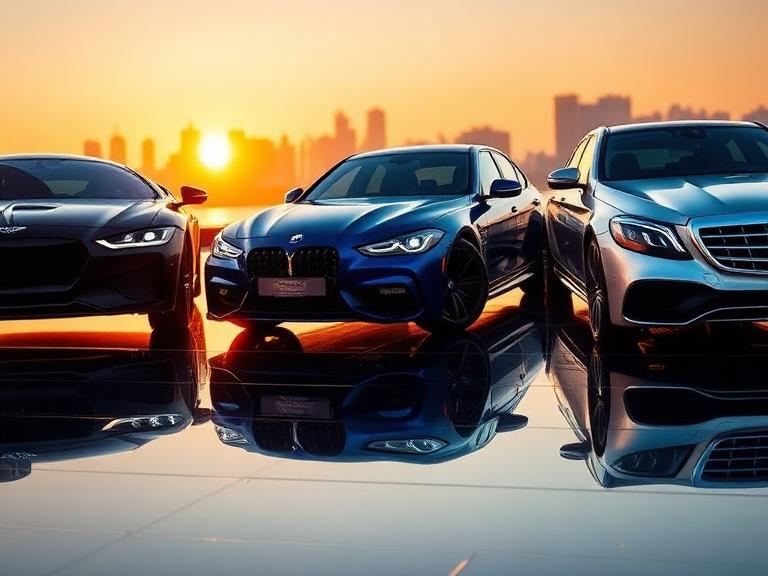
The luxury automotive market in 2026 has reached a pivotal junction where traditional craftsmanship meets radical technological innovation. As global markets transition toward electrification and autonomous driving, the definition of “luxury” is shifting from mere leather and wood to seamless digital integration, sustainable performance, and personalized AI experiences. This year’s rankings reflect a competitive landscape where legacy manufacturers are fighting to maintain dominance against agile newcomers who prioritize tech-first value propositions.
Expert evaluations for 2026 place a heavy emphasis on three core pillars: Reliability, Value Retention, and Safety. Brands that once relied solely on prestige are now being scrutinized for their long-term maintenance costs and software stability. From the silent power of flagship electric sedans to the rugged opulence of high-end SUVs, the 2026 fleet offers something for every discerning driver. Our comprehensive guide breaks down the top ten performers, providing the insights you need to navigate this high-stakes market.
1. Porsche
Porsche secures the top spot for 2026 by masterfully bridging the gap between visceral performance and daily usability. Whether it is the legendary 911 or the versatile Cayenne, Porsche continues to set the benchmark for driving dynamics. The 2026 Cayenne, in particular, has been lauded by experts for its agile handling and exquisite interior build quality, though its options list remains notoriously expensive. Porsche’s investment in E-fuels and high-performance electric platforms like the Taycan ensures they remain relevant in a green-conscious world without losing their “soul.”
Expert Rating: 9.4/10
- Pros: Unrivaled resale value (911 Coupe at 92.2%), best-in-class handling, massive customization options.
- Cons: High maintenance costs ($14,000+ over 10 years), standard features can be sparse on base trims.
- Key 2026 Models & Pricing:
- 911 Carrera: Starts at $120,100.
- Cayenne SUV: Starts in the low $90,000s.
- Taycan (EV): Starts at $110,000.
2. Lexus
Lexus remains the undisputed king of reliability and resale value in 2026. For buyers who prioritize peace of mind over raw lap times, Lexus is the gold standard. The Lexus IS 350 and LS 500 continue to lead their respective segments in quality ratings. The brand has successfully integrated hybrid technology across its entire lineup, offering some of the best fuel economy figures in the luxury sector. While some critics argue their designs are conservative, the market disagrees, as evidenced by their industry-leading resale percentages.
Expert Rating: 9.2/10
- Pros: Exceptional long-term reliability, low maintenance costs ($7,000-$9,000 over 10 years), stellar resale value (RX 350 at 67%).
- Cons: Infotainment systems can feel less “bleeding edge” than German rivals, performance is refined rather than aggressive.
- Key 2026 Models & Pricing:
- ES Sedan: Starts at $43,190.
- RX Hybrid: Starts at $53,475.
- LX 600: Starts at $107,950.
3. Genesis
Genesis has evolved from a value-alternative to a legitimate leader in luxury. In 2026, the GV70 and G80 are frequently ranked higher than their German counterparts for interior quality and standard tech. The 2026 GV70 3.5T Sport, featuring a stunning 27-inch OLED display, offers a “Bentley-lite” experience at a fraction of the cost. Genesis’ “concierge” service and 3-year free maintenance plan have disrupted the industry, forcing legacy brands to rethink their customer service models.
Expert Rating: 9.0/10
- Pros: Best value for money, industry-leading 10-year powertrain warranty, stunning modern interiors.
- Cons: Brand prestige still trailing legacy Europeans, limited dealer network in certain regions.
- Key 2026 Models & Pricing:
- G70: Starts at $44,845.
- GV70: Starts at $50,480.
- G90 Flagship: Starts at $94,195.
4. Mercedes-Benz
Mercedes-Benz continues to define the “Ultra-Luxury” experience through its S-Class and EQS lines. In 2026, the brand has doubled down on AI with the latest MBUX systems that learn driver preferences with uncanny accuracy. The GLC remains one of the highest-rated compact luxury SUVs, praised for its quiet cabin and smooth ride. While maintenance costs are high, the sheer “theater” of a Mercedes interior—with its ambient lighting and hyperscreens—remains unmatched for many buyers.
Expert Rating: 8.9/10
- Pros: Industry-leading interior tech, massive range of propulsion (ICE, Hybrid, EV), unmatched brand status.
- Cons: Complex electronics can lead to high repair bills ($16,000+ for S-Class maintenance over 10 years).
- Key 2026 Models & Pricing:
- C-Class: Starts at $50,800.
- GLC SUV: Starts at $49,550.
- S-Class: Starts at $118,450.
5. BMW
BMW holds steady in 2026 as the driver’s choice. The 3 Series remains the benchmark for compact luxury sedans, offering a blend of athleticism and upscale tech that rivals struggle to replicate. BMW’s iDrive 8.5 system is widely considered the best in the industry for ease of use. The brand has also seen success with its “Power of Choice” strategy, offering the same models in gasoline, hybrid, and electric (i4, i5, i7) configurations without compromising on cargo space or design.
Expert Rating: 8.8/10
- Pros: Engaging driving dynamics, snappy and intuitive infotainment, strong lease support.
- Cons: Stiff ride on run-flat tires, certain advanced safety features are tucked behind expensive packages.
- Key 2026 Models & Pricing:
- 3 Series: Starts at $48,850.
- X5 SUV: Starts at $68,500.
- i4 (Electric): Starts at $59,250.
6. Audi
Audi’s 2026 strategy is built on “Tech Minimalism.” The new A6 sedan and Q6 e-tron feature cabins that are clean, functional, and devoid of unnecessary clutter. Audi’s Quattro all-wheel-drive system remains the best for all-weather performance, and their lighting technology (OLED taillights) is years ahead of the competition. The 2026 A6 is noted for being “more engaging than a Mercedes and more comfortable than a BMW,” finding a perfect middle ground for the modern executive.
Expert Rating: 8.6/10
- Pros: Superior AWD performance, understated and elegant design, Virtual Cockpit is still a class-leader.
- Cons: Tighter trunk space compared to BMW, some models feel overly “digital” and clinical.
- Key 2026 Models & Pricing:
- A6 Sedan: Starts at $64,100.
- Q7 SUV: Starts at $61,200.
- e-tron GT: Starts at $108,000.
7. Bentley
Bentley is thriving in the “Super-Luxury” niche for 2026, especially with its Ultra Performance Hybrid powertrains. The Flying Spur and Continental GT now deliver over 770 horsepower while maintaining the ability to drive on pure electricity for city commutes. The craftsmanship—featuring 3D-diamond leather and rotating dashboard displays—is in a league of its own. Bentley has successfully modernized its image, attracting a younger generation of ultra-high-net-worth individuals.
Expert Rating: 8.5/10
- Pros: Unrivaled interior craftsmanship, massive torque from hybrid systems, immense road presence.
- Cons: Extreme depreciation in the first 3 years, heavy curb weights.
- Key 2026 Models & Pricing:
- Continental GT: Starts at $250,000.
- Bentayga SUV: Starts at $210,000.
- Flying Spur: Starts at $250,000.
8. Rolls-Royce
Rolls-Royce remains the pinnacle of automotive prestige. In 2026, the brand has embraced the electric era with the Spectre, which has been called the “finest motor car in the world.” For the traditionalist, the Cullinan SUV continues to dominate the ultra-luxury SUV space. Rolls-Royce isn’t about stats or speed; it is about “waftability”—the feeling of being detached from the road in a silent, leather-lined sanctuary.
Expert Rating: 8.4/10
- Pros: Infinite bespoke options, silent “Magic Carpet Ride,” the ultimate status symbol.
- Cons: Massive fuel consumption for V12 models (12 mpg city), entry price is out of reach for most.
- Key 2026 Models & Pricing:
- Ghost: Starts at $358,000.
- Cullinan: Starts at $410,000.
- Spectre (EV): Starts at $398,000.
9. Cadillac
Cadillac has made a massive comeback in 2026, driven by its V-Series performance cars and the all-electric IQ sub-brand. The 2026 Escalade IQ is a tech powerhouse, offering standard Super Cruise—the best hands-free driving system currently on the market. Cadillac is successfully repositioning itself as a tech-forward American alternative to the European establishment, combining massive scale with premium materials.
Expert Rating: 8.2/10
- Pros: Best-in-class autonomous driving (Super Cruise), bold design language, large interior spaces.
- Cons: Interior build quality can still be inconsistent compared to Lexus or Genesis.
- Key 2026 Models & Pricing:
- CT5 Sedan: Starts at $48,600.
- Lyriq (EV): Starts at $58,590.
- Escalade IQ: Starts at $132,795.
10. Land Rover
Land Rover rounds out the top ten with its Range Rover lineup, which remains the king of “anywhere luxury.” In 2026, the brand has introduced its first fully electric Range Rover, which is already commanding long waiting lists. Despite historical reliability concerns, the brand’s allure is irresistible for those who want a vehicle that can traverse a desert and look perfect at a red-carpet event. The new Autobiography trims offer levels of luxury that rival Bentley and Rolls-Royce.
Expert Rating: 8.0/10
- Pros: Iconic styling, unparalleled off-road capability, extremely comfortable air suspension.
- Cons: Highest 10-year maintenance costs in the industry ($19,000+), steep depreciation.
- Key 2026 Models & Pricing:
- Defender: Starts at $56,400.
- Range Rover Velar: Starts at $62,975.
- Range Rover Flagship: Starts at $103,550.
The 2026 Luxury Buying Guide: How to Choose
Purchasing a luxury vehicle in 2026 is no longer just about the badge on the hood. To make a smart investment, consider these four critical factors:
1. Total Cost of Ownership (TCO)
While a BMW 5 Series and a Lexus ES might have similar monthly lease payments, their long-term costs vary wildly. Lexus and Genesis have the lowest 10-year maintenance estimates ($7k-$9k), whereas Land Rover and Porsche can exceed $15k due to specialized parts and high labor rates.
2. Resale Value (The 5-Year Rule)
Luxury cars generally depreciate faster than economy cars, but certain models buck the trend. The Porsche 911 holds an incredible 92% of its value after five years. If you plan to trade in your car frequently, stick to Porsche or Lexus. Avoid ultra-luxury sedans like the S-Class or Flying Spur if you aren’t prepared for a 40-50% drop in value within three years.
3. Electrification vs. ICE
2026 is the year of the “Balanced Hybrid.” If you aren’t ready for a full EV (like the Audi Q6 e-tron), consider a Plug-in Hybrid (PHEV) from Mercedes or Volvo. These offer 40-50 miles of electric range for daily commutes but keep a gasoline engine for long trips. Note that EVs currently qualify for federal tax credits up to $7,500, depending on assembly location and MSRP.
4. Tech and Safety Rankings
Ensure your 2026 choice includes Level 3 Autonomous Capability or a high-end Level 2 system like Cadillac’s Super Cruise or Mercedes-Benz DRIVE PILOT. Safety scores from the IIHS and NHTSA are also vital; currently, Genesis and Volvo lead the luxury segment in “Top Safety Pick+” awards.
Comparison Table: 2026 Luxury Performance
| Brand | Avg. Starting Price | 10-Year Maint. Cost | Top Resale Model | Expert Score |
|---|---|---|---|---|
| Porsche | $90,000+ | $14,000+ | 911 (92.2%) | 9.4 |
| Lexus | $45,000+ | $7,500 | RX 350 (67%) | 9.2 |
| Genesis | $48,000+ | $8,500 | GV70 (61%) | 9.0 |
| Mercedes-Benz | $55,000+ | $10,500+ | G-Class (65.3%) | 8.9 |