
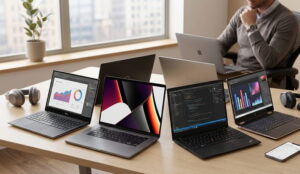
Choosing a new computer in today’s saturated market requires more than just looking at a spec sheet; it demands an understanding of which laptop brands consistently deliver on the promise of longevity, thermal management, and post-purchase support. As we move through 2026, the gap between budget-friendly machines and premium workhorses has narrowed in terms of raw power, yet the distinction in build quality and ecosystem integration remains vast. Professionals and students alike now prioritize silicon efficiency and AI-driven hardware acceleration, making the choice of manufacturer more critical than ever before. Whether you are seeking a rugged machine for field work or a sleek ultrabook for corporate boardrooms, the current landscape offers specialized options tailored to every niche imaginable.
The evolution of mobile computing has reached a point where integrated graphics can handle light video editing, and battery life frequently pushes past the fifteen-hour mark on leading models. This shift is largely due to the aggressive competition between proprietary chipsets and standardized processors, forcing brands to innovate not just in internal components but in display technology and sustainable manufacturing. Consumers in the USA and Europe are increasingly looking at the repairability scores and carbon footprints of their devices, influencing how major players design their chassis and internal layouts. Selecting the right brand involves weighing these ethical and functional factors against your specific daily workflow requirements.
Reliability remains the primary concern for most buyers, as a laptop is often the central hub for both professional productivity and personal entertainment. Leading manufacturers have responded by enhancing their accidental damage protection plans and streamlining their global service networks to ensure that hardware failure does not result in weeks of downtime. In this comprehensive analysis, we evaluate the top performers in the industry based on their 2026 lineups, focusing on innovation, customer satisfaction, and the price-to-performance ratio that defines their value proposition in a competitive global economy.
Top-Tier Laptop Manufacturers for Professional and Personal Use
When evaluating the best laptop brands, we look for a history of consistent performance and a forward-thinking approach to hardware design. The brands listed below have been selected because they represent the pinnacle of current engineering, offering diverse portfolios that cater to creative professionals, hardcore gamers, and casual users who demand the best possible experience from their technology investments.
Apple
Apple continues to dominate the premium segment with its M-series silicon, providing a level of vertical integration that other manufacturers struggle to match. The MacBook Pro and Air lines are designed for users who value a seamless macOS ecosystem, exceptional battery life, and high-fidelity Liquid Retina displays that are industry standards for color accuracy. These machines are particularly favored by creative professionals in photography, music production, and software development due to their sustained performance under heavy thermal loads. One significant pro is the industry-leading resale value and the exceptional build quality of the unibody aluminum chassis, though the primary con remains the high entry price and the lack of internal upgradability after purchase. Currently, the MacBook Air starts at 1,099 USD and the MacBook Pro 14-inch starts at 1,999 USD as of March 2026.
- Proprietary M4 and M5 series silicon for industry-leading efficiency.
- High-resolution Liquid Retina XDR displays with ProMotion technology.
- Extensive battery life often exceeding 18 hours of real-world use.
- Seamless integration with iPhone, iPad, and Apple Watch services.
- Precision-engineered Force Touch trackpads and Magic Keyboards.
Where to buy: Official Apple Store, Amazon, Best Buy, and authorized premium resellers.
Dell
Dell has solidified its reputation through the XPS lineup, which serves as the gold standard for Windows-based ultrabooks, and its robust Latitude and Precision series for enterprise environments. The brand is renowned for its InfinityEdge displays, which pioneered the nearly bezel-less look that has now become a standard across the industry. Dell excels at providing comprehensive on-site support and customization options, making them the preferred choice for large corporations and small businesses alike. While the XPS series offers stunning aesthetics and portability, some users find the limited port selection on newer models to be a drawback, requiring the use of external dongles for legacy connections. The Dell XPS 13 starts at approximately 1,249 USD, while high-end Precision workstations can exceed 3,500 USD as of March 2026.
- Premium CNC machined aluminum and carbon fiber palm rests.
- Advanced thermal designs with dual fans and hidden exhaust vents.
- Comprehensive Dell ProSupport with next-business-day on-site service.
- Highly customizable hardware configurations through the official website.
- Leading-edge OLED display options with 100% DCI-P3 color gamut.
Where to buy: Dell.com, B&H Photo, Amazon, and major electronics retailers.
Lenovo
Lenovo is widely considered the king of productivity, thanks largely to the legendary ThinkPad series which features the most comfortable keyboards in the mobile computing world. The brand caters to a massive audience, ranging from the budget-friendly IdeaPad line to the high-performance Legion gaming laptops and the innovative Yoga 2-in-1 convertibles. Lenovo stands out for its military-grade durability testing on ThinkPad models, ensuring they can survive spills, drops, and extreme temperatures. A notable pro is the sheer variety of models available, ensuring there is a laptop for every budget, though the sheer volume of choices can sometimes make the buying process confusing for non-technical users. The ThinkPad X1 Carbon Gen 13 starts at 1,580 USD, and the Legion Pro 7i starts at 2,099 USD as of March 2026.
- Industry-leading ergonomic keyboards with the iconic TrackPoint.
- MIL-STD 810H certified durability for professional-grade reliability.
- Versatile 360-degree hinges on the Yoga series for multiple use modes.
- Lenovo Vantage software for streamlined system health and driver updates.
- Strong focus on sustainable packaging and recycled internal components.
Where to buy: Lenovo Official Store, Newegg, Amazon, and CDW.
HP (Hewlett-Packard)
HP has undergone a design renaissance over the last few years, with its Spectre and Envy lines now rivaling Apple in terms of sheer elegance and premium materials. The Spectre x360 is frequently cited as one of the best 2-in-1 laptops on the market, offering a sophisticated gem-cut design and bundled active pens for digital artists. HP also maintains a strong presence in the gaming sector with the OMEN brand and provides high-value options for students through the Pavilion series. One of the brand’s biggest strengths is its HP Wolf Security suite, which offers hardware-enforced protection against modern cyber threats. While their premium machines are top-tier, some of the entry-level Pavilion models can feel slightly plastic-heavy compared to competitors. The HP Spectre x360 14 starts at 1,449 USD as of March 2026.
- Elegant gem-cut aesthetic with high-quality aluminum finishes.
- Integrated privacy screens and physical webcam kill switches.
- Bang & Olufsen tuned speakers for superior laptop audio.
- Fast charging capabilities reaching 50% in roughly 30 minutes.
- Advanced security features including BIOS protection and self-healing.
Where to buy: HP.com, Best Buy, Amazon, and Staples.
ASUS
ASUS is the brand for those who crave innovation and experimental form factors, such as the dual-screen Zenbook Duo or the ultra-portable ROG Flow series. They have become a dominant force in the gaming world with the Republic of Gamers (ROG) and TUF Gaming sub-brands, often being the first to market with the latest NVIDIA and AMD mobile chips. ASUS is credited with bringing OLED displays to the mainstream, offering vibrant screens even on their mid-range Vivobook models. A major pro is the aggressive pricing on high-refresh-rate gaming screens, but the cons can include a slightly higher rate of software bloatware on consumer models. The ASUS Zenbook S 16 OLED starts at 1,399 USD, and the ROG Zephyrus G14 starts at 1,599 USD as of March 2026.
- Pioneering ScreenPad and dual-display technology for multitasking.
- Extensive range of OLED panels across all price points.
- ErgoLift hinge design for improved cooling and typing angles.
- Robust cooling solutions with liquid metal thermal compounds.
- ASUS Antimicrobial Guard coating on frequently touched surfaces.
Where to buy: ASUS Store, Amazon, Micro Center, and Best Buy.
Microsoft
As the creator of the Windows operating system, Microsoft’s Surface line represents the “signature” experience for the platform, free from third-party bloatware and optimized for touch and pen input. The Surface Pro remains the definitive tablet-laptop hybrid, while the Surface Laptop offers a more traditional but equally refined clamshell experience. Microsoft focuses heavily on the 3:2 aspect ratio, which provides more vertical screen real estate for reading and document editing than standard widescreen displays. The primary pro is the clean software experience and excellent integration with Microsoft 365, while the cons are the expensive accessories like the Type Cover and Slim Pen which are often sold separately. The Surface Pro 11 starts at 999 USD (tablet only) and the Surface Laptop 7 starts at 1,199 USD as of March 2026.
- Signature 3:2 PixelSense touchscreens for enhanced productivity.
- Premium Alcantara or cool-to-the-touch metal finish options.
- Industry-leading front-facing cameras for high-quality video calls.
- Instant-on performance with secure Windows Hello facial recognition.
- Compact and lightweight designs optimized for mobile professionals.
Where to buy: Microsoft Store, Amazon, Best Buy, and Costco.
Razer
Razer targets a very specific niche: users who want the power of a desktop gaming rig inside the chassis of a premium ultrabook. Known as the “Apple of the gaming world,” Razer laptops feature minimalist black or mercury white aesthetics with customizable Chroma RGB lighting. Their Blade series is famous for using vapor chamber cooling to keep high-end components running smoothly in incredibly thin profiles. The pro is undoubtedly the combination of raw power and build quality, but the con is a price point that is often significantly higher than other gaming brands with similar internal specs. The Razer Blade 14 starts at 2,399 USD and the Blade 16 can easily reach 3,899 USD as of March 2026.
- CNC-milled T6 grade aluminum chassis for maximum rigidity.
- Per-key RGB lighting powered by Razer Chroma software.
- High-refresh-rate displays up to 240Hz with 100% sRGB coverage.
- THX Spatial Audio support for immersive gaming experiences.
- Compact power adapters utilizing GaN technology for portability.
Where to buy: Razer.com, Amazon, and specialized gaming retailers.
Samsung
Samsung has leveraged its dominance in the smartphone and display markets to create the Galaxy Book series, which offers the best integration for Android users. Their laptops are remarkably thin and light, often featuring the same Dynamic AMOLED 2X technology found in their flagship phones. The Galaxy Book Pro and Ultra models are designed for people who travel frequently and need a device that stays connected to their mobile ecosystem effortlessly. The main pro is the stunning display quality and the lightweight design, though some users find the chassis flex on the ultra-light models to be a bit more noticeable than on a MacBook or XPS. The Samsung Galaxy Book 4 Pro starts at 1,449 USD as of March 2026.
- Unmatched AMOLED display technology with deep blacks and high contrast.
- Galaxy Ecosystem features like Quick Share and Second Screen with tablets.
- Incredibly thin profiles, often measuring less than 12mm in thickness.
- Long-lasting batteries with shared USB-C charging across Galaxy devices.
- Integrated fingerprint sensors within the power button for security.
Where to buy: Samsung.com, Amazon, and major mobile carriers.
Acer
Acer is the go-to brand for value-conscious buyers who still want capable hardware, particularly through their Swift and Aspire lines. However, they also command respect in the high-end market with the Predator and Nitro gaming series, which offer some of the best frame-rates-per-dollar in the industry. Acer is known for its spatial labs technology, which provides glasses-free 3D viewing on certain creative-focused models. The pro is the competitive pricing across their entire range, while the con is that their lower-end models may not feel as premium as the entry-level offerings from Dell or HP. The Acer Swift Go 14 starts at 799 USD, and the Predator Helios Neo 16 starts at 1,149 USD as of March 2026.
- Excellent price-to-performance ratio in the budget and mid-range tiers.
- Innovative 3D display technology for niche creative workflows.
- Diverse gaming portfolio from entry-level Nitro to elite Predator.
- Compact Swift models featuring modern port selections including USB4.
- Strong focus on eco-friendly materials in the Vero line.
Where to buy: Acer Store, Amazon, Best Buy, and Walmart.
MSI (Micro-Star International)
MSI has transitioned from a component manufacturer to a world-class laptop brand specializing in gaming and high-end workstations. Their laptops are often packed with the highest possible wattage versions of GPUs, ensuring that gamers and 3D animators get the maximum performance out of the hardware. The Raider and Stealth series are flagship models that offer a mix of aggressive gaming aesthetics and sophisticated professional looks. A pro for MSI is the advanced manual control over fan curves and overclocking, while a con can be the shorter battery life typical of high-performance gaming machines. The MSI Stealth 16 AI Studio starts at 1,899 USD as of March 2026.
- High-TGP (Total Graphics Power) configurations for maximum FPS.
- SteelSeries per-key RGB keyboards with advanced macro support.
- Extensive thermal management with up to 7 heat pipes in high-end models.
- Dedicated workstations certified by ISVs like Adobe and Autodesk.
- High-resolution displays with 100% DCI-P3 coverage for creators.
Where to buy: MSI Store, Newegg, Amazon, and Micro Center.
Pricing Comparison and Value Analysis
Navigating the price landscape of 2026 laptops requires an understanding of how different brands position their value. At the entry level, brands like Acer and Lenovo provide the most utility for under 800 USD, offering machines that are perfect for web browsing, office tasks, and student life. These laptops typically feature plastic constructions but do not compromise on the internal processing power needed for everyday applications. In this bracket, you are paying for functionality over form, and the value proposition is centered on longevity for a minimal upfront investment.
The mid-range market, sitting between 1,000 USD and 1,600 USD, is where brands like HP, ASUS, and Samsung compete most fiercely. Here, the materials shift to aluminum, and the displays often move from standard LCD to high-quality OLED or QHD panels. This is the “sweet spot” for most consumers, as it offers a premium feel and enough power for creative work without the astronomical prices of specialized machines. Microsoft and Apple also play heavily in this space, though their entry-level configurations often have less storage or RAM than their Windows competitors at the same price point.
At the high end, which starts at 2,000 USD and can go up to 4,000 USD, we find the “pro” models from Apple, Razer, and Dell, alongside elite gaming rigs from MSI. In this category, the price reflects specialized engineering, such as vapor chamber cooling, workstation-grade GPUs, and ultra-high-brightness displays. For professional editors, engineers, or competitive gamers, the extra investment is justified by the time saved in rendering and the reliability of the hardware under stress. Value in this segment is measured by return on investment over a three-to-five-year period rather than the initial sticker price.
How to Choose the Right Laptop Brand for Your Lifestyle
The selection process should begin with a clear assessment of your primary use case, as different brands prioritize different aspects of the computing experience. If your workflow is entirely based on the web and mobile apps, a brand that offers strong ecosystem integration like Apple or Samsung will likely provide the most friction-free experience. These brands spend millions of dollars ensuring that your text messages, photos, and files move seamlessly between your phone and your laptop, which can be a massive productivity booster for people who are always on the move.
For those who require a machine that can take a physical beating, the traditional business brands like Lenovo and Dell are unrivaled. Their corporate-focused lines are built to survive international travel and the rigors of office life, often including features like spill-resistant keyboards and reinforced hinges. Furthermore, these brands offer much better long-term support and parts availability. If you are someone who prefers to fix things rather than replace them, choosing a brand with a high repairability score and available service manuals is a critical factor that often outweighs raw performance numbers.
Creative individuals and gamers must look at the thermal capabilities and display standards of a brand. ASUS and MSI, for example, often push the boundaries of what is possible in a mobile chassis, offering the highest refresh rates and most color-accurate screens. However, these machines often require more maintenance in terms of driver updates and fan cleaning. Understanding whether you prefer a “set it and forget it” experience like a MacBook or a “tinkerer’s paradise” like an ASUS ROG is perhaps the most important psychological factor in making a purchase you will be happy with for years.
Current Market Prices and Seasonal Deals
As of early 2026, the laptop market is seeing a stabilization of prices after the supply chain fluctuations of previous years. Standard ultrabooks with 16GB of RAM and 512GB of SSD storage are currently hovering around the 1,100 USD to 1,300 USD mark. We are seeing a significant trend where 16GB of RAM is finally becoming the base standard for most reputable brands, effectively phasing out the 8GB models that dominated the budget category for the last decade. This shift has slightly raised the floor of laptop pricing but has vastly improved the user experience across the board.
Major sales events such as Back-to-School (August), Black Friday (November), and Prime Day continue to be the best times to find deep discounts, often reaching 20% to 30% off MSRP. Brands like Acer and HP are particularly aggressive with holiday pricing, often clearing out the previous year’s inventory at substantial savings. Additionally, many manufacturers now offer robust trade-in programs, allowing users to swap their 2023 or 2024 models for credit toward a new machine, which has become a popular way for enthusiasts to stay on the cutting edge without paying full price every two years.
Expert Pro Tips for Laptop Buyers
When you are narrowing down your choices, always look beyond the processor name and check the specific power wattage assigned to the components. Two laptops can both claim to have an NVIDIA RTX 5060, but one might be limited to 60 watts while the other runs at 115 watts, resulting in a massive performance discrepancy. This information is often hidden in the deep technical specifications on the manufacturer’s website but is the single biggest factor in how your laptop will actually perform during intensive tasks like gaming or 4K video rendering.
Consider the keyboard and trackpad as much as the internal specs, because these are the components you interact with every single second the machine is on. A laptop with incredible power but a mushy keyboard or a small, erratic trackpad will quickly become a source of frustration. If possible, visit a retail showroom to type a few paragraphs and test the gesture support on the trackpad. Brands like Lenovo and Apple spend significant resources on “tactile physics,” and the difference in comfort over an eight-hour workday is truly substantial.
Don’t ignore the importance of port selection, especially if you plan to use your laptop in a professional setting. While the industry is moving toward a USB-C only future, having a dedicated HDMI port or an SD card slot can save you from the “dongle life” and prevent connectivity issues during important presentations. Brands like Dell and HP are generally better about including a mix of legacy and modern ports on their business machines compared to the ultra-thin consumer models that often prioritize aesthetics over connectivity.
Always verify the webcam quality and microphone array if you spend a significant portion of your day in video conferences. With the rise of hybrid work, many brands have finally upgraded to 1080p or even 5MP webcams with AI noise-canceling microphones. A high-quality internal camera can save you the hassle of carrying an external peripheral, and the software-based background blur and eye-contact correction features found in brands like Microsoft and Samsung are now sophisticated enough to make a professional impression in any lighting condition.
Finally, pay close attention to the warranty terms and the proximity of authorized service centers. A great price on a laptop from a brand with no local support in your region can turn into a nightmare if you have to ship your machine overseas for a simple battery replacement. Brands with a strong local presence in the USA and Europe, such as Dell, HP, and Apple, offer much faster turnaround times. Buying the extended warranty or accidental damage protection is almost always worth it for a device that you carry with you daily, as a single dropped bag can otherwise result in a total loss of your investment.
Frequently Asked Questions
Which laptop brand has the best customer service?
In the USA and Europe, Apple consistently ranks at the top for customer service due to their extensive network of physical Apple Stores and the efficiency of their Genius Bar. Dell is a close second, particularly for business users who opt for ProSupport, which provides on-site repairs and 24/7 access to high-level technicians. HP and Lenovo also offer solid support structures, but their consumer-level response times can vary more significantly depending on your specific region and the type of warranty purchased.
Are gaming laptop brands good for everyday office work?
Yes, gaming brands like Razer, ASUS ROG, and MSI produce machines that are excellent for office work because they have high-performance cooling and powerful processors that handle multitasking with ease. However, they often have shorter battery life and can be heavier than traditional office laptops. If you choose a gaming laptop for work, look for “Stealth” or “Studio” models that have more professional aesthetics and better battery optimization for non-gaming tasks.
Which brands are the most reliable for long-term use?
Lenovo’s ThinkPad series and Apple’s MacBook Pro are widely regarded as the most reliable laptops for long-term use, often lasting five to seven years or more with proper care. These brands focus on high-quality internal components and durable chassis materials that resist wear and tear better than budget-oriented brands. Dell’s Latitude and XPS series also have strong reputations for longevity, provided they are maintained with regular software updates and occasional internal dusting.
Why are some brands more expensive than others with the same specs?
Pricing differences often come down to build quality, display technology, and brand-specific features that don’t show up on a basic spec sheet. For example, an Apple or Razer laptop may cost more because of its CNC-milled aluminum chassis, superior color-calibrated screen, and better speakers compared to a plastic-bodied laptop with the same processor. You are also paying for the research and development of proprietary software, thinner designs, and more comprehensive global warranty coverage.
Should I prioritize RAM or storage when choosing a brand?
In 2026, you should almost always prioritize RAM because it is frequently soldered to the motherboard and cannot be upgraded later, whereas many brands still allow for external storage or even internal SSD upgrades. 16GB of RAM is the recommended minimum for a smooth experience in Windows or macOS today. If you have to choose between a brand offering more storage or a brand offering more RAM at the same price, take the RAM to ensure the machine remains fast as software becomes more demanding over time.
Which laptop brands are the most eco-friendly?
Apple, HP, and Acer have made the most significant strides in sustainability as of 2026. Apple uses 100% recycled aluminum in many of its enclosures, while HP and Acer’s “Vero” line utilize post-consumer recycled plastics for everything from the chassis to the keyboard caps. These brands also focus on carbon-neutral shipping and modular designs that make it easier to recycle the device at the end of its life, which is an increasingly important factor for environmentally conscious consumers.
Conclusion
The landscape of laptop brands in 2026 is defined by a high level of specialized excellence, where the “best” brand truly depends on the specific needs of the user. For those who prioritize a seamless software experience and unmatched hardware efficiency, Apple remains the dominant force. Conversely, users who require the flexibility of Windows, the durability of business-grade hardware, or the raw power of high-end gaming rigs will find that Dell, Lenovo, and ASUS offer the most compelling and innovative alternatives. The market has matured to the point where build quality and ecosystem integration are the primary differentiators, rather than just the speed of the processor inside.
Ultimately, making a successful purchase involves looking past the marketing slogans and focusing on the tactile and functional realities of the machine. By considering factors like keyboard ergonomics, thermal management, and long-term support infrastructure, you can ensure that your investment remains a productive tool for years to come. Whether you choose the refined elegance of a Microsoft Surface, the rugged reliability of a ThinkPad, or the cutting-edge innovation of an ASUS Zenbook, the current generation of laptops offers more power and portability than ever before, making it an excellent time to upgrade your mobile computing setup.