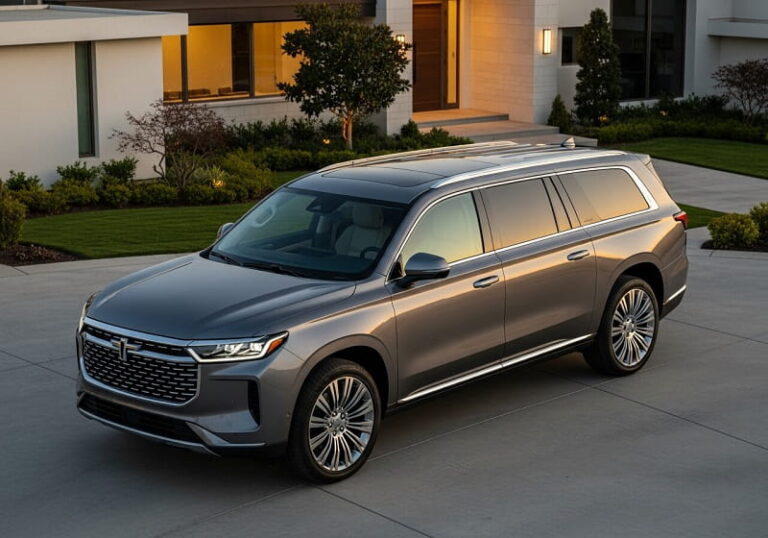
The landscape of the family vehicle has shifted dramatically as we approach the 2026 model year. Once dominated by the humble minivan, the market is now firmly in the grip of the three-row SUV. These vehicles have become the Swiss Army knives of the automotive world, offering a blend of rugged capability, high-tech interiors, and the sheer passenger volume required by modern families. As manufacturers unveil their latest iterations, the competition has never been more fierce. From redesigned stalwarts like the Kia Telluride and Hyundai Palisade to the tech-forward updates of the Honda Pilot, 2026 represents a pinnacle of automotive engineering tailored for group travel.
Choosing the right three-row SUV requires a careful balance of priorities. For some, the primary concern is third-row legroom—ensuring that the “way back” is actually habitable for adults and not just a temporary perch for toddlers. For others, fuel efficiency takes center stage, leading to a surge in hybrid and plug-in hybrid options that were once rare in this heavyweight segment. Additionally, the integration of advanced safety suites and semi-autonomous driving features has become a standard expectation rather than a luxury add-on. This guide explores the premier options for 2026, dissecting their performance, interior utility, and value propositions.
As we analyze the current market, it is clear that “bigger” is no longer the only metric for “better.” Efficiency, maneuverability, and digital connectivity are now equally important. The 2026 lineup showcases a diverse range of philosophies: the American full-size giants continue to offer unmatched towing and raw space, while the mid-size crossovers lean into car-like handling and sophisticated hybrid powertrains. Whether you are navigating tight suburban school zones or embarking on a cross-country expedition, there is a 2026 three-row SUV designed to meet those specific demands with precision and style.
The Redesign Leaders: 2026 Kia Telluride and Hyundai Palisade
The Kia Telluride and Hyundai Palisade have long been the darlings of the mid-size three-row segment, and for 2026, they undergo significant transformations. The 2026 Kia Telluride moves away from its previously softer aesthetic toward a more geometric, “boxy” profile that draws heavy inspiration from the electric EV9. This new design language includes vertical LED headlights and a more commanding road presence. Inside, the cabin has been completely overhauled with a panoramic curved dual-screen display that integrates the instrument cluster and infotainment system into a single, seamless interface. This digital-first approach is paired with premium materials like Nappa leather and genuine wood accents, maintaining its reputation for “attainable luxury.”
Parallel to the Telluride, the 2026 Hyundai Palisade enters its second generation with a slightly longer wheelbase and increased exterior dimensions. This growth directly translates to easier passenger ingress and egress, as well as improved third-row comfort. One of the most significant updates for the 2026 Palisade is the introduction of a 2.5-liter turbocharged hybrid powertrain. This new option is designed to deliver approximately 329 horsepower while significantly boosting fuel economy, targeting up to 34 mpg. This move addresses one of the few historical criticisms of the Palisade: its thirst for fuel during city driving.
Both vehicles also introduce enhanced off-road-oriented trims to cater to the growing “overlanding” trend. The Kia Telluride X-Pro continues to offer increased ground clearance and all-terrain tires, while Hyundai introduces the Palisade XRT PRO. The XRT PRO is notably more robust than previous XRT iterations, featuring an electronic rear limited-slip differential and an additional inch of ground clearance compared to standard models. These enhancements ensure that while these SUVs are primary family haulers, they are more than capable of handling unpaved trails and adverse weather conditions with confidence.
Refined Practicality: The 2026 Honda Pilot and Toyota Highlander
The 2026 Honda Pilot focuses on “refined ruggedness” and a significant tech injection. For this model year, Honda has made several high-value features standard across all trims, including a 12.3-inch HD color touchscreen and a 10.2-inch digital instrument cluster. This is a substantial upgrade from previous base-model offerings. Furthermore, the 2026 Pilot boasts a quieter cabin thanks to the implementation of semi-tempered door glass and new insulation materials in the doors and hood. This focus on “NVH” (noise, vibration, and harshness) reduction makes the Pilot one of the most serene environments for long-distance highway cruising.
Toyota continues to dominate the efficiency conversation with the 2026 Highlander and Grand Highlander. The standard Highlander remains a staple for those who prioritize reliability and manageable dimensions, now coming with standard all-wheel drive across every trim level for the U.S. market. However, for families who truly need adult-sized third-row seating, the Grand Highlander is the definitive choice. For 2026, the Grand Highlander emphasizes its premium feel with an available panoramic roof that floods the cabin with light and a suite of hybrid powertrains that achieve up to 35 mpg combined. This efficiency is staggering for a vehicle of its size and utility.
The Honda Pilot and Toyota Highlander also represent different approaches to interior flexibility. The Pilot offers a unique removable middle seat in the second row (on higher trims) that can be stored under the rear cargo floor, allowing owners to switch between an 8-passenger bench and 7-passenger captain’s chairs on the fly. Toyota, conversely, focuses on a fixed configuration but optimizes the Grand Highlander’s rear-most space to provide 33.5 inches of legroom, making it one of the few in the “mid-size” category where adults can sit comfortably for hours. Both models feature comprehensive safety suites—Honda Sensing and Toyota Safety Sense—providing a high baseline of protection.
American Muscle and Scale: 2026 Ford Explorer and Chevrolet Traverse
The 2026 Ford Explorer continues to be a performance leader in the segment, particularly with its ST trim. Powered by a 3.0-liter Twin-Turbocharged EcoBoost V6 producing 400 horsepower, the Explorer ST is designed for the driver who refuses to sacrifice engagement for utility. For 2026, the Explorer lineup is simplified into six distinct trims, including the off-road-ready Tremor. A key technological highlight for 2026 is the broader availability of BlueCruise, Ford’s hands-free highway driving technology, which allows for a more relaxed experience on pre-mapped North American highways. The interior also sees a refresh with the Ford Digital Experience infotainment system, powered by Google Built-in.
Chevrolet’s 2026 lineup offers a clear choice between the mid-size Traverse and the full-size Tahoe. The 2026 Traverse is a masterclass in space optimization, offering a class-leading 97.6 cubic feet of maximum cargo volume. It utilizes a 2.5-liter turbocharged four-cylinder engine that balances 328 horsepower with respectable fuel economy. The Traverse is aimed at the family that needs maximum “stuff-carrying” capability without the footprint or fuel bill of a traditional truck-based SUV. Its 17.7-inch standard infotainment screen is currently one of the largest in the segment, providing a high-tech focal point for the cabin.
For those whose needs exceed the Traverse’s 5,000-pound towing limit, the 2026 Chevrolet Tahoe remains the heavy-duty champion. Built on a truck frame, the Tahoe offers V8 power and towing capacities reaching up to 8,400 pounds. While it is more expensive to operate and harder to park in tight urban spaces, its sheer volume is unmatched. The 2026 Tahoe also benefits from a massive 17.7-inch touchscreen and an available 6.2-liter V8 engine. The distinction between Traverse and Tahoe in 2026 is sharper than ever: the Traverse is the sensible, tech-forward family hauler, while the Tahoe is the ultimate multi-tool for heavy towing and massive interior volume.
The Luxury Perspective: Jeep Grand Wagoneer and Land Rover Defender 130
The 2026 Jeep Grand Wagoneer represents the pinnacle of American luxury in the three-row SUV market. For 2026, the Grand Wagoneer introduces a highly anticipated plug-in hybrid (PHEV) variant, marking the first time this flagship has embraced electrification. This move is intended to provide short-range electric commuting while maintaining the massive 10,000-pound towing capacity that defines the model. The interior of the Grand Wagoneer is a fortress of screens, with up to 75 inches of total display area available across the dashboard and rear seats. It is designed to compete directly with European luxury marques, offering 24-way power-adjustable massaging seats and a 23-speaker McIntosh audio system.
On the more adventurous side of luxury sits the Land Rover Defender 130. Unlike many three-row SUVs that treat the third row as an afterthought, the Defender 130 was engineered specifically to carry eight adults in a 2-3-3 configuration. It offers nearly 33 inches of third-row legroom and even features its own dedicated sunroof and climate zone for the rearmost passengers. For 2026, the Defender 130 continues to blend this interior hospitality with legendary off-road hardware, including a sophisticated air suspension system and the Terrain Response 2 suite. It is the premier choice for families who want to combine high-end social status with genuine “go-anywhere” capability.
Both of these luxury options prioritize “presence” as much as they do “practice.” The Grand Wagoneer receives a styling refresh for 2026, featuring a shorter, more upright grille and a new slim LED light bar that creates a more modern, less “fussy” aesthetic. The Defender 130 remains iconic in its silhouette, emphasizing durability with its aluminum intensive architecture. While these vehicles come with a significantly higher price tag than a Kia or a Honda, they offer a level of material quality, towing power, and specialized engineering that justifies the investment for the high-end consumer.
Performance and Powertrain Specifications for 2026
The 2026 model year marks a turning point where internal combustion engine (ICE) refinements meet the rapid expansion of hybrid technology. Understanding these powertrain differences is crucial for determining long-term ownership costs and daily driving satisfaction. Most manufacturers are moving away from naturally aspirated V6 engines in favor of smaller, turbocharged four-cylinder units that produce similar torque but with better efficiency. However, several brands are doubling down on hybrid systems to provide the low-end “grunt” needed for merging onto highways with a full load of passengers.
- Hybrid and Electrified Efficiency: Many 2026 models, such as the Hyundai Palisade and Toyota Grand Highlander, now feature high-output hybrid systems. These systems use electric motors to assist a gasoline engine, resulting in combined fuel economy figures often exceeding 30 mpg, a massive improvement over the 20-22 mpg averages seen in the previous decade.
- Turbocharged Four-Cylinder Adoption: The Chevrolet Traverse and Ford Explorer (Active trim) utilize high-output 2.3-liter to 2.5-liter turbocharged engines. These engines typically produce between 300 and 328 horsepower, providing more immediate torque than traditional V6s, which is essential for city driving and light towing.
- The Persistence of the V6 and V8: For those who prioritize towing and smooth power delivery, the 3.8-liter V6 in the Kia Telluride and the 3.5-liter V6 in the Honda Pilot remain. Meanwhile, full-size models like the Chevrolet Tahoe and Jeep Grand Wagoneer continue to offer V8 or Twin-Turbo Inline-6 engines to manage 8,000+ pound towing capacities.
- All-Wheel Drive Technology: Mechanical AWD systems are being replaced by electronic torque-vectoring systems. Models like the Honda Pilot TrailSport and Hyundai Palisade XRT PRO use specialized differentials to send power precisely to the wheels with the most grip, enhancing both off-road capability and on-road safety in slippery conditions.
- Transmission Trends: The 8-speed and 10-speed automatic transmissions have become the industry standard for 2026. These gearboxes provide a wide range of ratios to keep the engine in its most efficient power band, contributing to smoother acceleration and quieter highway cruising compared to older 6-speed units.
Safety and Tech: The New Standard in Family Transport
Safety has evolved from passive protection (airbags and crumple zones) to active prevention. For 2026, nearly every top-tier three-row SUV includes a suite of driver-assistance technologies as standard equipment. This includes Automatic Emergency Braking with pedestrian and cyclist detection, Lane Keeping Assist, and Blind-Spot Monitoring. However, the “cutting edge” for 2026 involves more sophisticated systems like Intersection Collision-Avoidance, which can detect oncoming traffic during left-hand turns and apply the brakes automatically if a collision is imminent. These systems are designed to mitigate the most common types of family-vehicle accidents.
Digital connectivity has also reached a new plateau. The 2026 model year sees a massive shift toward “Google Built-in” infotainment systems. This allows drivers to use Google Maps, Google Assistant, and the Google Play Store directly from the vehicle’s interface without needing to plug in a phone. While wireless Apple CarPlay and Android Auto remain standard, the native integration of these services provides a more stable and faster user experience. Furthermore, many 2026 SUVs now offer 5G Wi-Fi hotspot capabilities and over-the-air (OTA) software updates, meaning the vehicle’s features and safety algorithms can improve long after it has left the dealership.
Rear-seat technology has also been reimagined. Instead of simple “drop-down” DVD players, the 2026 luxury variants offer individual interactive displays for second-row passengers. These screens can stream content, allow passengers to assist with navigation, or even view vehicle cameras. For the driver, “transparent hood” camera views and 360-degree surround-view monitors have become essential tools for maneuvering these large vehicles in tight spaces. These technological advancements collectively aim to reduce driver stress and keep all eight occupants entertained and secure during travel.
Current Market Price and Deals
The 2026 SUV market reflects the ongoing inflationary pressures in the automotive industry, but competition remains high, leading to aggressive financing and lease deals on specific models. Below is a breakdown of the expected starting MSRPs for the most popular models in this category.
- Kia Telluride (2026): Starting MSRP approximately $37,500 – $55,000. Dealers are currently offering competitive 36-month lease rates on the EX and SX trims to maintain market share.
- Hyundai Palisade (2026): Starting MSRP approximately $38,000 – $56,500. The new hybrid variant is expected to carry a $1,500 – $2,500 premium over the standard V6.
- Honda Pilot (2026): Starting MSRP approximately $41,200 – $54,500. Honda often provides loyalty incentives for returning lessees, which can significantly lower monthly payments on the Elite trim.
- Toyota Grand Highlander (2026): Starting MSRP approximately $45,000 – $60,000. Due to high demand for the Hybrid MAX powertrain, these models often sell at MSRP with limited discounting.
- Chevrolet Traverse (2026): Starting MSRP approximately $39,500 – $55,500. General Motors frequently offers 0.9% to 2.9% APR financing for well-qualified buyers on 60-month terms.
- Ford Explorer (2026): Starting MSRP approximately $41,000 – $57,000. The ST and Platinum trims often see regional “customer cash” rebates of $1,000 to $2,000 during holiday sales events.
- Jeep Grand Wagoneer (2026): Starting MSRP approximately $93,000 – $115,000. As a luxury flagship, Jeep often provides high-value lease packages for corporate or fleet buyers.
Pros and Cons
- Kia Telluride & Hyundai Palisade
- Pros: Exceptional value-for-money, industry-leading 10-year/100,000-mile powertrain warranty, and high-end interior materials that rival luxury brands.
- Cons: High dealer markups remain common due to popularity; the new 2026 designs may be polarizing to fans of the previous “softer” look.
- Honda Pilot
- Pros: Innovative removable second-row seat for maximum flexibility, world-class reliability ratings, and a very quiet, comfortable ride.
- Cons: Infotainment system can be slightly less intuitive than competitors; fuel economy lags behind the hybrid leaders.
- Toyota Grand Highlander
- Pros: Superior fuel economy in hybrid trims, a “real” third row that fits adults, and exceptionally high resale value.
- Cons: Higher entry price than many mid-size rivals; the base engine can feel a bit strained under a full load.
- Ford Explorer
- Pros: Best-in-class performance in the ST trim, hands-free BlueCruise technology, and strong towing capability for a unibody SUV.
- Cons: Interior plastics in lower trims feel less “premium” than Kia or Hyundai; third-row space is tighter than the Traverse or Grand Highlander.
Pro Tips for SUV Buyers
- Test the Third Row Personally: Don’t rely on spec sheets for legroom. Sales personnel often quote “passenger volume,” but the real-world comfort depends on seat height and floor flatness. Sit in the third row yourself and have someone slide the second row into a “normal” position to see if your knees hit the seatback.
- Prioritize “Google Built-in”: If you are a heavy user of navigation and voice commands, seek out 2026 models with native Google integration. It is significantly faster and more reliable than mirroring a phone, and it often integrates with the vehicle’s battery/fuel status to suggest stops.
- Evaluate the “Trail” Trims Carefully: Models like the Honda Pilot TrailSport or Ford Explorer Tremor look great, but they often come with a fuel economy penalty due to all-terrain tires and increased ride height. If you don’t actually go off-road, a standard “Limited” or “Platinum” trim will be quieter and cheaper to run.
- Check for “Smart” Slide Seats: Look for second-row seats that can tilt and slide forward even with a child safety seat installed. This is a game-changer for parents who don’t want to remove a car seat every time someone needs to get into the third row.
- Understand the Hybrid Trade-off: While hybrids save money at the pump, they often have slightly less towing capacity than their pure gas counterparts. If you plan on towing a heavy boat or camper, verify the specific GCWR (Gross Combined Weight Rating) for the hybrid trim.
Frequently Asked Questions (FAQ)
Q: Which 2026 SUV has the most legroom in the third row?
A: In the mid-size segment, the Toyota Grand Highlander and Chevrolet Traverse are the leaders, offering enough space for average-sized adults. In the full-size segment, the Chevrolet Tahoe and Jeep Grand Wagoneer offer the most generous dimensions.
Q: Do all 2026 3-row SUVs come with Apple CarPlay and Android Auto?
A: Yes, nearly every 2026 model includes these features. Most have moved to wireless connectivity, though base trims on some models might still require a USB-C cable for the most stable connection.
Q: Is a hybrid 3-row SUV worth the extra cost?
A: It depends on your driving habits. If you do a lot of city driving with frequent stop-and-go traffic, the fuel savings will typically pay for the hybrid premium within 3 to 5 years. For pure highway driving, the benefits are less pronounced.
Q: Can these SUVs really tow a boat?
A: Most mid-size three-row SUVs like the Honda Pilot or Kia Telluride are rated for 5,000 pounds, which is enough for a small fishing boat or a pair of jet skis. For larger boats, you will need a vehicle like the Ford Explorer (5,600 lbs) or a full-size SUV like the Tahoe or Grand Wagoneer.
Q: What is the safest 2026 3-row SUV?
A: While official crash test ratings from the IIHS and NHTSA are released throughout the year, the 2026 Honda Pilot, Toyota Highlander, and Kia Telluride consistently earn “Top Safety Pick+” designations due to their advanced structural engineering and standard active safety tech.
Conclusion
The 2026 market for three-row SUVs represents a significant leap forward in making group travel more efficient, safer, and technologically integrated. Whether you gravitate toward the bold redesign and luxury-adjacent feel of the Kia Telluride and Hyundai Palisade, the unmatched hybrid efficiency of the Toyota Grand Highlander, or the rugged versatility of the Honda Pilot, there is no longer a need to sacrifice personal style for family utility. The key to making the right choice lies in identifying your specific “pain points”—whether it’s the frustration of a cramped third row, the high cost of fuel, or the need for advanced towing power. By weighing the performance specifications against the interior innovations highlighted in this guide, you can confidently select a vehicle that will serve your family’s needs for years to come.