

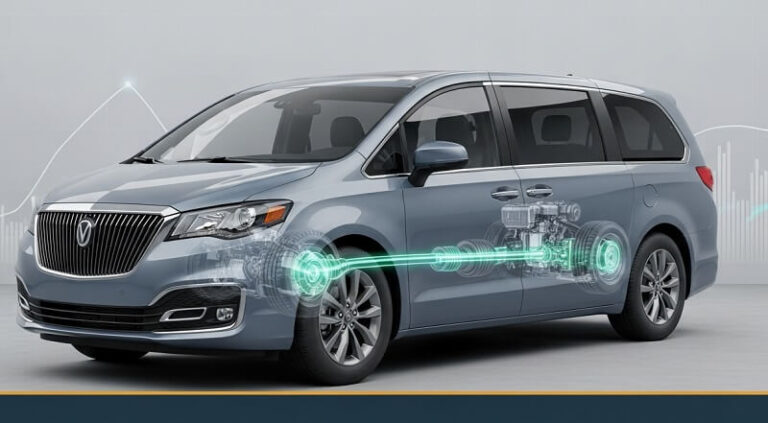
The minivan segment, long celebrated for its unparalleled blend of passenger comfort, cargo utility, and family-friendly features, is experiencing a quiet revolution. While the core mission remains the same, the demand for enhanced capability and safety in all weather conditions has propelled all-wheel drive (AWD) from a niche offering to a critical consideration for modern families. The 2026 model year represents a pivotal moment, with more options than ever before, yet also significant shifts as the automotive industry accelerates toward electrification. This guide provides a comprehensive, verified overview of the all-wheel-drive minivan landscape for 2026, detailing available models, their technological underpinnings, and key factors to inform your purchasing decision.
Gone are the days when choosing a minivan meant sacrificing confidence in rain, snow, or on loose surfaces. Manufacturers have responded to consumer demand by integrating sophisticated AWD systems that operate seamlessly in the background, providing traction when needed without compromising the serene, car-like driving experience minivans are known for. For 2026, the options range from traditional gasoline-powered people-movers to groundbreaking all-electric entries, each with a unique approach to delivering power to all four wheels.
The primary advantage of an AWD system in a minivan is proactive safety and assurance. Rather than waiting for a front wheel to slip before reacting, modern systems often pre-emptively distribute torque to manage power more effectively during acceleration and cornering. This translates to more secure handling when navigating slippery interstate on-ramps, traversing a snowy driveway, or managing a wet, winding road during a family trip. It’s an investment not just in vehicle capability, but in peace of mind for the most precious cargo.
Available All-Wheel Drive Minivans for the 2026 Model Year
The 2026 lineup features a mix of established leaders and an all-new contender, reflecting both market tradition and its electric future. Availability can vary by trim level and region, so consulting with local dealerships for specific packaging is essential.
Toyota Sienna: The Toyota Sienna stands out as the sole minivan in the North American market offered exclusively as a hybrid. For 2026, it continues with its sophisticated hybrid AWD system as a core offering. Unlike conventional systems that use a driveshaft, the Sienna employs an independent electric motor to power the rear wheels when extra traction is needed. This e-AWD system is efficient, responsive, and contributes to the van’s impressive overall fuel economy, which remains a class benchmark. The system is particularly effective at providing instant torque to the rear wheels during slippery starts.
Chrysler Pacifica: The Chrysler Pacifica offers AWD as an option on certain trim levels, pairing it with its venerable 3.6-liter Pentastar V6 engine and a nine-speed automatic transmission. This is a more traditional on-demand AWD system that can send power to the rear wheels as conditions dictate. For 2026, Chrysler has continued to refine the Pacifica’s tech and luxury offerings, particularly in the top-tier Pinnacle trim, making it a compelling choice for those who prefer conventional powertrain dynamics with available AWD. The Pacifica also retains its unique stowable second-row “Stow ‘n Go” seats even with the AWD system, a notable engineering feat.
Kia Carnival: Previously a front-wheel-drive-only proposition, the Kia Carnival joins the AWD arena for the 2026 model year, a direct response to strong market demand. This addition is a significant development, as the Carnival has gained rapid popularity for its SUV-like styling and premium interior. The AWD system is expected to be an option on higher trims, complementing its 3.5-liter V6 engine. This move positions the Carnival as a more direct competitor to the Sienna and Pacifica, offering families a stylish alternative with newfound all-weather confidence.
Toyota Venza (For Comparison): While not a minivan, it is important to address a common point of confusion. The Toyota Venza is a midsize crossover SUV that also utilizes a hybrid electric AWD system similar in principle to the Sienna’s. Consumers comparing high-mpg, family-oriented vehicles with hybrid AWD may encounter both. The critical distinction lies in body style, interior space, and sliding doors; the Venza offers a sleeker profile and lower cargo capacity than a true minivan.
The Electric Newcomer: Kia EV9 Although technically classified as a three-row SUV, the all-electric Kia EV9 must be considered in any 2026 family vehicle discussion. Its spacious, minivan-like interior, available six- or seven-passenger seating with captain’s chairs, and standard dual-motor AWD configuration make it a direct alternative for families considering an electric future. With immense horsepower, a compelling driving range, and ultra-fast charging capability, the EV9 represents the vanguard of electric family transportation. Its AWD is inherent to the dual-motor setup, providing instantaneous and precise torque vectoring for exceptional traction and stability.
Understanding the Technology: How AWD Systems Differ
Not all all-wheel-drive systems are created equal. The technology employed significantly impacts driving feel, fuel efficiency, and cost. For 2026 minivans, there are three primary types of systems available.
Traditional On-Demand AWD (Chrysler Pacifica, Kia Carnival): This system is typically front-wheel-drive based. A center coupling or multi-plate clutch manages power distribution to the rear axle. Under normal dry conditions, the vehicle operates primarily in front-wheel drive to maximize fuel economy. When the vehicle’s computer detects wheel slip at the front, it can engage the rear axle by sending torque through a driveshaft. Some more advanced versions can pre-emptively send a small amount of power rearward during acceleration. The key characteristic is its reactive or partially proactive nature.
Hybrid Electric AWD (Toyota Sienna): This system eliminates the mechanical driveshaft. The front wheels are driven by the hybrid powertrain (a gas engine and electric motor combination), while a dedicated, independent electric motor powers the rear wheels. The vehicle’s computer can activate this rear motor in milliseconds, providing torque almost instantly when needed. This setup is more packaging-efficient, reduces weight, and avoids the mechanical energy losses of a driveshaft, thereby benefiting overall fuel economy. It is particularly adept at low-speed traction.
Dual-Motor Electric AWD (Kia EV9): Found in dedicated electric vehicles, this system uses separate electric motors for the front and rear axles. Power distribution is fully electronic and can be managed with extreme precision, allowing for torque vectoring—sending different amounts of power to each wheel to aid in both traction and cornering. This system provides permanent AWD with instantaneous response and is a key contributor to the impressive performance of electric vehicles. There is no “engagement” delay whatsoever.
Current Market Pricing and Available Deals
Pricing for the 2026 model year reflects the added technology, ongoing industry adjustments, and the premium for electrification. All-Wheel Drive typically adds a significant cost increment over base front-wheel-drive models.
- Toyota Sienna: The Sienna, with its standard hybrid powertrain, has an MSRP starting in the mid-$37,000 range for a base front-wheel-drive model. Adding the hybrid AWD system typically increases the starting price to around the low-$40,000s. Well-equipped XLE and Limited AWD models can easily reach into the $50,000-$55,000 territory. Toyota’s financing deals and lease offers are often competitive, but regional availability and high demand can affect final pricing.
- Chrysler Pacifica: The Pacifica’s starting price is competitive, but adding the AWD option is a notable upgrade. Expect to pay a package premium of several thousand dollars, placing an AWD-equipped Touring or Touring L model in the mid-$40,000s. The premium Pinnacle AWD trim can approach or exceed $60,000. Chrysler frequently offers national retail cash incentives and special APR financing to move inventory, which can provide meaningful savings.
- Kia Carnival: With AWD being a new-for-2026 option, pricing details are still firming up. Based on the existing trim structure, AWD will likely be available on SX and above trims, potentially adding $2,000 to $3,000 to the MSRP. A well-equipped Carnival SX AWD could land in the mid-to-high $40,000s. Kia often provides strong warranty coverage and may have launch incentives for the new AWD variant.
- Kia EV9: As a fully electric vehicle, the EV9 commands a premium. The dual-motor AWD variants start in the high $60,000s and can exceed $75,000 for the top GT-Line model. However, it may qualify for available federal and state EV tax credits, which can effectively reduce the purchase price by up to $7,500. Lease deals on the EV9 may also pass through these credits.
When shopping, always check manufacturer websites for current national incentives and consult with multiple local dealerships. The final out-the-door price is subject to destination charges, dealer fees, and optional equipment.
Pros and Cons of Choosing an AWD Minivan
Selecting an all-wheel-drive minivan involves balancing clear advantages against tangible trade-offs.
Pros:
- Enhanced Traction and Safety: The foremost benefit is improved grip on wet, snowy, icy, or gravel-covered roads. This leads to more confident acceleration from stops, better stability in corners, and reduced likelihood of getting stuck in adverse conditions.
- Increased Resale Value: In regions with harsh winters, AWD is a highly desirable feature that can help the vehicle retain a higher percentage of its value over time compared to an equivalent front-wheel-drive model.
- Proactive Driving Assurance: The knowledge that the vehicle has additional capability provides significant peace of mind for drivers responsible for transporting their family, especially during unexpected weather events or on unfamiliar roads.
- Improved Handling Dynamics: Even in dry conditions, some AWD systems can improve initial turn-in response and overall balance by managing torque distribution, making the vehicle feel more planted and secure.
Cons:
- Higher Initial Cost: The AWD system itself is a premium option, adding anywhere from $2,000 to $4,000 or more to the vehicle’s purchase price.
- Reduced Fuel Economy: For traditional mechanical AWD systems, the added weight and mechanical drag of the driveshaft and rear differential typically result in a 1-3 MPG decrease in fuel efficiency compared to the front-wheel-drive version. This is not the case with the Toyota Sienna’s hybrid e-AWD, which avoids this penalty.
- Potentially Higher Maintenance Costs: An AWD system introduces additional components that may require service over the vehicle’s life, such as transfer case fluid, rear differential fluid, and more complex driveline parts. Repair costs for these systems can be higher.
- No Replacement for Winter Tires: It is a critical misconception that AWD makes winter tires unnecessary. AWD helps a vehicle go, but it does not significantly aid in stopping or turning. The single most important factor for winter safety is a set of high-quality snow tires on all four wheels. An AWD vehicle with all-season tires will be outperformed in braking and cornering by a front-wheel-drive vehicle equipped with proper snow tires.
Pro Tips for Buying and Owning an AWD Minivan
Making an informed decision and maintaining your vehicle properly will ensure you get the most value and safety from your investment.
- Assess Your Actual Needs: Be honest about your climate and driving patterns. If you live in a region with mild winters and infrequent snow, the cost and fuel economy penalty of AWD may not be justified. If you regularly encounter snow, ice, or drive on unplowed roads, it can be a worthwhile investment.
- Prioritize Winter Tires: Budget for a dedicated set of winter tires on steel or alloy rims. This combination—AWD for propulsion and winter tires for grip—is the ultimate safety setup for cold climates. The difference in braking distance and cornering control is transformative.
- Understand the System’s Limitations: AWD does not provide the ground clearance or underbody protection of an SUV or truck. It is not intended for serious off-roading. Deep snow, muddy fields, or rocky terrain can easily damage a minivan’s lower components.
- Follow Maintenance Schedules Rigorously: Adhere strictly to the manufacturer’s recommended service intervals for the entire driveline, including the AWD system’s fluids. Neglecting transfer case or differential fluid changes can lead to extremely expensive failures.
- Tire Rotation and Replacement are Critical: For AWD systems, having all four tires with closely matched tread depth is essential to prevent damage to the drivetrain. Tires should be rotated regularly and replaced in sets of four, not pairs. Mismatched tread can cause the AWD system to work incorrectly and fail prematurely.
- Test Drive in Relevant Conditions: If possible, schedule a test drive on a wet day or find a safe, empty parking lot with some snow or gravel to gently feel how the system responds. Pay attention to how seamlessly it operates and the vehicle’s overall stability.
Frequently Asked Questions
Is AWD available on the Honda Odyssey for 2026? As of the latest manufacturer information, the Honda Odyssey is not offered with an all-wheel-drive system in any market. It remains a front-wheel-drive-only platform. Honda directs customers seeking AWD and three rows to its SUV lineup, such as the Pilot or Passport.
Which AWD minivan gets the best gas mileage? The Toyota Sienna is the undisputed leader in fuel economy. Its hybrid powertrain, combined with the efficient e-AWD system, allows it to achieve an EPA-estimated 36 MPG combined, regardless of drivetrain. This dwarfs the fuel efficiency of traditional gasoline AWD minivans.
Can I add AWD to a minivan after purchase? No, AWD cannot be added after the vehicle is built. It is a fundamental part of the vehicle’s architecture, involving the engine, transmission, driveshaft (if applicable), rear differential, and a completely different floor pan and exhaust routing. It is not an aftermarket modification.
Do AWD minivans require more maintenance? Yes, but it is manageable. In addition to standard engine and transmission service, the AWD system’s transfer case and rear differential fluids must be changed at intervals specified in the owner’s manual (often between 60,000 and 100,000 miles). Ignoring this can result in catastrophic failure.
Is the Toyota Sienna AWD good in snow? Yes, the Sienna’s e-AWD system is very effective in snow, particularly for getting moving from a stop. Its instant torque delivery to the rear wheels provides excellent traction. As with any vehicle, pairing it with winter tires will unlock its full potential and ensure safe stopping and turning.
Should I buy an AWD minivan or an AWD SUV? This depends on your priorities. A minivan will almost always offer more spacious and flexible third-row seating, easier passenger access via sliding doors, greater cargo volume with all seats folded, and often better fuel economy. An AWD SUV may offer slightly higher ground clearance and a more rugged image, but often at the expense of interior space and practicality for large families.
Conclusion
The 2026 model year presents a diverse and capable field of all-wheel-drive minivans, catering to a wide spectrum of family needs and preferences. From the fuel-sipping hybrid mastery of the Toyota Sienna to the feature-rich versatility of the Chrysler Pacifica, and the stylish new AWD offering from Kia Carnival, there are robust gasoline-powered choices. Simultaneously, the all-electric Kia EV9 SUV challenges the very definition of the segment, offering a glimpse into the high-performance, zero-emission future of family hauling. The decision ultimately hinges on individual priorities: whether maximum fuel efficiency, traditional powertrain feel, cutting-edge electric technology, or a specific brand and feature set is paramount. By understanding the different AWD systems, carefully weighing the costs and benefits, and committing to proper maintenance and tire selection, families can choose a vehicle that delivers not just unparalleled practicality, but also the confidence and security to navigate any journey, in any weather.

Full-stack developer at Scylla Technologies (USA), working remotely from Bangladesh. Adobe Certified Magento Developer.