

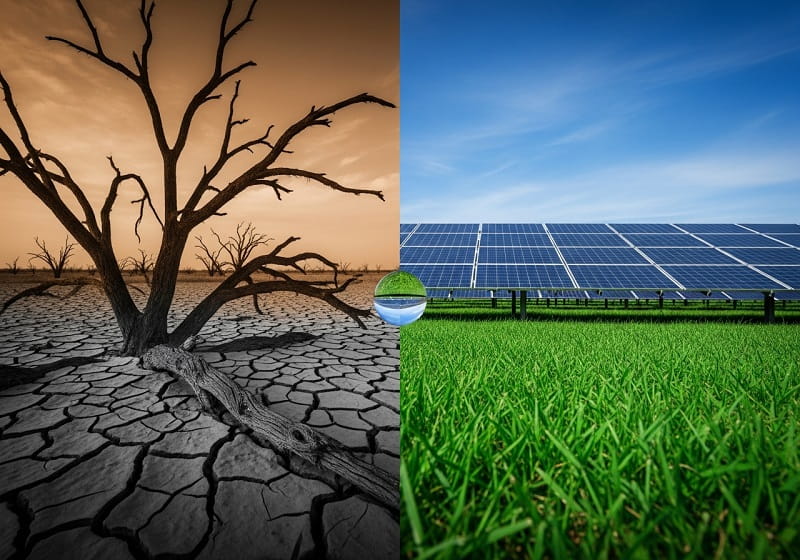
Climate change is no longer a distant scientific forecast but an accelerating reality reshaping our world in profound ways. From intensifying wildfires and unprecedented heatwaves to disruptive rainfall patterns and rising sea levels, the signals of a planet under stress are now unmistakable across every continent. This global phenomenon represents the most significant environmental challenge of our time, driven primarily by human activities that increase the concentration of heat-trapping greenhouse gases in our atmosphere.
The consequences are far-reaching, impacting not just fragile ecosystems but also global economies, public health, and social stability. Understanding the complex mechanisms behind climate change, its observable impacts, and the viable pathways to mitigate its worst effects is crucial for informed decision-making at every level—from individual households to international policy forums. While the challenge is immense, recent technological advances and growing global cooperation offer credible pathways to a more sustainable future, making this not just a story of crisis but also of potential solutions and human resilience.
The Scientific Foundation of Global Warming
The science of climate change is built upon centuries of established physics and decades of meticulous observation. At its core is the greenhouse effect, a natural process where certain gases in Earth’s atmosphere trap heat from the sun, keeping our planet habitable. Human activities, particularly since the Industrial Revolution, have dramatically intensified this effect by increasing the atmospheric concentration of key greenhouse gases far beyond natural levels.
The Greenhouse Gas Culprits
Not all greenhouse gases are created equal in their warming potential or longevity. The primary drivers of anthropogenic climate change are carbon dioxide (CO₂), methane (CH₄), and nitrous oxide (N₂O). Carbon dioxide, emitted mainly from burning fossil fuels and deforestation, is the single largest contributor, accounting for roughly three-quarters of total human-induced warming. While it is less potent molecule-for-molecule than other gases, its sheer volume and persistence—remaining in the atmosphere for centuries—make it the central focus of mitigation efforts. Methane, released from agriculture, waste management, and fossil fuel extraction, is over 80 times more powerful than CO₂ at trapping heat over a 20-year period, though it dissipates faster. Nitrous oxide, primarily from agricultural fertilizers and industrial processes, is nearly 300 times more potent than CO₂ and also contributes to ozone layer depletion.
The evidence for human-caused warming is now overwhelming. The Intergovernmental Panel on Climate Change (IPCC), the United Nations body for assessing climate science, states unequivocally that human influence has warmed the atmosphere, ocean, and land. This conclusion is supported by multiple, independent lines of evidence, from the isotopic fingerprint of carbon in the atmosphere—which confirms its origin from burned fossil fuels—to the observed pattern of atmospheric warming, which matches predictions from climate models incorporating human factors but not those considering natural forces alone. Since widespread industrialization began, atmospheric CO₂ concentrations have surged from about 280 parts per million to over 420 ppm, a level not seen in millions of years.
Key Climate Metrics and Tipping Points
Scientists monitor several critical metrics to gauge the state of the climate system. Global surface temperature is the most cited, with the planet having warmed approximately 1.2°C above pre-industrial (1850-1900) levels as of 2023. Other vital indicators include ocean heat content, which absorbs over 90% of the excess heat; the extent of sea ice in the Arctic and Antarctic; and global sea level, which is rising due to thermal expansion of warming water and the melting of land-based ice sheets and glaciers.
A major concern for climate scientists is the risk of crossing irreversible tipping points—thresholds where a small change leads to a large, often abrupt, and self-perpetuating shift in the climate system. Potential tipping points include the collapse of the West Antarctic Ice Sheet, which could lock in several meters of sea-level rise; the dieback of the Amazon rainforest, turning it from a carbon sink into a source; and the shutdown of major ocean current systems like the Atlantic Meridional Overturning Circulation, which regulates regional climates. Avoiding these thresholds is a primary motivation for limiting global warming to the targets set in the Paris Agreement.
Observed and Projected Impacts Across the Globe
The impacts of a warming climate are no longer theoretical projections; they are current events playing out in real-time across the globe. These effects are interconnected, often amplifying one another, and they disproportionately affect the world’s most vulnerable populations who have contributed the least to the problem.
Weather Extremes and Hydrological Changes
The most visceral impacts for many are the increasing frequency and severity of extreme weather events. A warmer atmosphere holds more moisture, leading to more intense rainfall and catastrophic flooding, as seen in events like the 2022 Pakistan floods. Conversely, higher temperatures accelerate evaporation, worsening droughts and heatwaves, like the record-shattering 2021 heat dome in the Pacific Northwest of North America. Scientific attribution studies now routinely calculate how much more likely or severe a particular extreme event was made by human-induced climate change.
Beyond individual disasters, long-term hydrological shifts are underway. Changing precipitation patterns are altering water availability, with some regions like the Mediterranean and southwestern North America becoming drier, while others like parts of Asia see increased monsoon rainfall. Glaciers, which act as natural freshwater reservoirs for billions of people, are retreating at an alarming rate worldwide. This combination of factors threatens water security for agriculture, industry, and communities, increasing the risk of conflict over dwindling resources.
- Intensified Heatwaves and Wildfires: Longer, hotter, and more frequent heatwaves directly endanger human health, reduce labor productivity, and strain energy grids. They also create tinder-dry conditions that fuel larger and more destructive wildfires, releasing vast stores of carbon back into the atmosphere and degrading air quality across continents.
- Supercharged Storms and Flooding Warmer ocean surface temperatures provide more energy for tropical cyclones (hurricanes and typhoons), increasing their potential intensity and the amount of rainfall they produce. This leads to greater storm surge flooding due to higher sea levels and more inland flooding from extreme precipitation.
- Agricultural and Food Security Stress: Crop yields for staples like wheat, maize, and rice are negatively affected by extreme heat during key growth stages. Combined with water scarcity and increased pest pressures, this undermines global food security and can lead to price volatility, disproportionately impacting low-income nations.
- Ecosystem Collapse and Biodiversity Loss: Many terrestrial, freshwater, and marine ecosystems are being pushed beyond their adaptive limits. Coral reefs are experiencing mass bleaching events, mountain ecosystems are shifting upward, and the rate of species extinction is accelerating, which disrupts vital natural services like pollination, water purification, and climate regulation.
- Human Health and Disease Burden: Climate change exacerbates a wide range of health risks. These include direct effects like heatstroke, injuries from extreme events, and the expanded geographical range of vector-borne diseases like malaria and dengue. Indirect effects include malnutrition from food shortages and mental health impacts from trauma and displacement.
Economic and Social Consequences
The economic costs of climate change are staggering and rising. The physical damages from more destructive weather, the loss of labor hours due to extreme heat, and the impacts on agriculture and fisheries impose a heavy toll. Major financial institutions and central banks now regularly stress-test their portfolios and the broader economy against climate risks, recognizing it as a major threat to financial stability. The costs of inaction, as shown in numerous economic models, far exceed the investments required for a transition to a low-carbon economy.
Socially, climate change acts as a “threat multiplier,” exacerbating existing inequalities and instability. It can deepen poverty, trigger displacement and migration, and increase the risk of conflict over resources. The World Bank estimates that without concerted action, over 200 million people could be forced to migrate within their own countries by 2050 due to climate impacts. These disruptions place immense pressure on social safety nets, urban infrastructure, and international relations, highlighting that climate justice—addressing the unequal burden of impacts and solutions—must be central to the global response.
Global Mitigation and Adaptation Strategies
Addressing the climate crisis requires a dual approach: aggressively reducing greenhouse gas emissions to mitigate future warming (mitigation) and making adjustments to lessen the harm from changes already in motion (adaptation). These strategies must be implemented simultaneously and at a scale commensurate with the challenge.
Transitioning to a Low-Carbon Economy
The cornerstone of climate mitigation is a rapid and just transition away from fossil fuels. This energy transformation is now technologically feasible and increasingly economical.
- Renewable Energy Deployment: Wind and solar power have become the cheapest sources of new electricity in most of the world. The key challenge is scaling up deployment, modernizing electricity grids to handle variable renewable sources, and developing large-scale energy storage solutions like advanced batteries and green hydrogen.
- Electrification and Efficiency: Switching end-use sectors like transport and heating from fossil fuels to electricity—generated from clean sources—is critical. This means accelerating the adoption of electric vehicles, heat pumps for buildings, and electric industrial processes. Coupled with stringent energy efficiency standards for appliances, vehicles, and buildings, this can drastically reduce demand.
- Nature-Based Solutions: Protecting and restoring forests, wetlands, mangroves, and other ecosystems is a vital and cost-effective climate solution. These natural systems sequester massive amounts of carbon while also providing crucial co-benefits like biodiversity habitat, flood protection, and water filtration.
- Technological Innovation: While existing technologies can deliver most of the needed emissions cuts, investment in next-generation solutions is essential for harder-to-abate sectors. This includes advancements in carbon capture and storage, sustainable aviation fuels, low-carbon cement and steel production, and advanced nuclear power.
- Policy and Financial Levers: Effective government policies, such as carbon pricing, clean energy standards, and the phase-out of fossil fuel subsidies, are required to steer investment and innovation. Redirecting global financial flows from high-carbon to low-carbon activities is paramount, requiring clear signals from regulators and commitments from major banks and investors.
Building Resilience Through Adaptation
Even with ambitious mitigation, the Earth is committed to further warming and impacts due to past emissions. Adaptation is therefore unavoidable. Effective adaptation involves making systemic changes to reduce vulnerability.
For infrastructure, this means building with future climate conditions in mind—constructing seawalls and flood barriers, hardening electricity grids, and designing roads and bridges to withstand higher temperatures and more intense storms. In agriculture, it involves developing drought- and heat-resistant crop varieties, implementing efficient irrigation, and diversifying food systems. For communities, it requires updating early warning systems for extreme weather, creating urban green spaces to reduce heat island effects, and developing plans for managed retreat from high-risk coastal areas.
Financing adaptation, particularly for developing countries with the greatest needs but the least capacity to pay, remains a major hurdle in international climate negotiations. The principle of “common but differentiated responsibilities” underscores the obligation of wealthier nations, historically the largest emitters, to support adaptation efforts in more vulnerable nations.
International Agreements and the Path Forward
The global nature of climate change demands a coordinated international response. The cornerstone of this effort is the 2015 Paris Agreement under the United Nations Framework Convention on Climate Change (UNFCCC). Its central goal is to limit global warming to “well below 2°C” above pre-industrial levels while pursuing efforts to limit it to 1.5°C, a threshold identified by science as significantly reducing the risks of the most catastrophic impacts.
The Paris Agreement operates on a five-year cycle of increasingly ambitious climate action. Countries submit national plans known as Nationally Determined Contributions (NDCs), which outline their emissions reduction targets and adaptation plans. A key process is the “global stocktake,” which assesses collective progress toward the agreement’s goals. The first stocktake concluded at COP28 in 2023 with a landmark agreement calling for “transitioning away from fossil fuels in energy systems.” While a historic statement, its non-binding nature underscores the persistent gap between political commitments and the concrete, rapid actions required by science.
The challenge remains immense. Current global policies and NDCs, if fully implemented, are projected to result in warming of around 2.5-2.9°C by the end of the century—far above the Paris targets. Closing this “implementation gap” requires unprecedented acceleration in every sector. Success hinges not just on government action, but on a whole-of-society mobilization involving sub-national governments, corporations, financial institutions, civil society, and individuals.
The Role of Individual and Collective Action
While systemic change driven by policy is essential, individual and collective actions play a critical role in shaping social norms, driving market demand, and building political will for stronger climate policies. Informed citizens can exert influence through multiple channels.
On a personal level, high-impact actions include reducing energy consumption at home, adopting a plant-rich diet, minimizing air travel, and choosing sustainable transportation. However, individual behavior change is most powerful when it shifts from private virtue to public action. This includes discussing climate change within social networks to overcome polarization, supporting businesses with strong environmental commitments, and, most significantly, engaging in the civic process.
Citizens can demand climate action from elected officials at all levels of government, vote for leaders with credible climate plans, and participate in community initiatives focused on resilience, such as local tree-planting or disaster preparedness groups. Collective movements, from youth-led strikes to shareholder activism pushing corporations to decarbonize, demonstrate that public pressure can alter the political and economic landscape. Ultimately, individual agency is most effective when leveraged to demand and support the large-scale systemic transformations that only coordinated governance and markets can deliver.
Conclusion
Climate change represents a defining challenge of the 21st century, testing humanity’s capacity for collective action, innovation, and justice. The scientific reality is unequivocal: human activities are warming the planet at an alarming rate, triggering a cascade of dangerous and costly impacts that threaten ecosystems, economies, and global stability. From escalating weather disasters to insidious threats to food and water security, the evidence of a world in climatic transition is all around us. Yet, within this crisis lies a clear opportunity. The pathways to a stable climate—rapidly decarbonizing our energy systems, transforming industries, protecting natural ecosystems, and building resilient communities—are increasingly understood and, in many cases, economically advantageous. The technological tools largely exist; what is now required is the political will, financial investment, and social commitment to deploy them at the necessary speed and scale. The legacy of today’s generation will be determined by the urgency with which we heed the scientific warnings, embrace the solutions before us, and ensure a livable, equitable planet for future generations. The time for incrementalism has passed; the era of decisive, global transformation must begin.
