

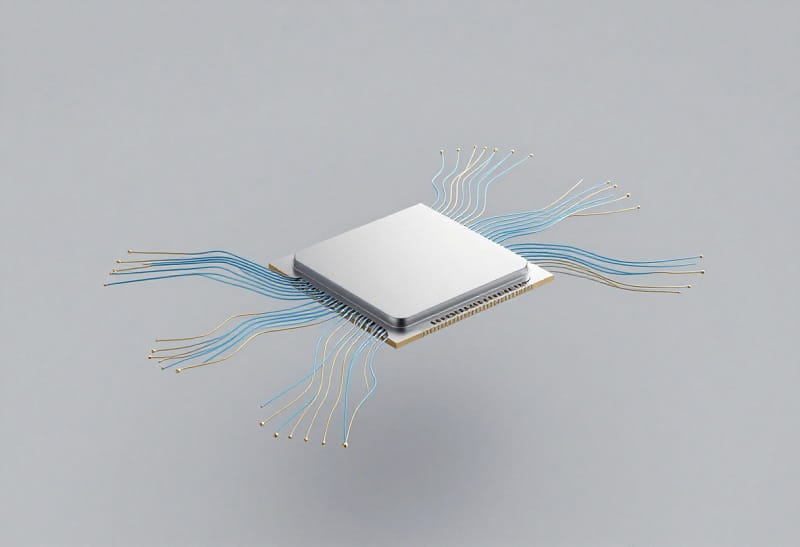
The convergence of artificial intelligence with living biological tissue has moved beyond theoretical exploration into a tangible technological sector, giving rise to sophisticated AI bio-digital interface systems. In 2026, these systems are no longer confined to science fiction; they are actively being deployed in medical research centers, developed by neurotechnology startups, and tested in clinical trials across the United States and Europe. From wearable devices that translate thought into digital command without surgery to biological computers running on human neurons, the field is experiencing an unprecedented acceleration in capability and accessibility .
The Current State of Bio-Digital Convergence
The core principle behind bio-digital interfaces is the establishment of a high-bandwidth communication pathway between the brain’s electrical activity and external digital devices. While early brain-computer interfaces (BCIs) relied heavily on decoding simple motor commands, the addition of sophisticated AI models has revolutionized their functionality. Modern systems do not merely read signals; they interpret intent, predict outcomes, and adapt in real-time.
One of the most significant developments in late 2025 was the publication of a study by German researchers at Ruhr University Bochum, who successfully created an interface allowing a large language model to interpret real-time human heart data. Dr. Morris Gellisch and Boris Burr demonstrated that an AI could not only receive physiological data but also adapt its output based on the user’s cognitive stress levels, as indicated by heart rate variability . This moves beyond traditional BCI, venturing into a broader realm of physiological AI interaction.
Concurrently, hardware has evolved. The Australian company Cortical Labs has commercialized the CL1, a “Synthetic Biological Intelligence” that grows human neurons on a silicon chip. This creates a closed-loop system where biological neurons interact with digital code, offering a potential alternative to energy-intensive silicon-only AI .
Leading AI Bio-Digital Interface Platforms and Products
The market for these systems is bifurcating into two main categories: high-cost, high-complexity research platforms designed for institutional use, and application-specific devices aimed at restoring function for individuals with disabilities. Below are the leading entities shaping this industry in 2026.
Cortical Labs CL1
The Cortical Labs CL1 represents a radical departure from traditional computing. It is the world’s first commercialized code-deployable biological computer, integrating living human neurons (reprogrammed from skin or blood cells) onto a silicon chip. These approximately 800,000 neurons are sustained by an internal life-support system, creating a “DishBrain” that can process information and learn with minimal data and energy. It is designed for advanced medical research, drug discovery, and as an alternative platform for AI development .
- Neural Fusion: Utilizes induced pluripotent stem cells (iPSCs) reprogrammed into neurons, grown directly on a chip with 2D and 3D structures.
- Closed-Loop System: The chip sends and receives electrical impulses to and from the neurons, allowing for real-time interaction and stimulation.
- biOS (Biological Intelligence Operating System): A proprietary operating system that allows researchers to deploy code directly to the neurons and manage experimental protocols.
- Self-Contained Life Support: Automated perfusion system regulates temperature, gas mix, and nutrient flow, keeping neurons alive and functional for up to six months.
- Energy Efficiency: Consumes a fraction of the power required by traditional GPU-based AI data centers, offering a sustainable research model.
Price: Approximately $35,000 per unit (as of October 2025) .
Pros: Unprecedented research platform; drastically reduces energy consumption; offers an alternative to animal testing; high adaptability due to living neurons.
Cons: High initial cost; requires specialized knowledge to operate and maintain; long-term viability of cell cultures can be variable; ethical considerations regarding neuron sentience.
Best For: Neuroscience research labs, pharmaceutical companies for drug toxicity testing, and advanced AI research institutions.
Availability: Available for pre-order through Cortical Labs, with general commercial release expected in the second half of 2025. Cloud access via a remote server stack is also planned .
Cognixion Axon-R with Apple Vision Pro Integration
Cognixion has developed the Axon-R, a non-invasive wearable headset utilizing advanced EEG technology. Its most groundbreaking initiative is a clinical study launched in late 2025 to integrate the Axon-R with the Apple Vision Pro. This combination aims to create a powerful assistive technology for individuals with ALS, spinal cord injuries, and traumatic brain injuries. By combining brain signals, eye gaze, and head pose, the system enables hands-free, voice-free communication and control without the need for risky implant surgery .
- Nucleus Bio-Sensing Hub: A high-density EEG system that captures neural activity with precision, designed for real-world, non-invasive use.
- AI-Mediated Input: Proprietary algorithms filter and interpret neural signals, translating them into commands for the Apple Vision Pro’s accessibility features like Dwell Control.
- Assisted Reality Applications: Designed to control mobility devices, access entertainment, and facilitate communication within a spatial computing environment.
- Investigational Status: The device is currently part of a feasibility study (running through April 2026) and is not yet FDA-cleared.
- Multimodal Fusion: Combines EEG, eye-tracking, and head pose data for a more robust and accurate interpretation of user intent.
Price: Pricing for the combined system is not yet public as it is investigational. The Apple Vision Pro retails starting at $3,499.
Pros: Completely non-invasive and avoids surgical risks; leverages Apple’s robust accessibility ecosystem; aims to provide immediate communication benefits; targets a large addressable patient population.
Cons: Still in the clinical trial phase and not commercially available; EEG-based systems generally have lower signal resolution than implants; dependent on the user’s ability to control eye movement to some degree.
Best For: Individuals with severe speech and physical impairments (ALS, SCI, stroke) seeking to regain communication and environmental control.
Availability: Investigational; available for enrollment in the clinical study. Awaiting pivotal trial and FDA clearance .
UCLA AI-Powered Wearable BCI
Researchers at UCLA, led by Jonathan Kao, have developed a non-invasive BCI system that leverages an “AI copilot” to quadruple its performance. The system uses a standard 64-electrode EEG cap, but its innovation lies in a custom AI algorithm that interprets the user’s intent and assists in steering a cursor or controlling a robotic arm. In trials, a paralyzed participant who could not complete a robotic arm task alone succeeded 93% of the time with the AI’s assistance. This “shared autonomy” model demonstrates the power of AI in bridging the gap between noisy neural signals and precise motor control .
- Shared Autonomy Algorithm: An AI copilot that combines EEG decoder inputs with environmental data (e.g., target positions) to infer and assist with user intent.
- Reinforcement Learning: The system uses reinforcement learning to improve its assistance over time, adapting to the user’s specific neural patterns.
- Wearable Design: Based on a non-invasive EEG cap, making it a low-risk alternative to brain surgery.
- Proven Performance: In published studies, the AI copilot boosted cursor control success rates by 2x to 4x and enabled complex block-stacking tasks with a robotic arm .
- Versatile Application: Demonstrated effectiveness in both cursor control and robotic arm manipulation tasks.
Price: This is a research prototype and not a commercial product. Component costs are estimated in the low thousands for the EEG cap and processing unit.
Pros: Demonstrates massive performance gains for non-invasive systems; reduces the need for risky implants; the AI adapts to the user’s specific neural activity; provides a viable path for paralyzed individuals to regain motor function.
Cons: Not yet a commercial product; performance may still lag behind invasive systems for highly complex tasks; requires a computer to run the AI model.
Best For: Research institutions and future medical device companies aiming to develop high-performance, non-invasive assistive technologies.
Availability: Research prototype only, developed at UCLA .
NeuroXess BCI with Mandarin Decoding
Shanghai-based NeuroXess has achieved a significant milestone in language decoding. In a clinical trial published in Science Advances, the company demonstrated real-time decoding of Mandarin Chinese from neural signals. Using its proprietary XessOS and a high-density implant, a patient with epilepsy was able to control a digital avatar to speak, converse with AI models, and send a New Year’s message via brain signals. This breakthrough is critical for tonal languages, which are spoken by the global majority but often excluded from English-centric BCI development .
- High-Accuracy Syllable Decoding: Achieved 71.2% accuracy in decoding 394 common Chinese syllables (covering >98% of daily speech).
- Real-Time Speech Synthesis: Enabled a patient to vocalize through a digital avatar in real-time, with a decoding speed of 49.6 characters per minute.
- XessOS Platform: A proprietary universal BCI operating system that facilitates communication between the implant and external AI models or devices.
- Bilingual Capability: The first major system to prove the viability of BCIs for tonal languages, expanding accessibility to billions of potential users.
- AI Model Integration: Allowed the patient to converse directly with large AI models in real-time using decoded thoughts.
Price: Not commercially available; currently in clinical trial phase.
Pros: Validates BCI for tonal language speakers; high accuracy and low latency (65ms per syllable); enables natural conversational pace; integrates with AI for enhanced functionality.
Cons: Invasive implant required; current trial focused on epilepsy patients; requires further validation in stroke/ALS patients with speech loss.
Best For: Medical centers specializing in speech restoration and neurological rehabilitation for Mandarin-speaking patients.
Availability: Clinical trials in China; future development planned for stroke and ALS patients .
AlterEgo Silent Communication Interface
AlterEgo, a Boston-based company with roots at MIT, has developed a non-neural, wearable interface that enables “near-telepathic” communication. Unlike BCIs that read brain signals, AlterEgo uses surface electromyography (sEMG) to detect the subtle neuromuscular signals sent to the vocal cords and internal speech articulators during subvocalization. The device maps these muscle movements to text, allowing users to “type” by thinking of words, without speaking or moving their lips. It claims to achieve high accuracy while ignoring non-speech thoughts .
- Surface Electromyography (sEMG): Uses electrodes on the skin’s surface to pick up nerve signals to the larynx and tongue muscles involved in internal speech.
- Non-Invasive Wearable: A curved device that rests on the neck and lower face, requiring no surgery or implanted chips.
- Silent Output: Translates subvocalized thoughts directly into text or commands, enabling silent interaction with computers and AI.
- Speed of Thought Typing: Aims to allow users to compose messages and queries as fast as they can internally verbalize them.
- Privacy-Focused: Designed to only capture signals related to intended speech, not random background thoughts.
Price: Not yet publicly released; no official pricing announced.
Pros: Completely non-invasive and avoids brain surgery; high reported accuracy (92% in early studies); provides a private and silent communication channel; potential for use in noisy environments or by individuals who have lost audible speech.
Cons: Still in development with sparse recent performance data; requires functional subvocalization ability (may not work for all locked-in patients); is not a direct brain interface, so it may not work for those with severe neuromuscular damage.
Best For: Individuals with speech impairments who retain subvocal motor function, and for general consumers seeking a silent way to interact with AI.
Availability: Development stage; company has announced recent breakthroughs but no commercial release date .
MIT Media Lab Affective Biofeedback System
Researchers at the MIT Media Lab, including Jocelyn Scheirer and Rosalind Picard, have developed a novel system that combines generative AI with wearable sensors to create personalized biofeedback. Instead of generic graphs or tones, the system allows users (specifically tested with autistic adults) to describe a meaningful object or scene to an AI. The AI then generates a custom animation that changes in real-time based on the user’s electrodermal activity (EDA). This helps users, particularly those with interoception challenges, to recognize and understand their own emotional and physiological states .
- Generative AI Animation: A GPT-based interface creates personalized Processing animations based on user descriptions of emotionally resonant objects (e.g., a favorite landscape).
- Real-Time Physiological Mapping: Skin conductance (EDA) data from a wrist sensor dynamically drives the animation’s behavior (e.g., color, speed, shape).
- Interoception Scaffolding: Aims to help users learn to sense internal state changes by visualizing them through personally meaningful metaphors.
- Co-Design with Users: Developed and evaluated in partnership with 12 autistic adults to ensure relevance and engagement.
- No-Code Customization: The AI interface allows for iterative refinement of the animation without requiring the user to have programming skills.
Price: Research prototype only.
Pros: Highly personalized and engaging feedback mechanism; addresses a specific clinical need (interoception); demonstrates a creative fusion of AI, wearables, and psychology; empowers users to author their own therapeutic tools.
Cons: Not a commercial product; effectiveness is highly individual and requires further validation; relies on user’s ability to describe meaningful visual metaphors.
Best For: Researchers in affective computing, human-computer interaction, and digital therapeutics for neurodivergent populations.
Availability: Research project at the MIT Media Lab; academic publication only .
Pricing Comparison: AI Bio-Digital Interface Systems (2026)
- Cortical Labs CL1: ~$35,000 (research platform, est. commercial release H2 2025)
- Cognixion Axon-R + Apple Vision Pro: Pricing Pending (Investigational; Vision Pro alone starts at $3,499)
- UCLA AI-Powered BCI: Not for sale (research prototype; component cost ~$5,000-$10,000 est.)
- NeuroXess BCI: Not for sale (clinical trial phase in China)
- AlterEgo: Not for sale (development stage)
- MIT Affective Biofeedback: Not for sale (research prototype)
How to Choose a Bio-Digital Interface System
Selecting the right platform depends entirely on the user’s goals, medical needs, and technical resources.
- Invasiveness vs. Signal Fidelity: Determine the acceptable level of risk. Non-invasive EEG systems (Cognixion, UCLA) are safer but offer lower signal resolution. Invasive implants (NeuroXess) provide high-fidelity data but require brain surgery. Consider whether the medical necessity justifies the surgical risk .
- Application Specificity: Define the primary use case. For basic communication and environmental control, a non-invasive system like Cognixion’s may suffice. For complex robotic limb control or high-speed typing, a higher-bandwidth invasive or research-grade system may be necessary .
- Research vs. Clinical Use: Distinguish between a research platform and a therapeutic device. The Cortical Labs CL1 is a tool for understanding neuroscience and testing drugs, not for patient use. NeuroXess and Cognixion are pursuing clinical pathways to help patients regain lost functions .
- Language and Cultural Context: For speech restoration, consider whether the system supports the user’s native language. NeuroXess’s breakthrough with Mandarin highlights the importance of tonal language support, which many English-centric systems lack .
- Regulatory Status: Check if the device is FDA-cleared or CE-marked for use in the USA and Europe. Most systems mentioned are either investigational or research-only. Purchasing an unapproved device for personal use is currently not an option.
Buying Guide: Key Factors to Consider
For institutions or individuals navigating this emerging market, consider these deeper factors:
- Signal Processing Algorithms: The quality of the AI or algorithm that decodes neural signals is often more important than the hardware itself. The UCLA study showed that a superior “AI copilot” could make a standard EEG cap perform at levels rivaling implants for specific tasks . Investigate the software stack, not just the sensors.
- Closed-Loop Functionality: Look for systems that can not only read but also stimulate. Closed-loop systems that provide sensory feedback to the brain or body are the next frontier for more natural control and rehabilitation.
- Long-Term Biocompatibility and Viability: For biological systems like the CL1, assess the protocols for maintaining cell health. For implants, investigate long-term studies on signal degradation and immune response. The CL1’s 6-month neuron lifespan is acceptable for research but would be a limitation for a permanent implant .
- Ecosystem and API Access: Consider how the system integrates with existing technologies. Cognixion’s integration with Apple’s accessibility features is a major advantage, as it leverages a mature, user-friendly platform. Check for open APIs that allow for custom software development .
- Data Privacy and Security: Neural data is arguably the most personal data imaginable. Investigate the company’s policies on data encryption, user ownership of neural data, and protection against “brain hacking.” This is an evolving ethical and legal area.
- Ethical and Social Implications: Be aware of the broader debates. Mark Cook from the University of Melbourne warns about “shared autonomy” systems potentially overriding user intent if the AI is too aggressive . Understand the balance between assistance and autonomy.
- Total Cost of Ownership: For platforms like the CL1, the $35,000 purchase price is just the beginning. Factor in the cost of consumables (nutrient media, chips), specialized personnel, and maintenance. For non-invasive devices, consider software subscription fees and hardware replacement cycles.
Current Market Prices and Deals
As of early 2026, the market for bio-digital interfaces remains in its infancy, dominated by research tools and clinical trials rather than mass-market consumer products. The only confirmed commercial price is for the Cortical Labs CL1 research platform at approximately $35,000 . This is aimed at institutional buyers. Other devices, such as those from Cognixion and NeuroXess, are not yet for sale and are currently available only to participants in approved clinical studies .
There are no current consumer “deals” or promotions for these advanced medical devices. The primary cost for an individual seeking this technology would be associated with enrolling in a clinical trial, which typically covers the device and procedure costs. For institutions, purchasing a CL1 involves direct negotiation with Cortical Labs. There is currently no secondary market or leasing options publicly available.
Pros and Cons Summary of Leading Systems
- Cortical Labs CL1: Pros: Revolutionary biological computing platform, low energy, high research value. Cons: Very high cost, requires specialized lab, not for patient therapy.
- Cognixion Axon-R: Pros: Non-invasive, leverages Apple ecosystem, direct patient benefit focus. Cons: Investigational, lower signal resolution than implants, pending regulatory approval.
- UCLA AI-Powered BCI: Pros: Demonstrated massive performance gains with AI, non-invasive, robust research. Cons: Research prototype only, not commercially available.
- NeuroXess BCI: Pros: World-first tonal language decoding, high accuracy, real-time AI interaction. Cons: Invasive surgery required, currently China-based trials only.
- AlterEgo: Pros: Non-invasive, high accuracy claims, private silent communication. Cons: Not a direct brain interface, development status unclear, not commercially available.
Pro Tips for Engaging with AI Bio-Digital Interfaces
- For Researchers: When evaluating platforms like the CL1, design your experiments with the neurons’ biological variability in mind. Unlike deterministic silicon, biological systems are adaptive; statistical power may require more trials to account for this “living” noise .
- For Clinicians: For patients considering non-invasive BCIs like Cognixion’s, early and consistent training is key. The AI models often improve with more data, so patient adherence to calibration protocols directly impacts long-term performance .
- For Developers: When building applications for these interfaces, prioritize “shared autonomy” principles. The AI should act as a predictive co-pilot, smoothing out noisy signals, but it must be transparent enough that the user retains ultimate control and agency .
- For Patients: Stay informed about clinical trial registries (like ClinicalTrials.gov). Companies like Cognixion and Synchron actively recruit participants. Early access to these technologies often comes through trial participation .
- For Ethicists and Policymakers: The rapid advancement of language decoding, as shown by NeuroXess, necessitates urgent discussion on neural data rights. The ability to decode internal speech from Mandarin syllables raises the stakes for protecting the privacy of inner thought .
- For Investors: Differentiate between hardware companies and software/AI companies. While hardware like the CL1 is impressive, the real scalable value may lie in the algorithms (like UCLA’s AI copilot) that can significantly enhance existing, less-invasive hardware platforms.
Frequently Asked Questions about AI Bio-Digital Interfaces
What is the difference between a BCI and a bio-digital interface?
A brain-computer interface (BCI) is a subset of bio-digital interfaces specifically focused on the brain. Bio-digital interface is a broader term that includes systems connecting other biological components (like neurons in a dish, heart signals, or muscle movements) directly to digital systems, as seen with the Cortical Labs CL1 or the heart-rate-to-AI interface .
Are these devices safe for long-term use?
Safety depends on the type. Non-invasive devices like EEG caps or sEMG wearables (e.g., AlterEgo) are generally considered very safe. Invasive implants carry surgical risks and potential long-term immune reactions. Devices like the CL1 are for laboratory use only and are not implanted . Long-term safety data for most of these new systems is still being collected.
Can I buy a brain-computer interface for personal use?
Currently, high-performance BCIs for medical conditions are not available for direct consumer purchase. They are either investigational devices available only in clinical trials (like Cognixion’s) or expensive research platforms sold to institutions (like Cortical Labs) . Consumer-grade neurofeedback devices exist but are far less powerful.
How does AI improve brain-computer interfaces?
AI acts as an intelligent interpreter. It can filter out noise from neural signals, predict the user’s intended action based on context, and adapt to the individual’s unique brain patterns over time. The UCLA study showed that an “AI copilot” can compensate for the lower signal quality of non-invasive EEG, dramatically boosting performance .
Will these interfaces work for tonal languages?
Until recently, most BCI speech research focused on English. The breakthrough by NeuroXess in decoding Mandarin Chinese proves that it is possible for tonal languages, opening the door for systems that serve the global majority. This requires specialized algorithms to interpret pitch and tone variations .
What is “shared autonomy” in this context?
Shared autonomy is a model where the AI and the user collaborate to complete a task. The AI interprets the user’s intent and assists in the execution, but the final decision-making remains with the user. This is crucial for assistive devices, ensuring the AI doesn’t override what the person actually wants to do .
What are the ethical concerns with this technology?
Key ethical concerns include: mental privacy (who has access to your neural data), autonomy (ensuring the AI doesn’t override user intent), security (preventing “brain hacking”), and equitable access (ensuring these expensive technologies don’t widen the disability gap). There are also emerging debates about the moral status of biological computers like the CL1 .
How do neurons survive on a computer chip like the CL1?
The chip is housed inside a sterile environment with a sophisticated life-support system. This system continuously pumps a nutrient-rich medium over the cells, removes waste, and carefully regulates temperature, oxygen, and pH levels to mimic the conditions inside a living body, keeping the neurons healthy for extended periods .
Conclusion
The landscape of AI bio-digital interface systems in 2026 is marked by a dynamic tension between biological and silicon intelligence, invasive and non-invasive methods, and research tools versus clinical applications. From the biological computing power of the Cortical Labs CL1 to the assistive, non-invasive promise of the Cognixion-Apple Vision Pro integration, the field is rapidly moving toward practical, real-world impact. The integration of sophisticated AI copilots is proving to be a transformative force, capable of unlocking the potential of safer, wearable technologies and making them viable for individuals with severe motor impairments. As companies like NeuroXess break down language barriers and researchers at MIT explore new forms of affective feedback, we are witnessing the foundational years of a technology that will fundamentally redefine the relationship between humans, our bodies, and the machines we use. The focus is now shifting from mere technical feasibility to responsible implementation, ensuring that as these systems become more integrated into our lives, they enhance human agency rather than diminish it.

Loading comments…