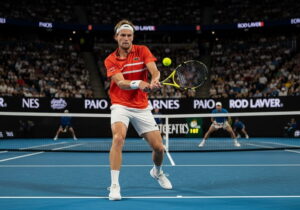
The landscape of professional tennis continued its dramatic shift at Melbourne Park as the 2026 Australian Open reached its fever pitch during the quarterfinal rounds. In a highly anticipated clash of youth and power, defending champion Jannik Sinner maintained his iron grip on the tournament by defeating American eighth seed Ben Shelton in straight sets. The victory not only extended Sinner’s remarkable winning streak on the blue hard courts of Rod Laver Arena but also set the stage for a monumental semifinal showdown against the legendary Novak Djokovic. As the tennis world watches the “Next Gen” solidify its dominance, Sinner’s performance against Shelton served as a masterclass in tactical precision and mental fortitude.
Sinner entered the match with a formidable psychological advantage, holding an 8-1 head-to-head record against Shelton. Despite the American’s explosive serve and aggressive baseline play, Sinner has consistently found ways to neutralize Shelton’s greatest weapons. The quarterfinal encounter proved to be no different, as the Italian world number two utilized his superior return game and baseline consistency to frustrate the young American. From the opening point, it was clear that Sinner’s familiarity with the Melbourne conditions and his recent championship experience provided a level of composure that Shelton struggled to match.
Throughout the three-set contest, Sinner displayed the surgical efficiency that has defined his rise to the top of the ATP rankings. While Shelton attempted to dictate play with high-velocity serves and heavy forehands, Sinner remained undeterred, redirecting pace with ease and forcing Shelton into extended rallies where the American’s unforced error count began to climb. This victory marks Sinner’s sixth consecutive appearance in a Grand Slam semifinal, a testament to his incredible consistency over the past two seasons. As he prepares to face Djokovic, the narrative shifts from a battle of young stars to a clash of eras, with Sinner looking to further cement his status as the new king of hard courts.
The first set established a rhythm that would persist throughout the match. Sinner struck early, securing a break of serve in the fourth game to move ahead 3-1. His ability to stand close to the baseline and take Shelton’s 220 km/h serves on the rise allowed him to start points on neutral or even offensive terms. Shelton, known for his “rowdy” energy and ability to feed off the Melbourne crowd, found himself unable to ignite the atmosphere as Sinner’s clinical play kept the fans in a state of quiet admiration. The Italian closed out the opening set 6-3 in just under 50 minutes, striking 12 winners and committing only four unforced errors.
In the second set, Shelton attempted to vary his tactics, incorporating more serve-and-volley plays and utilizing his slice backhand to disrupt Sinner’s rhythm. However, Sinner’s court coverage and passing shots were near-perfect. Whenever Shelton approached the net, he was met with dipping cross-court forehands or precise down-the-line backhands that left him stranded. A single break of serve late in the set was all Sinner needed, as his own service games remained virtually untouchable. By the end of the second set, which ended 6-4, Sinner had won over 80% of his first-serve points, leaving Shelton with very few opportunities to find a foothold in the match.
The third set saw Shelton’s most spirited resistance, as he managed to hold serve comfortably through the first eight games. The American’s serve remained a viable weapon, and he began to find more depth with his groundstrokes. Yet, at 4-4, the pressure of the moment appeared to weigh on the 23-year-old American. A few mistimed forehands gave Sinner the opening he needed to secure the decisive break. Serving for the match at 5-4, Sinner showed no signs of nerves, closing out the contest with an ace to secure a 6-3, 6-4, 6-4 victory. The win pushed his Melbourne winning streak to 20 matches, a streak that dates back to the start of the 2024 tournament.
Sinner’s victory over Shelton is supported by a range of statistical metrics that highlight his current dominance on the ATP Tour. Key performance indicators from the quarterfinal match include:
- First Serve Efficiency: Sinner landed 68% of his first serves, winning 84% of those points. This high percentage prevented Shelton from generating any significant break point opportunities throughout the three sets of play.
- Return of Serve Success: The Italian won 38% of his return points against one of the fastest serves in the game. By consistently putting the ball back in play, Sinner forced Shelton to work for every point, leading to increased fatigue and errors.
- Unforced Error Ratio: Sinner committed only 15 unforced errors over the course of the match, compared to Shelton’s 33. This discipline in long rallies allowed Sinner to wait for the American to make the mistake rather than forcing unnecessary risks.
- Net Point Conversion: Despite being primarily a baseline player, Sinner won 12 of 15 points when approaching the net, showing his growing comfort with all-court tennis and tactical variety.
- Break Point Conversion: Sinner was highly efficient on his opportunities, converting three of the five break points he earned. In contrast, he did not face a single break point on his own serve for the duration of the match.
- Physical Endurance: Sinner’s average rally length was significantly higher than Shelton’s, yet he maintained a higher speed and better court positioning throughout the match, indicating his superior conditioning.
These statistics underscore why Sinner has become such a difficult opponent to beat on hard courts. His game lacks obvious weaknesses, and his ability to elevate his level during the most critical moments of a match has become his trademark. For Shelton, the match served as a learning experience, highlighting the gap between being a top-ten player and a Grand Slam champion. While the American’s power is undeniable, his tactical depth and consistency remain areas for improvement as he continues to compete at the highest level of the sport.
The upcoming semifinal between Jannik Sinner and Novak Djokovic is perhaps the most significant matchup in men’s tennis today. Djokovic, the 10-time Australian Open champion and 24-time Grand Slam winner, enters the match as the elder statesman of the tour, still competing at an elite level at age 38. However, the recent history between the two suggests that the tide has turned in Sinner’s favor. The Italian has won four of their last five meetings, including a convincing straight-sets victory in the 2024 Australian Open semifinals and subsequent wins at Roland Garros and Wimbledon in 2025.
Djokovic reached the 2026 semifinals after a challenging path that included a quarterfinal victory where his opponent, Lorenzo Musetti, was forced to retire due to injury. Despite the shortened match, Djokovic has looked physically sharp and mentally focused, repeatedly stating that he is “not waving the white flag” to the younger generation. The Serbian remains the sport’s greatest tactician, and his ability to adjust his game plan mid-match is legendary. To beat Sinner, Djokovic will likely need to find ways to drag the Italian out of his comfort zone on the baseline, perhaps utilizing more drop shots and variety to prevent Sinner from finding a rhythm.
For Sinner, the challenge is as much psychological as it is physical. While he has proven he can beat Djokovic on the biggest stages, the pressure of being the favorite against the “Greatest of All Time” is a different kind of burden. Sinner’s performance against Shelton showed that he is currently playing with immense confidence, but Djokovic represents a vastly different challenge. Unlike Shelton, Djokovic will not give away free points through unforced errors; every game will be a tactical battle of wills. The outcome of this match will likely depend on Sinner’s ability to maintain his high first-serve percentage and Djokovic’s ability to exploit any small lapses in the Italian’s focus.
The rivalry between Sinner and Djokovic has evolved into a fascinating study of stylistic differences. Sinner represents the modern “power-baseline” era, where heavy groundstrokes from both wings are the primary weapons. His backhand, in particular, has become one of the most feared shots in tennis, capable of producing extreme angles and pace even when he is on the defensive. Djokovic, while also a baseline master, relies more on defensive flexibility, elite counter-punching, and the best return of serve the game has ever seen. The “Sinner-Djokovic H2H” now stands as a defining rivalry of the mid-2020s, bridging the gap between the Big Three era and the new age of tennis.
One of the key factors in their recent encounters has been Sinner’s serve. Historically, Djokovic has feasted on second serves, but Sinner has improved his second-serve velocity and placement to the point where it is no longer a liability. In their 2025 meetings at the French Open and Wimbledon, Sinner’s ability to hold serve under pressure was the deciding factor. Djokovic has openly praised Sinner’s development, noting that the Italian has “no real holes” in his game anymore. This mutual respect adds an intriguing layer to their competition, as both players are constantly evolving to counter the other’s strengths.
The 2026 Australian Open semifinal will take place in the evening session at Rod Laver Arena, conditions that typically favor Sinner’s flatter groundstrokes. The cooler night air in Melbourne makes the court slightly slower, allowing Sinner more time to set up his powerful shots. Djokovic, however, has historically excelled in night sessions in Melbourne, often wearing down opponents through his superior movement and endurance. Fans can expect a match filled with long, high-intensity rallies where both players will test each other’s physical and mental limits. This is the match many predicted at the start of the tournament, and it carries the weight of a virtual final.
While the focus is currently on Sinner and Djokovic, the other side of the draw features a similarly high-stakes battle between world number one Carlos Alcaraz and third seed Alexander Zverev. The presence of Alcaraz and Sinner in the semifinals reinforces the narrative that the “natural cycle” of tennis is nearing its completion. These two young superstars have split the last eight Grand Slam titles between them, creating a duopoly that has finally challenged the dominance of the older guard. Alcaraz’s flair and athleticism provide a stark contrast to Sinner’s icy precision, setting up the possibility of a “Sinner vs Alcaraz” final that would be a dream matchup for tournament organizers and fans alike.
The impact of this shift is being felt across the ATP Tour. Players like Ben Shelton, while highly talented, are finding that the bar for success has been raised significantly. To compete with the likes of Sinner and Alcaraz, players must possess more than just a big serve or a powerful forehand; they need a complete, all-court game and the mental resilience to perform under the highest pressure. Shelton’s quarterfinal loss, while disappointing for American fans, serves as a benchmark for his own progress. He has solidified his place in the top ten but now faces the difficult task of breaking into the elite tier currently occupied by the top three seeds.
The atmosphere at Melbourne Park has been electric throughout the fortnight, with fans eager to witness what many consider a historical turning point for the sport. The Australian Open has long been a place where new stars are born and legends are tested, and the 2026 edition is living up to that reputation. As the tournament enters its final days, the storylines are clear: Can Sinner achieve a historic “three-peat” in Melbourne? Can Djokovic defy time once again to claim his 25th Grand Slam? Or will Carlos Alcaraz emerge as the ultimate victor in this new era of dominance?
Analyzing Sinner’s path to the semifinals reveals a player who has managed his energy levels with expert precision. He has spent the least amount of time on court of any player in the draw, having only dropped a single set through five matches. This efficiency is crucial in a Grand Slam, where physical fatigue often becomes a factor in the final rounds. Sinner’s fourth-round victory over fellow Italian Luciano Darderi was equally impressive, showing his ability to dismantle different styles of play with the same tactical rigor he applied to Shelton.
The Italian’s coaching team, led by Darren Cahill and Simone Vagnozzi, has been credited with much of his recent success. They have focused on improving his tactical variety and his mental approach to big matches. Sinner now appears much more comfortable transitioning from defense to offense, and his improved volleys have added a new dimension to his game. This holistic development has made him the most complete player on the tour over the last 12 months. As he prepares for Djokovic, the focus in the Sinner camp will likely be on maintaining this high level of execution while remaining adaptable to whatever tactical shifts Djokovic might attempt.
From a technical standpoint, Sinner’s backhand remains his most reliable weapon under pressure. Against Shelton, he used it to redirect pace and create sharp angles that pulled the American out of position. Against Djokovic, this shot will be vital in neutralizing the Serbian’s own legendary backhand. The “backhand-to-backhand” exchanges in the upcoming semifinal will be one of the most technically demanding aspects of the match, as both players possess the ability to change the direction of the ball at will. Sinner’s physical strength, which he mentioned in post-match interviews after beating Shelton, will also be a key factor in enduring the grueling rallies that are a staple of any match against Djokovic.
For tennis enthusiasts and bettors looking to understand the dynamics of this match, several “Pro Tips” and “Frequently Asked Questions” provide additional context on the current state of the ATP Tour and the specific attributes of these elite athletes.
Pro Tips for Analyzing High-Level Tennis Matches
- Watch the Return Position: Pay attention to where a player stands when returning serve. Sinner’s aggressive return position against big servers like Shelton allows him to take time away from his opponent, a tactic that is essential for neutralizing power.
- Monitor the Serve-to-Forehand Pattern: Elite players like Sinner often use their serve to set up a “plus-one” forehand. If the player is successfully hitting their first forehand after the serve from a balanced position, they are likely to dominate the service game.
- Evaluate Court Coverage and Lateral Movement: In matches between Sinner and Djokovic, movement is everything. Observe which player is forced to defend more frequently and how they transition from a defensive slide back into a neutral rally position.
- Observe Mental Resilience During Break Points: The mark of a champion is often their performance on break points. Track how many “unforced” versus “forced” errors occur during these high-pressure moments to gauge a player’s current mental state.
- Consider Surface-Specific History: While Sinner is currently dominant on hard courts, his history in Melbourne specifically provides a psychological edge. Confidence in a particular environment can often overcome small physical or tactical disadvantages.
Frequently Asked Questions
- Has Jannik Sinner ever won the Australian Open before? Yes, Jannik Sinner is the two-time defending champion, having won the title in 2024 and 2025. He is currently attempting a “three-peat” in the 2026 tournament.
- What is the current head-to-head record between Sinner and Djokovic? As of their last meeting in late 2025, Sinner holds a slight edge in their recent rivalry, having won several of their most important recent encounters, though Djokovic holds the lead in total career meetings.
- Why is Ben Shelton considered a significant opponent? Shelton is known for having one of the fastest and most explosive serves on the ATP Tour. His left-handed game and aggressive style make him a dangerous “spoiler” against top-ranked players.
- What makes Sinner so dominant on hard courts? Sinner’s combination of extreme baseline power, exceptional timing, and improved physical conditioning allows him to out-hit and out-last almost any opponent on a hard surface.
- How old is Novak Djokovic in the 2026 season? Novak Djokovic is 38 years old during the 2026 season, making his continued presence in the semifinals of Grand Slams a historic feat of longevity.
Conclusion
Jannik Sinner’s straight-sets victory over Ben Shelton at the 2026 Australian Open is a clear indication that the Italian is currently the man to beat in world tennis. By neutralizing Shelton’s power and maintaining a near-flawless tactical execution, Sinner has once again proven his championship credentials. His journey now leads to a semifinal clash with Novak Djokovic, a matchup that represents the ultimate test of the new generation’s dominance. Whether Sinner can continue his “three-peat” quest or whether Djokovic will find a way to stop the Italian’s momentum remains the most compelling question in the sport. As the tournament heads into its final stages, the tennis world is set for a historic encounter between a legendary icon and the player who seems destined to define the next decade of the game.
Recommended For You