Deadly New Year’s Day Inferno at Crans-Montana Bar: Inside the Swiss Alps Tragedy
The alpine town of Crans-Montana, Switzerland, was plunged into grief and shock in the early hours of New Year’s Day when a devastating fire tore through a crowded bar during a celebration, killing scores of people and leaving many more injured. The tragedy has been widely described as one of the worst civilian disasters in Swiss recent history, and the small resort community — usually known for its world-class skiing, international visitors, and festive nightlife — has been shaken to its core.
The blaze occurred shortly after 1:30 a.m. local time on January 1, 2026, inside a popular bar known as Le Constellation. Revelers gathered to welcome the new year were caught in the rapidly spreading blaze, which engulfed the venue’s basement area within moments. Emergency response teams were mobilized swiftly, but the scale of the tragedy quickly overwhelmed local resources.
This report brings together verified details of what happened, how emergency authorities responded, the unfolding investigation into the cause, and how this tragedy is affecting the victims’ families, local authorities, and the wider global community that had gathered in this Swiss resort to celebrate the holiday.
The Setting: Crans-Montana on New Year’s Eve
Crans-Montana sits high in Switzerland’s Valais canton, known for its snow-capped peaks, world-class ski slopes, and lively après-ski culture. At this time of year, the town hosts tourists from across Europe, North America, and beyond, drawn by both winter sports and festive celebrations.
Le Constellation, a bar and lounge popular with young adults and visitors, had been hosting a New Year’s Eve party drawing a large crowd. Witness accounts emphasize that the venue was packed well past midnight, with dozens — possibly hundreds — of revelers inside as the clock struck midnight and festivities continued into the early morning hours.
Just over an hour into the new year, the atmosphere of celebration quickly turned to panic as flames suddenly broke out within the crowded bar space. Patrons described a momentary sense of confusion that gave way to terror as smoke and fire spread with alarming speed.
How the Fire Unfolded
The fire began near the bar’s basement level, where many of the revelers had gathered after midnight. Witnesses later described seeing flames erupt and spread along the ceiling close to where people were dancing and socializing. Within seconds the fire had grown so intense that it forced panicked patrons toward the exits.
Crucially, the layout of the bar reportedly funneled patrons through a narrow staircase and a single narrow exit, creating a bottleneck as people attempted to escape. As smoke and flames intensified, many people became trapped or disoriented, and frantic efforts to break windows or climb to safety were reported by survivors.
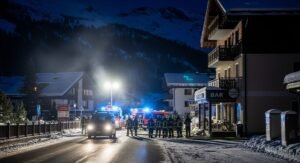
Emergency services received the first calls shortly after 1:30 a.m. Firefighters, medics, and police rushed to the scene, with helicopters and ambulance teams mobilized from across the canton and neighboring areas. Despite these efforts, the scale of the disaster quickly became apparent, with dozens of casualties and many more injured requiring urgent medical attention.
Casualties and Hospital Response
Initial reports from official sources indicated that at least 40 people had died in the blaze, with more than 115 individuals suffering injuries — many of them severe burns or respiratory trauma. As the early morning unfolded, local hospitals in Valais and nearby major cities received a massive influx of patients, some critically injured.
Specialist burn units, particularly in hospitals in Lausanne, Zurich, and other Swiss cities, were pressed into service to treat the most serious cases. Helicopter evacuations were carried out for those requiring urgent specialist care. In some situations, patients were also transferred to medical facilities in neighboring countries to ensure they received appropriate treatment.
Medical teams reported treating a wide range of injuries, including severe smoke inhalation, third-degree burns, and crushing injuries from crowd surges as people attempted to flee. Many of those injured were young adults and teenagers, further deepening the sense of national sorrow and concern for the long-term recovery of survivors.
Investigation Into the Cause
Swiss authorities quickly made it clear that there was no indication of deliberate foul play such as arson or terrorism. Instead, early investigative work focused on understanding how the fire ignited and why it spread with such ferocity. Detailed examinations of video footage, witness testimony, and early forensic evidence are ongoing to reconstruct the exact sequence of events leading up to the fire’s outbreak.
Some eyewitnesses pointed to celebratory items such as sparklers or pyrotechnics being used inside the bar as possible ignition sources, potentially coming into contact with the venue’s décor or ceiling materials. The exact cause remained under investigation, and authorities emphasized that it would take time to determine whether fire code violations, overcrowding, or combustible interior materials played a role.
Officials also stated that fire safety compliance, occupancy limits, and emergency exit access would be key aspects of the ongoing inquiry. Authorities have pledged full transparency in their findings as the investigation continues.
National Mourning and Official Reactions
Swiss President Guy Parmelin described the incident as one of the worst tragedies in the country’s recent history and declared official days of national mourning. Flags were lowered to half-mast across Switzerland as a mark of respect for victims and missing persons, and the federal government offered support to families affected by the fire.
Condolences poured in from world leaders as nations acknowledged the loss of life and the injuries suffered by citizens who had traveled to Switzerland for the holiday. Several foreign governments activated helplines and support services for their citizens, with many families anxiously seeking information about loved ones who had been at the bar during the fire.
Local authorities also organized vigils and community gatherings in Crans-Montana to memorialize the victims and provide support opportunities for survivors and residents traumatized by the event. Church services, memorial walls, and public gatherings became focal points for collective grieving.
Witness Accounts: Moments of Chaos
Survivor testimonies offered vivid and harrowing accounts of the moments during and after the fire’s outbreak. Many described an initial confusion followed by a surge of panic as smoke filled the room and flames flared up along the ceiling and walls.
Attempts to navigate narrow staircases and doorways amid the chaos created difficult conditions, and some witnesses reported breaking windows to find alternative routes out of danger. Others recalled helping friends or strangers to safety, while some traumatic memories included scenes of people falling or collapsing in smoke-filled corridors.
- Escaping the blaze: Many survivors emphasized how smoke and flames moved far faster than expected, prompting immediate flight responses that quickly turned chaotic due to limited escape routes.
- Helping others: Several accounts noted patrons assisting one another, either by physically carrying injured friends or guiding those disoriented by smoke toward the exits.
- Breaking barriers: Some individuals recounted moments of breaking windows when doors were congested, allowing for alternative means of escape and providing crucial access for first responders.
- Medical urgency: Injured patrons spoke of severe burning and inhalation trauma, with some waiting in freezing outdoor conditions while emergency crews worked to rescue others and transport the most critically hurt to care facilities.
- Emotional responses: Many survivors described shock, grief, and disbelief, reflecting on a night that had begun with joy and ended in tragedy.
Emergency Response and Resource Mobilization
Police, firefighters, and medical personnel responded in large numbers as the scale of the disaster became clear. Fire departments from neighboring cantons joined forces with local responders to contain the blaze and recover victims from the scene. Helicopter units ferried critically injured patients to distant hospitals while ambulances queued at makeshift triage locations outside Crans-Montana.
The canton’s emergency coordination teams established command centers to manage the logistics of the response, facilitate communication with national authorities, and ensure that local medical facilities weren’t overwhelmed. In addition, consular services from various nations worked to assist their respective citizens who had been present at the bar.
Authorities also enforced security perimeters around the scene to allow investigators and emergency teams to operate while keeping bystanders at a safe distance. A temporary no-fly zone was implemented over parts of Crans-Montana to provide unimpeded aerial access for medical helicopters and rescue operations.
International Impact and Global Reactions
News of the tragedy reverberated internationally, with media outlets around the world reporting on the scale of the loss and the ongoing search for the missing. Foreign ministries in affected countries issued statements urging caution and offering assistance to citizens and families impacted by the fire.
Several nations with known visitors at the resort activated crisis hotlines and deployed embassy personnel to coordinate information flow and support services. The international ski community, including professional athletes and winter sports organizations, expressed deep sorrow for the victims and pledged solidarity with the Swiss people and those affected.
Aftermath: Community Healing and Long-Term Support
In the days following the tragedy, local authorities and community groups organized support initiatives for survivors, families of victims, and residents who witnessed the disaster. Psychological counseling services were made available, and community centers became spaces for mourning, discussion, and collective healing.
Local businesses, accustomed to welcoming tourists, shifted their focus to memorial efforts, hosting fundraisers and awareness events. The ski resort’s management also pledged to help families with travel and accommodation needs for those who chose to remain in Switzerland in the aftermath.
Lessons and Questions Going Forward
The Crans-Montana fire has prompted urgent questions about fire safety compliance, emergency exit accessibility, and crowd management at indoor venues. As investigators continue to analyze the sequence of events and structural details of the bar’s layout, officials have hinted that recommendations for improved safety standards may emerge.
Key areas likely to be scrutinized include:
- Venue capacity limits: Ensuring that indoor establishments do not exceed safe occupancy numbers during peak celebrations.
- Fire safety systems: Mandatory installation and inspection of fire alarms, sprinklers, and clearly marked, unobstructed exits.
- Material compliance: Verification that interior décor and upholstery meet flame-resistance standards to prevent rapid fire spread.
- Staff training: Training staff in emergency response and evacuation procedures to reduce panic and aid orderly egress.
- Public awareness: Educating patrons about fire risks and the importance of recognizing emergency exits upon entering crowded venues.
Memorials and Collective Remembrance
Community memorials sprang up across Crans-Montana and beyond, with candles, flowers, and notes left in tribute to the victims. Vigils were held throughout the first week of January, offering collective moments of silence and reflection. Many speakers at these gatherings underscored the need to remember the individuals who lost their lives while also supporting those who survived and continue to recover.
Relatives and friends of the deceased shared heartfelt stories and photographs, ensuring that the memories of those taken too soon remain at the forefront of public consciousness. These personal remembrances brought into sharp relief the human cost of the disaster, beneath the headlines and statistics.
Conclusion
The midnight fire at Le Constellation bar in Crans-Montana on January 1, 2026, has left a profound mark on Switzerland, its emergency responders, and the international community drawn to this picturesque alpine resort. As investigations continue to seek answers about the cause and contributory factors of this devastating incident, attention is turning to how authorities and communities can prevent similar tragedies in the future.
With dozens of fatalities, over a hundred injured, and many families coping with loss and trauma, the event stands as a stark reminder of the importance of rigorous fire safety standards, careful crowd management, and proactive emergency planning — especially during busy celebrations with large gatherings. In honoring the victims and supporting the survivors, Crans-Montana and the broader Swiss society are engaged in deep reflection, healing, and a collective quest to ensure greater safety for all.