
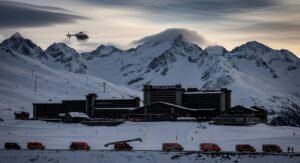
A catastrophic fire tore through Le Constellation bar in the luxury Swiss Alpine ski resort town of Crans-Montana in the early hours of January 1, 2026, transforming New Year celebrations into one of Switzerland’s deadliest tragedies in recent history. The devastating blaze, which broke out around 1:30 a.m. local time, claimed the lives of approximately 40 people and left 115 others injured, many with critical burns. Swiss authorities have declared this incident an unprecedented tragedy that has plunged the nation into mourning and prompted questions about fire safety standards in crowded entertainment venues.
The fire erupted at Le Constellation, a popular nightclub and bar located in the heart of Crans-Montana, a prestigious ski destination situated approximately 200 kilometers south of the Swiss capital, Bern. The venue, which had been operating for over 40 years and was renowned as a local institution, was packed with more than 100 revelers celebrating the arrival of 2026 when disaster struck. Within seconds of ignition, flames engulfed the establishment, triggering a panicked evacuation attempt that resulted in a deadly crowd surge as patrons desperately tried to escape through narrow exits.
Timeline of the Tragedy: How the Crans-Montana Fire Unfolded
According to Valais Cantonal Police Commander Frédéric Gisler, the first signs of trouble emerged at precisely 1:30 a.m. when smoke was detected emanating from Le Constellation bar. Within seconds, emergency call centers received frantic reports of a fire, triggering an immediate red alert that mobilized fire services across the region. The first police officers from the Crans-Montana intercommunal police and gendarmerie arrived at the scene at 1:32 a.m., just two minutes after the initial alert, demonstrating the rapid response capabilities of Swiss emergency services.
Eyewitness accounts paint a harrowing picture of the fire’s rapid progression. Multiple survivors reported seeing a waitress standing on the shoulders of a waiter, holding a champagne bottle adorned with lit sparklers as part of the New Year festivities. The flames from these sparklers were reportedly just centimeters away from the bar’s wooden ceiling, which quickly ignited. According to witness testimonies provided to French broadcaster BFMTV and other media outlets, the ceiling caught fire almost instantaneously, and within approximately ten seconds, the entire nightclub was consumed by flames.
Axel Clavier, a 16-year-old survivor from Paris, described the scene as total chaos. As fire spread throughout the venue, patrons in the basement-level nightclub rushed toward the single narrow staircase leading to the exit. This bottleneck created a devastating crowd surge, with people trampling over one another in desperate attempts to escape the inferno. The combination of rapid fire spread, limited exit routes, and the sheer number of people present created what fire safety experts would later describe as a worst-case scenario for any entertainment venue.
Emergency Response and Rescue Operations
The scale and coordination of the emergency response to the Crans-Montana fire demonstrated the Swiss emergency management system’s capabilities under extreme pressure. Within minutes of the initial alert, a massive mobilization was underway, with resources being drawn from across the Valais canton and beyond. The response included 150 emergency personnel, 42 ambulances, 13 helicopters, and three specialized disaster response trucks, all converging on the small Alpine resort town.
Firefighters faced significant challenges in containing the blaze due to the building’s structure and the intensity of the fire. However, they succeeded in extinguishing the flames relatively quickly, allowing investigators to begin their work while medical teams focused on treating the injured. The priority during the initial response phase was providing emergency medical care to victims, many of whom had suffered severe burns and smoke inhalation.
The sheer number of casualties quickly overwhelmed the regional medical infrastructure. The intensive care unit and operating theater at the hospital in Sion, the nearest major medical facility, reached full capacity within hours. This necessitated the establishment of a regional air evacuation system, utilizing the 13 helicopters deployed to the scene to transport critically injured patients to specialized burn treatment centers across Switzerland and even into neighboring countries.
Medical Response and Hospital Capacity Crisis
The medical response to the Crans-Montana fire revealed both the strengths and limitations of Switzerland’s healthcare system when confronted with a mass casualty incident. Mathias Reynard, president of the Valais State Council, reported that 115 people were injured in the fire, with a significant number classified as being in critical condition. Of these, 80 individuals were treated at the scene by emergency services before being transported to hospitals, while an additional 35 people made their own way to medical facilities seeking treatment.
The distribution of patients across Switzerland’s hospital network highlighted the severity of the crisis. The local hospital in Sion received 60 patients, representing the largest single concentration of victims. However, to manage the overwhelming demand for specialized burn care, patients were transferred to Switzerland’s two national centers for burn treatment in Lausanne and Zurich. At least 22 individuals suffering from serious burns were taken to the hospital in Lausanne, while more than a dozen victims were transported to Zurich University Hospital in northern Switzerland.
The crisis extended beyond Switzerland’s borders. Six critically injured patients were transferred to Geneva, and Italian authorities opened a specialized burns unit at the Ospedale Niguarda Ca’ Granda in Milan to receive additional victims. Italian Foreign Minister Antonio Tajani confirmed that 15 Italian nationals were hospitalized following the fire, with Italian media reporting that as many as 16 Italian citizens remained unaccounted for in the tragedy’s immediate aftermath. French authorities similarly confirmed that at least two French nationals were among the injured and had been immediately taken into care by emergency services.
Investigation into the Fire’s Cause and Safety Standards
Beatrice Pilloud, the prosecutor general for the Valais canton, moved quickly to establish a comprehensive investigation into the fire’s cause and circumstances. At a press conference held on the morning of January 1, Pilloud confirmed that authorities had ruled out any possibility of a terrorist attack, stating categorically that there was no evidence suggesting deliberate criminal activity. Instead, investigators are focusing on the hypothesis that what authorities describe as a flashover occurred, leading to one or multiple explosions that rapidly engulfed the venue.
A flashover represents one of the most dangerous phenomena in fire dynamics, occurring when combustible materials in a confined space simultaneously ignite due to heat buildup. This creates an instantaneous and overwhelming spread of fire throughout an enclosed area, often accompanied by explosive-like effects. The term used by Swiss authorities, embrasement généralisé, describes precisely this type of catastrophic fire progression that would have given patrons almost no time to react or evacuate safely.
While eyewitness accounts consistently point to champagne bottle sparklers as the ignition source, Pilloud emphasized that determining the exact cause would require extensive forensic analysis. Specialist forensic investigators from Zurich arrived at the scene on January 1 to begin the painstaking work of examining physical evidence, gathering witness testimonies, and reviewing any available video footage from inside the venue or surrounding areas. Pilloud indicated that the investigation would take considerable time, with no immediate conclusions expected.
Safety Regulation Concerns and Building Standards
The investigation has expanded beyond determining the fire’s immediate cause to examining whether Le Constellation was operating in compliance with Swiss fire safety regulations and building codes. Particular attention is being focused on the venue’s layout and emergency exit provisions. Photographs and witness accounts describe a multi-level establishment with a basement nightclub area connected to upper levels by a narrow staircase and equally narrow doorway, creating what fire safety experts would consider a significant evacuation bottleneck.
Pilloud specifically mentioned that investigators would examine whether all safety standards were met, particularly regarding the narrowness of the stairs and adequacy of emergency exits. This line of inquiry takes on added significance given reports that Swiss media and online review platforms had previously highlighted concerns about Le Constellation. According to these sources, guests had complained about poor treatment of personnel, lack of professionalism, and notably, security deficiencies at the establishment.
The bar’s capacity rating of 300 people inside with an additional 40 on the heated terrace is now under scrutiny. Investigators must determine not only whether the venue was operating within its permitted capacity at the time of the fire but also whether the original capacity determination adequately accounted for emergency evacuation scenarios. The presence of a shisha and smoking area within the establishment, along with wooden ceiling materials, has raised additional questions about fire prevention measures and materials selection in venue construction and renovation.
Le Constellation had been acquired and remodeled in 2015 by a married couple from Corsica who operated several establishments in the region. The investigation will examine whether the 2015 renovation complied with all applicable fire safety codes and whether subsequent inspections had identified any deficiencies that were not addressed. These findings could have far-reaching implications for fire safety regulations and enforcement across Switzerland’s hospitality industry, particularly in high-traffic tourist destinations.
International Impact and Diplomatic Response
The international dimension of the Crans-Montana tragedy became apparent as authorities worked to identify victims and notify their families. Police Commander Gisler acknowledged that the resort’s status as an internationally renowned ski destination meant foreign nationals from multiple countries were likely among the dead and injured. This assessment proved accurate as diplomatic channels became active throughout January 1, with various nations confirming that their citizens were affected by the disaster.
The British embassy in Switzerland issued a statement indicating that foreign nationals from multiple countries were likely among the victims, advising British citizens in the area to contact loved ones to confirm their safety. The United States Embassy in Switzerland similarly urged American citizens in the country to notify family and friends of their safety, recognizing that U.S. nationals could potentially be among those affected given Crans-Montana’s popularity with international tourists.
France’s response was particularly significant given the geographic proximity and the number of French visitors to Swiss ski resorts during the holiday period. French Foreign Minister officials confirmed that at least two French nationals were among the injured and had received immediate medical attention. French consular teams maintained continuous contact with Swiss authorities to determine whether additional French citizens were affected by the tragedy. French President Emmanuel Macron personally contacted newly inaugurated Swiss President Guy Parmelin to express France’s solidarity, with Macron describing the death toll as devastating and offering France’s full support.
Italy’s involvement in the tragedy was substantial. Italian Foreign Minister Antonio Tajani announced that he would travel to Crans-Montana to be close to Italian citizens affected by the fire. Tajani had been in frequent communication with Prime Minister Giorgia Meloni, who was personally monitoring the situation. The Italian foreign ministry reported that 15 Italian nationals were hospitalized, with Italian media sources indicating that potentially 16 Italian citizens remained unaccounted for in the disaster’s immediate aftermath.
National Mourning and Political Response in Switzerland
The timing of the tragedy added a particularly poignant dimension to Switzerland’s response. January 1, 2026, marked the first day of Guy Parmelin’s tenure as President of the Swiss Confederation, as Switzerland’s unique rotating presidency system brought him to the role. Rather than celebrating his inauguration with the traditional New Year’s address to the nation, Parmelin found himself traveling to Crans-Montana to inspect the disaster site and console a grieving community.
Parmelin’s statement captured the national mood, describing the fire as one of the worst tragedies Switzerland has experienced. He emphasized that what should have been a moment of joy had turned into a day of mourning affecting not only Crans-Montana or the Valais canton but the entire country and beyond. The Swiss Federal Council, Switzerland’s executive body, took note of the tragedy with what Parmelin described as profound dismay, immediately ordering that flags on all federal buildings be flown at half-mast for five days to honor those killed.
The impact on Switzerland’s traditional New Year observances was immediate and widespread. Parmelin postponed his scheduled New Year’s address out of respect for the victims and their families, a decision that underscored the tragedy’s national significance. The city of Lucerne took the additional step of canceling its traditional New Year’s fireworks display in respect for those affected by the fire, setting a precedent that other Swiss municipalities considered as well.
Regional authorities in the Valais canton declared a state of emergency, enabling them to mobilize additional resources and coordinate the massive response effort. Mathias Reynard, president of the Valais State Council, spoke emotionally about the tragedy, noting that an evening that should have been a celebration and coming together had turned into a nightmare. His words reflected the sentiment throughout the canton, where the ski tourism industry forms a central pillar of the regional economy and cultural identity.
Impact on Crans-Montana and Swiss Tourism
Crans-Montana occupies a unique position in Switzerland’s tourism landscape, representing one of the country’s most exclusive and prestigious Alpine destinations. Situated approximately 1,500 meters above sea level in the heart of the Valais canton, the resort is renowned for its year-round sunshine, sweeping panoramic views stretching from the Matterhorn to Mont Blanc, and world-class skiing facilities. The community, which typically has a population of around 10,000 residents, swells significantly during peak tourism seasons, with thousands of international visitors descending on the area for skiing, golf, and other recreational activities.
The resort’s prominence in international winter sports adds another layer of complexity to the tragedy’s aftermath. Crans-Montana is scheduled to host elite Alpine skiing events, including competitions featuring top athletes like American skiing legend Lindsey Vonn, as part of the Audi FIS Alpine Ski World Cup circuit. These events serve as final tune-ups before the Milan Cortina Olympics scheduled for February 2026. The town’s Crans-sur-Sierre golf club similarly holds international significance, hosting the European Masters tournament each August on its picturesque course.
The immediate impact on the local tourism economy has been profound. Authorities issued public appeals urging skiers to avoid the Crans-Montana area temporarily, not due to danger from the fire itself but because the regional medical system remained at capacity treating fire victims. Any skiing accidents or other injuries requiring medical attention could overwhelm hospitals already stretched beyond their limits. This unprecedented request highlighted the tragedy’s ripple effects throughout the community and region.
Local businesses, particularly those in the hospitality sector, face uncertain prospects as the resort town grapples with the tragedy. Le Constellation itself had been described as a cheap and cheerful bar popular with younger tourists, serving a somewhat different clientele than the luxury establishments typically associated with Crans-Montana. Nevertheless, its destruction and the circumstances surrounding the fire have cast a shadow over the entire resort area’s reputation for safety and quality tourism experiences.
Long-term Tourism Implications
Tourism industry analysts suggest the fire could have lasting implications for Swiss Alpine tourism, particularly regarding safety perceptions and regulatory oversight. Switzerland has long marketed itself as a destination offering not only natural beauty and winter sports excellence but also Swiss precision in safety standards and quality assurance. A tragedy of this magnitude challenges those perceptions and may lead potential visitors to scrutinize safety measures more carefully when selecting vacation destinations.
However, Switzerland’s strong reputation for addressing problems systematically and transparently may help mitigate long-term damage. The swift emergency response, comprehensive investigation, and commitment to reviewing safety standards demonstrate the kind of institutional competence that tourists value. The tragedy may ultimately prompt improvements in fire safety regulations that could enhance Switzerland’s position as a leader in tourism safety standards, though this offers cold comfort to those affected by the current disaster.
The international nature of the victim pool has particular significance for tourism marketing. With casualties confirmed or suspected from Switzerland, France, Italy, and potentially other nations, the tragedy resonated across European markets that represent core customer bases for Swiss ski resorts. Tourism authorities will need to work not only to restore confidence domestically but also to reassure international travelers that appropriate lessons have been learned and implemented.
Support Systems and Community Response
Swiss authorities moved quickly to establish support infrastructure for victims’ families and the traumatized community. A reception center was established to provide information and assistance to families seeking news of loved ones, while a specialized helpline was activated at 4:14 a.m., less than three hours after the fire began. The helpline number, +41 848 112 117, provided families a direct channel to authorities for information about the deceased and injured.
The challenge of victim identification emerged as one of the most difficult aspects of the tragedy’s aftermath. Many victims suffered such severe burns that immediate identification proved impossible. Valais State Council President Mathias Reynard warned that the identification process could take several days, leaving many families in an agonizing state of uncertainty about their loved ones’ fate. Prosecutor Pilloud emphasized that significant forensic resources were being allocated to expedite victim identification, recognizing that returning bodies to families represented a critical priority.
The psychological toll on survivors, witnesses, and the broader community prompted immediate action. Counseling services were established to assist those affected by trauma, recognizing that the mental health impacts of such a disaster extend far beyond the physically injured. First responders, including police officers, firefighters, and medical personnel, received access to critical incident stress management resources, acknowledging the emotional burden of responding to such a catastrophic event.
The international community’s response demonstrated the solidarity that emerges in the face of tragedy. King Charles III of the United Kingdom sent a message of condolence, stating that he and his wife were appalled and greatly saddened by the devastating fire. Political leaders from across Europe and beyond issued similar statements, with many offering concrete assistance including medical resources, forensic expertise, and diplomatic support for victim identification and family notification processes.
Historical Context and Comparative Analysis
The Crans-Montana fire joins a tragic history of nightclub and entertainment venue fires that have resulted in mass casualties. The incident draws inevitable comparisons to the 2003 Station nightclub fire in Rhode Island, United States, which killed 100 people when pyrotechnic effects ignited flammable soundproofing material. Similarly, the 2013 Kiss nightclub fire in Brazil claimed 242 lives when a band’s pyrotechnic display set fire to acoustic foam insulation. These precedents highlight the particular dangers posed by combining fire sources, crowded conditions, limited exits, and flammable building materials in entertainment venues.
Switzerland itself experienced a similar tragedy 25 years prior to the Crans-Montana fire. On New Year’s Eve 2000-2001, an inferno swept through a cafe in the Dutch fishing town of Volendam, killing 14 people and injuring more than 200 celebrating revelers. The parallels between the Volendam fire and the current tragedy underscore ongoing challenges in preventing catastrophic fires in entertainment venues despite advances in fire safety technology and regulation.
Within the immediate geographic region, Crans-Montana had previously experienced mass casualty transportation disasters. The town is less than three miles from Sierre, where 28 people, including many children, died when a bus from Belgium crashed inside a Swiss tunnel in 2012. The accumulation of tragic incidents in this compact area of the Swiss Alps has created a community particularly sensitized to disaster and loss, though nothing could have prepared residents for the scale and nature of the New Year’s Day fire.
Fire Safety Evolution and Regulatory Response
Each major fire tragedy in entertainment venues has historically prompted regulatory reforms and heightened safety standards. The Station nightclub fire in Rhode Island led to comprehensive revisions of fire codes across the United States, including stricter limitations on pyrotechnic use in enclosed spaces, requirements for fire suppression systems, and improved exit capacity standards. The Kiss nightclub fire in Brazil similarly prompted sweeping reforms of Brazilian safety regulations and enforcement mechanisms.
Switzerland is expected to undertake a similar review process following the Crans-Montana tragedy. Early indications suggest that authorities will examine not only building codes and fire safety requirements but also enforcement mechanisms, inspection frequency, and penalties for non-compliance. The investigation’s focus on whether safety standards were met at Le Constellation suggests that existing regulations may have been adequate if properly implemented, raising questions about inspection and enforcement effectiveness.
The use of pyrotechnic effects, sparklers, and open flames in crowded entertainment venues represents a particular area of concern. While eyewitness accounts suggest that champagne bottle sparklers triggered the Crans-Montana fire, authorities have emphasized that definitive conclusions await completion of the forensic investigation. Nevertheless, the tragedy will inevitably prompt discussions about whether such fire sources should be prohibited or more tightly regulated in indoor entertainment settings, particularly those with wooden structural elements or limited egress capacity.
Frequently Asked Questions
What caused the fire at Le Constellation bar in Crans-Montana?
While the investigation is ongoing, multiple eyewitnesses reported seeing a waitress with a champagne bottle adorned with lit sparklers standing on another employee’s shoulders during New Year celebrations. The sparklers were reportedly centimeters from the bar’s wooden ceiling, which quickly caught fire. Authorities have described the incident as a flashover, where the entire room rapidly ignited, leading to explosions. Swiss prosecutors have ruled out terrorism and are treating this as an accidental fire pending final forensic conclusions.
How many people died and were injured in the Crans-Montana fire?
Swiss authorities confirmed that approximately 40 people died in the fire, with 115 others injured. Many of the injured suffered severe burns and remain in critical condition. The death toll could potentially rise given the severity of injuries among survivors. Victims include Swiss nationals and international tourists from multiple countries including France, Italy, and potentially other nations.
What safety concerns have been raised about Le Constellation bar?
The investigation is examining whether the venue met all required safety standards, particularly regarding emergency exits and evacuation routes. Witnesses described narrow stairs and doorways connecting the basement nightclub to upper levels, creating bottlenecks during the panicked evacuation. Swiss media reported that the bar had previously received complaints about security deficiencies. Investigators are also examining whether the venue was operating within its 300-person capacity limit and whether materials used in construction and renovation, including the wooden ceiling, complied with fire safety codes.
How did Swiss authorities respond to the emergency?
Emergency services demonstrated rapid response, with first officers arriving just two minutes after the initial alert at 1:30 a.m. The full response mobilized 150 emergency personnel, 42 ambulances, 13 helicopters, and three disaster response trucks. A no-fly zone was established over Crans-Montana to facilitate air evacuations. Medical facilities across Switzerland treated victims, with specialized burn centers in Lausanne and Zurich receiving the most critical cases. Neighboring Italy also provided medical support, opening burn treatment capacity in Milan.
Will the Crans-Montana fire affect Swiss ski resort safety regulations?
Swiss authorities are expected to conduct comprehensive reviews of fire safety regulations and enforcement mechanisms following this tragedy. The investigation will examine not only what caused this specific fire but also whether existing regulations are adequate and properly enforced. Tourism industry experts anticipate that findings could lead to stricter requirements for entertainment venues, particularly regarding emergency exits, building materials, pyrotechnic use, and inspection procedures. Any regulatory changes would likely affect ski resorts and entertainment venues throughout Switzerland.
Conclusion
The New Year’s Day fire at Le Constellation bar in Crans-Montana stands as one of Switzerland’s most devastating tragedies in modern history, claiming approximately 40 lives and injuring 115 others in a matter of seconds. The disaster transformed what should have been a joyous celebration into a scene of unimaginable horror, overwhelming the local medical system and sending shockwaves through Switzerland and the international community. As forensic investigators work to determine the exact cause and circumstances of the fire, preliminary evidence points to a tragic accident involving decorative sparklers igniting the bar’s wooden ceiling, triggering a rapid flashover that gave patrons virtually no time to escape safely.
The tragedy has exposed critical questions about fire safety standards, emergency exit capacity, and regulatory enforcement in entertainment venues, particularly those serving large crowds in confined spaces. Swiss authorities’ commitment to a thorough investigation, including examination of whether Le Constellation met all applicable safety standards, demonstrates recognition that this disaster demands systemic responses beyond simply determining what sparked the initial flames. The identification of victims continues as a painful priority, with many families enduring an agonizing wait for news of loved ones whose severe burn injuries complicate identification efforts.
For Crans-Montana and Switzerland’s broader tourism industry, the fire represents both an immediate crisis and a long-term challenge. The resort town must heal while maintaining its position as a premier international destination, a balancing act complicated by the tragedy’s timing at the height of ski season. Swiss President Guy Parmelin’s decision to postpone his traditional New Year address and visit the disaster site on his first day in office underscored the tragedy’s national significance, while the five-day period of national mourning with flags at half-mast provided space for collective grieving.
As the investigation continues and the community begins the long process of recovery, the Crans-Montana fire serves as a stark reminder of how quickly celebration can turn to catastrophe when fire safety measures prove inadequate. The lessons learned from this tragedy, once fully understood through comprehensive investigation, must inform stronger safety standards and enforcement mechanisms to prevent similar disasters in the future. For now, the focus remains on supporting survivors and victims’ families while honoring the memory of those whose lives were cut short in the early hours of what should have been a hopeful new year.