The landscape of digital platforms tailored to higher education has evolved significantly, with applications designed to foster community and convenience among students. One such platform, developed specifically for college environments, has recently broadened its scope to address practical needs beyond social interaction. This informational resource examines the strategic extension of services within this ecosystem, highlighting its implications for user engagement and operational efficiency. By integrating commerce functionalities, the platform enhances its utility, aligning with the multifaceted demands of contemporary student life. The ensuing analysis draws upon documented developments to illustrate this progression.
College-aged individuals navigate a complex array of responsibilities, from academic pursuits to social connections and daily logistics. Digital tools that consolidate these elements promote greater accessibility and reduce fragmentation in user experiences. The initiative in question represents a deliberate convergence of social networking and essential services, reflecting broader trends in application development for niche demographics. This approach not only sustains user retention but also positions the platform as a comprehensive resource.
Established in the early 2020s, the application in focus originated from discussions among its founders regarding the gaps in existing social media for authentic campus interactions. Initial iterations emphasized anonymity and locality, enabling users to share experiences without external pressures. Over time, iterative enhancements have incorporated features that extend practical value, culminating in the recent commercial integration. This evolution underscores a commitment to holistic support within educational settings.
Funding mechanisms have played a pivotal role in sustaining growth, with investments channeled toward infrastructure and feature development. Strategic alliances with established service providers have accelerated scalability, ensuring robust delivery networks. These partnerships leverage complementary strengths, fostering synergies that benefit end-users through seamless integrations. The result is an ecosystem where social discourse coexists with transactional capabilities, enriching the overall platform narrative.
Historical Context of the Platform
Launched in 2021, the application emerged as a response to the limitations of mainstream social networks in capturing campus-specific dynamics. Founders identified a need for a space dedicated to genuine exchanges among peers, free from algorithmic biases favoring entertainment over connection. Early adoption focused on select universities, where it facilitated discussions on local events and resources. By prioritizing verified affiliations, the platform cultivated trust and relevance within its communities.
Subsequent updates introduced mechanisms for commerce, such as peer-to-peer marketplaces, allowing users to exchange goods and services. This feature addressed immediate needs like textbook sales or event ticket sharing, embedding economic utility into social frameworks. Group coordination tools further enhanced its role in collective activities, from study sessions to off-campus gatherings. These additions reflected user feedback, emphasizing practicality alongside interactivity.
Expansion to over 620 institutions across the United States marked a phase of rapid proliferation. Metrics indicate sustained engagement, with millions of contributions amassed over years of operation. Recent surges in daily participation underscore the platform’s resonance with its target demographic, driven by organic growth and targeted outreach. This foundation has enabled ambitious extensions into adjacent domains.
Foundational Vision and Development
The inception traces to informal brainstorming sessions amid the challenges of remote learning during global disruptions. Co-founders articulated a vision for democratizing information and access, targeting the underrepresented aspects of student life. Initial prototypes tested anonymity protocols to encourage candid participation, balancing privacy with community accountability. Beta phases on pilot campuses refined user interfaces, incorporating feedback loops for iterative improvements.
Technical architecture emphasized scalability from the outset, utilizing cloud-based solutions for handling variable loads. Security measures, including data encryption and moderation algorithms, ensured compliance with educational privacy standards. Partnerships with university administrations facilitated endorsements, accelerating adoption rates. This methodical rollout established credibility and laid groundwork for future functionalities.
Economic viability was secured through venture capital infusions totaling significant sums, supporting talent acquisition and marketing efforts. Board compositions included industry veterans, guiding strategic pivots toward sustainability. Annual reports highlight milestones like user milestones and feature launches, validating the developmental trajectory.
The Strategic Partnership
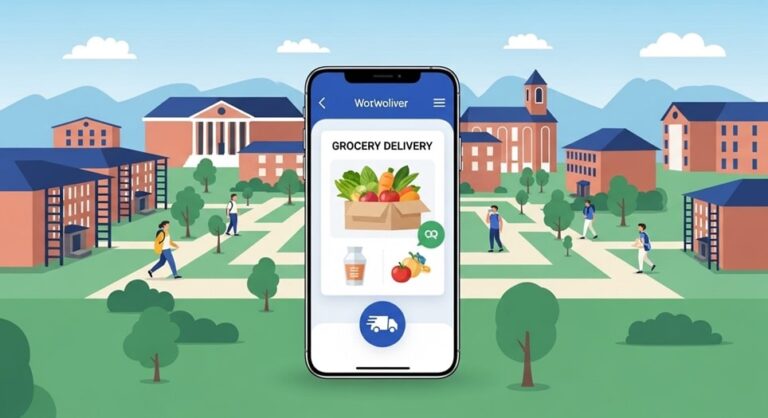
In early September 2025, the platform announced a collaboration with a prominent rapid delivery service, renowned for its campus-centric origins. This alliance integrates procurement options directly into the application’s interface, allowing seamless ordering of provisions. The service provider, established by alumni, brings established logistics expertise, ensuring efficient fulfillment within constrained timelines.
Executives from both entities cited aligned values and user-centric philosophies as catalysts for the union. Shared commitments to expeditious service and demographic affinity facilitated swift negotiations. The integration draws upon pre-existing user behaviors, such as coordinated procurements, to minimize adoption barriers. This partnership exemplifies how symbiotic relationships can amplify individual offerings.
Implementation details encompass curated assortments tailored to common scenarios, streamlining selection processes. Delivery commitments align with student schedules, promising arrivals in under a quarter-hour under optimal conditions. Backend synchronizations handle inventory and routing, maintaining real-time accuracy. This technical harmony enhances reliability and user satisfaction.
Key Objectives and Synergies
The primary aim is to alleviate logistical burdens, enabling focus on academic and social priorities. By embedding commerce, the platform transitions from informational to transactional, fostering deeper engagement. The delivery partner’s micro-fulfillment model complements the application’s localized focus, optimizing last-mile efficiencies.
Mutual benefits include expanded reach for the service provider within educational enclaves and diversified revenue streams for the social application. Data analytics from combined usage inform refinements, such as assortment adjustments based on regional preferences. This iterative feedback mechanism sustains relevance and competitiveness.
Launch strategies targeted high-density campuses, leveraging existing user bases for initial traction. Promotional campaigns emphasized convenience, with testimonials underscoring transformative impacts on daily routines. Metrics post-launch indicate positive reception, with increased session durations and conversion rates.
Operational Mechanics of the Integration
Users access the new module via a dedicated tab within the main navigation. Interface elements mirror familiar social feeds, with visual cues guiding selections. Pre-assembled packages address frequent requisites, reducing decision fatigue. Customization options allow additions or substitutions, accommodating dietary or preferential variances.
Checkout processes incorporate secure payment gateways, supporting multiple modalities. Order confirmations provide tracking updates, integrating with notification systems for proactive alerts. Fulfillment commences upon validation, dispatching from proximate warehouses to minimize delays. This end-to-end orchestration ensures predictability and transparency.
Post-delivery evaluations solicit input, refining algorithms for personalization. Integration with social components enables shared orders, enhancing communal aspects. Such features promote inclusivity, particularly for group living arrangements common in residential settings.
User Interface and Experience Enhancements
Design principles prioritize intuitiveness, with minimalist layouts and responsive adaptations for mobile devices. Search functionalities incorporate predictive suggestions, drawing from historical patterns. Accessibility compliance includes voice commands and high-contrast modes, broadening usability.
Notification preferences allow customization, preventing overload while ensuring timeliness. Analytics dashboards for administrators monitor performance indicators, facilitating proactive adjustments. This user-centric ethos permeates all interactions, from browsing to resolution.
- Curated Collections: Assortments like fitness-oriented kits supply nutritional staples for active lifestyles. These bundles expedite procurement, ensuring balanced intake amid hectic schedules. Customization extends longevity, adapting to evolving needs.
- Rapid Fulfillment: Commitments to swift arrivals cater to impromptu demands, such as study marathons. Proximity-based dispatching optimizes routes, reducing environmental footprints. Reliability fosters habitual reliance.
- Social Integration: Shared carts facilitate collaborative planning, strengthening interpersonal bonds. Real-time updates synchronize group awareness, mitigating coordination challenges. This fusion elevates communal efficacy.
- Payment Security: Encrypted transactions safeguard financial data, adhering to industry benchmarks. Multi-option support accommodates diverse preferences, enhancing inclusivity. Audit trails promote accountability.
- Feedback Mechanisms: Post-interaction surveys capture sentiments, informing enhancements. Aggregated insights drive assortment evolutions, aligning with demographic shifts. Continuous improvement sustains satisfaction.
- Inventory Transparency: Real-time availability displays prevent disappointments, streamlining experiences. Supplier collaborations ensure diversity, catering to cultural variances. This foresight minimizes disruptions.
- Promotional Incentives: Introductory offers incentivize trials, accelerating adoption. Loyalty programs reward recurrence, embedding value propositions. Strategic pricing balances accessibility and sustainability.
- Support Accessibility: Dedicated channels resolve queries promptly, bolstering confidence. Multilingual resources accommodate international cohorts, promoting equity. Proactive assistance preempts escalations.
Growth Metrics and User Demographics
Platform statistics reveal exponential trajectories, with participation metrics multiplying in recent periods. Presence across hundreds of institutions underscores national footprint, with expansions targeting underserved regions. Engagement indicators, including content volume, affirm vitality and resonance.
Demographic profiling centers on young adults in transitional phases, characterized by high mobility and digital fluency. Research from analytical firms quantifies their propensities, noting elevated frequencies in online engagements across sectors. This cohort’s affinity for consolidated platforms informs feature prioritization.
Recent accelerations in active cohorts correlate with promotional initiatives and network effects. Record-setting influxes signal threshold crossings, enabling economies of scale. These dynamics position the entity for sustained momentum.
Quantitative Insights
Content aggregation exceeds tens of millions, reflecting prolific contributions. Monthly active surges indicate viral dissemination, amplified by referral mechanisms. Institutional launches compound reach, diversifying participant pools.
Analytical reports delineate behavioral patterns, highlighting preferences for integrated utilities. Subscription inclinations among this group surpass averages, underscoring demand for streamlined services. These data points guide resource allocations effectively.
Implications for Student Life
The infusion of procurement capabilities alleviates temporal constraints, reallocating efforts toward scholastic endeavors. Convenience metrics improve, as evidenced by anecdotal endorsements from beneficiaries. This augmentation of daily efficacy contributes to holistic well-being.
Social ramifications include fortified networks through facilitated interactions, such as communal sustenance arrangements. Privacy safeguards maintain authenticity, preventing commodification of exchanges. Educational integrations, like resource sharing, further enrich environments.
Economic considerations encompass affordability measures, mitigating budgetary pressures inherent to studenthood. Discount structures and bulk options optimize expenditures, promoting fiscal prudence. Long-term, such provisions cultivate self-sufficiency skills.
Case Examples from Implementation
On select campuses, initial rollouts demonstrated uptake rates exceeding expectations, with clusters forming around peak hours. User narratives detail scenarios like midnight replenishments during exam periods, illustrating practical dividends. Administrative collaborations enhanced visibility, embedding into orientation materials.
Comparative analyses with analogous services reveal differentiation through social embeddings, yielding higher retention. Feedback compilations highlight themes of empowerment and connectivity, informing communicative strategies. These exemplars validate the model’s viability.
Broader Industry Trends
The convergence of social and commercial functionalities mirrors sector-wide shifts toward super-applications. Niche targeting within demographics accelerates personalization, outpacing generalized competitors. Delivery infrastructures’ maturation enables such embeddings, with logistics optimizations driving feasibility.
Analytical frameworks from business intelligence underscore the profitability of youth-oriented ventures. Engagement multipliers from multifaceted offerings justify investments, with return profiles improving over time. Regulatory landscapes, emphasizing data stewardship, shape compliance paradigms.
Innovation cycles in mobile ecosystems favor agile entities, rewarding rapid iterations. Cross-sector alliances proliferate, pooling expertise for mutual advancement. This milieu fosters environments conducive to boundary-pushing developments.
Comparative Landscape
Parallel initiatives in educational tech integrate utilities variably, with varying degrees of seamlessness. Success factors include intuitive designs and responsive supports, differentiating leaders. Market segmentations reveal opportunities in underserved locales, guiding expansions.
- Demographic Alignment: Tailoring to generational idiosyncrasies enhances affinity, as quantified by utilization disparities. High immersion levels correlate with bespoke provisions. Sustained relevance demands ongoing attunements.
- Logistical Efficiencies: Proximity models minimize latencies, aligning with temporal flexibilities. Scalable architectures accommodate fluctuations, ensuring resilience. Environmental considerations influence sourcing, promoting sustainability.
- Engagement Amplifiers: Interactive elements sustain interest, with gamification variants boosting participations. Analytics-driven refinements perpetuate cycles of enhancement. Community governance models empower users, deepening investments.
- Economic Models: Hybrid monetizations balance gratuitousness with viability, through affiliations and premiums. Value exchanges underpin loyalties, mitigating churns. Predictive modellings forecast trajectories, informing pivots.
- Regulatory Adherences: Compliance frameworks safeguard vulnerabilities, particularly in data realms. Transparent policies build trusts, essential for adoptions. Evolving statutes necessitate vigilant monitorings.
- Innovation Pipelines: R&D allocations fuel prototypes, testing viabilities pre-scales. Collaborative ecosystems accelerate learnings, diversifying portfolios. Horizon scannings anticipate disruptors, maintaining edges.
- Impact Metrics: Outcome evaluations quantify benefits, from efficacies to satisfactions. Stakeholder inputs shape evolutions, ensuring alignments. Longitudinal studies illuminate durabilities, guiding narratives.
- Scalability Challenges: Infrastructure scalings address volumes, with redundancies mitigating failures. Geographic expansions consider variabilities, localizing adaptations. Resource optimizations sustain growths without dilutions.
Challenges and Mitigations
Operational hurdles encompass supply chain volatilities, addressed through diversified sourcing. User education initiatives clarify functionalities, reducing entry barriers. Feedback integrations enable agile responses to pain points.
Scalability demands robust backends, with load balancers ensuring stabilities. Privacy protocols evolve with threats, incorporating audits and trainings. These proactive stances fortify resilience against disruptions.
Market saturations prompt differentiations, emphasizing unique value propositions. Competitive landscapes necessitate vigilant trackings, informing strategic repositions. This adaptive posture sustains competitive postures.
Sustainability Considerations
Ecological footprints are minimized via efficient routings and packaging reductions. Partnerships with green suppliers align with ethos, appealing to conscious cohorts. Metrics trackings quantify impacts, driving continual improvements.
Conclusion
In summation, the platform’s extension into procurement services via a dedicated alliance with a rapid fulfillment provider introduces the Fizz Store, featuring curated assortments and swift deliveries integrated within its social framework, launched across 620 campuses to over 27 million posts and quadrupled daily actives. This development, rooted in 2021 origins and $41 million funding, addresses Gen Z’s digital inclinations per analytical insights, enhancing student conveniences through seamless interfaces and communal tools. Strategic synergies, user-centric designs, and growth metrics affirm its efficacy, while industry trends and mitigations underscore broader potentials for educational digital ecosystems.