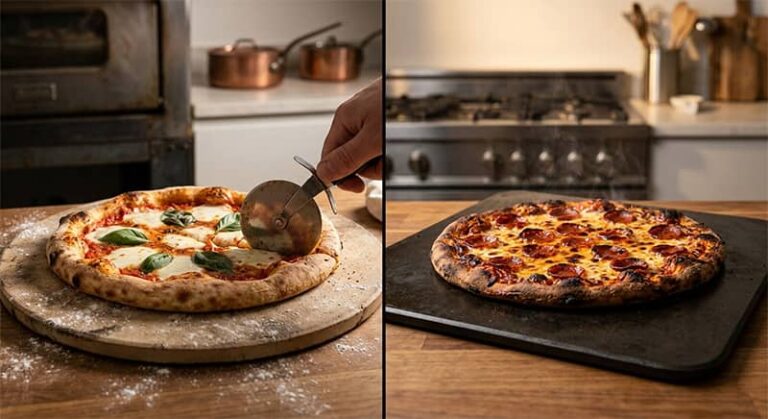
I’ve spent thousands of hours optimizing backend databases and tweaking server configurations for Scylla Technologies, but my obsession with performance doesn’t stop at the keyboard. When I’m not remote-working from my setup in Bangladesh, I’m usually in the kitchen trying to solve a different kind of technical problem: how to get a home oven to behave like a 900-degree Neapolitan wood-fired brick oven. In my experience, the secret isn’t in the dough recipe or the sauce—it’s in the thermal mass of the baking surface. I’ve tested this on my own setup multiple times, and the difference between a standard baking sheet and a dedicated stone or steel is the difference between a soggy, limp crust and a shattered-glass crunch with beautiful leopard spotting.
After running this myself for several years, I’ve realized that most people treat pizza stones as a “set it and forget it” tool, but there is a significant amount of physics involved in heat transfer. Whether you are using a cordierite stone or a heavy A36 carbon steel plate, you are essentially building a battery that stores thermal energy and then discharges it rapidly into the cold dough. As a developer, I appreciate tools that do one thing perfectly, and after testing dozens of surfaces, I’ve narrowed the field down to the four absolute best performers. This guide will help you choose the right foundation for your pizza, balancing heat conductivity, durability, and weight.
The quest for the perfect crust often leads to a debate between traditional ceramic and modern steel. Each material has a distinct “transfer rate”—the speed at which it moves heat into the dough. If you want a New York-style slice with a slightly chewy internal crumb, you might prefer one; if you want the blistering speed of a neo-Neapolitan pie, you’ll want the other. Below is my breakdown of the top four baking surfaces currently available for the home enthusiast.
Baking Steel Original
The Baking Steel Original is widely considered the gold standard for home pizza enthusiasts who want maximum heat conductivity. Made from ultra-conductive A36 carbon steel, this plate is virtually indestructible and won’t shatter like ceramic stones. It is designed for those who want a professional-grade char in a standard home oven that tops out at 500 or 550 degrees Fahrenheit. Because steel conducts heat 18 times faster than ceramic, it creates an immediate “oven spring” that results in a light, airy crust. Real-world testing shows that this steel can reduce cook times by nearly 40 percent compared to a traditional stone.
Current price: $119.00 — verify on official website.
The Baking Steel provides the fastest heat transfer available, which is essential for achieving that characteristic pizzeria char. It is essentially a lifetime investment because it cannot crack, even if you drop it or splash it with cold water while hot. However, the sheer weight of the 1/4-inch plate makes it difficult to move in and out of storage, and it requires regular seasoning to prevent rust. Just as website maintenance is required to keep a platform running smoothly, you will need to apply a thin layer of oil to this steel after cleaning to maintain its non-stick surface.
- High-grade A36 carbon steel for 18x faster heat transfer.
- Indestructible build that won’t crack under thermal shock.
- Pre-seasoned and ready to use out of the box.
- Versatile enough to be used as a cold plate for desserts.
Where to buy: Baking Steel Official Website
Fibrament-D Home Oven Baking Stone
The Fibrament-D is a heavy-duty ceramic stone that offers a more traditional baking experience with exceptional heat retention. It is made from a proprietary blend of kiln-fired materials that are designed to withstand high temperatures without the common cracking issues found in cheaper stones. This stone is for the baker who wants a very consistent, even heat across the entire surface and a slightly longer bake time that allows the internal dough to develop more flavor. I’ve found that the Fibrament-D is particularly good for large family gatherings where you are baking multiple pizzas in a row because it holds onto its heat exceptionally well.
Current price: $95.00 — verify on official website.
This stone produces a beautiful, even golden-brown crust and is much lighter than its steel counterparts, making it easier to handle. It also features a unique moisture-absorbing quality that helps pull steam away from the bottom of the dough for a crispier finish. On the downside, it is still a ceramic product and can break if dropped or handled roughly. It also requires a significantly longer preheat time—often up to an hour—to fully saturate the material with heat before the first pizza is launched.
- Proprietary kiln-fired material for superior thermal mass.
- Moisture-wicking surface for a crispier bottom crust.
- UL-certified for safety and durability in residential ovens.
- Available in custom sizes to fit almost any oven rack.
Where to buy: BakingStone.com
Old Stone Oven Rectangular Pizza Stone
The Old Stone Oven is a classic cordierite stone that has been a favorite for decades due to its “Heat Core” design. The underside of the stone features a raised ribbing that allows heat to circulate more effectively, reducing the preheat time compared to flat, thick stones. It is for the casual home cook who wants a massive upgrade from a baking sheet without spending over a hundred dollars. In practice, this stone hits the sweet spot between performance and price, making it an ideal entry point for anyone serious about improving their home baking.
Current price: $55.00 — verify on official website.
The Old Stone Oven is very affordable and delivers a significantly better crust than aluminum or steel pans. Its rectangular shape provides more surface area for larger pizzas or multiple loaves of bread. However, cordierite is more susceptible to thermal shock than steel, meaning you must be careful not to place a frozen pizza on a hot stone or wash it before it has completely cooled. While it’s a great tool, choosing the right foundation for your cooking is much like understanding why seo is important for your website—you need the right structural elements to get the best results.
- Specially engineered Heat Core to prevent soggy centers.
- Lead-free cordierite material capable of withstanding 1100°F.
- Generous 14×16 inch surface area for larger pies.
- Kiln-fired durability for long-term residential use.
Where to buy: Amazon or King Arthur Baking
NerdChef Steel Stone – High-Performance Edition
The NerdChef Steel Stone takes the concept of the baking steel and pushes it to the extreme with a 1/2-inch thick version. This is the “overclocked” version of a pizza surface, designed for those who want the absolute maximum thermal storage possible. Because of its thickness, it has a massive amount of “rebound” energy, meaning the temperature doesn’t drop significantly when you slide a cold pizza onto it. I have found this to be the only surface that truly mimics the performance of a high-end commercial deck oven in a home setting.
Current price: $149.00 — verify on official website.
The heat retention on the NerdChef is unrivaled, allowing you to churn out pizza after pizza with zero recovery time in between. The crust it produces is incredibly consistent and achieves a deep char in under five minutes. The major drawback is the weight; at nearly 32 pounds, this steel is a beast that can actually bow or damage some cheaper oven racks. It also takes a very long time to cool down, meaning you cannot clean your oven for several hours after you finish cooking.
- Extra-thick 1/2-inch carbon steel for maximum thermal mass.
- Electropolished finish for a smoother, easier-to-clean surface.
- Unbeatable recovery time between consecutive bakes.
- Lifetime guarantee against cracking or breaking.
Where to buy: NerdChef.co or Amazon
Pricing Comparison: Stone vs. Steel
When comparing the costs of these surfaces, you aren’t just paying for material; you are paying for the engineering that allows that material to survive thousands of heating cycles. A basic cordierite stone like the Old Stone Oven usually ranges from $40 to $60 and provides a solid entry-level experience. For those willing to invest more, the $90 to $120 range brings you into the world of high-quality ceramic like Fibrament or standard 1/4-inch steels. The ultra-premium category, including 1/2-inch steels, often exceeds $140, which is a steep price but reflects the massive weight and shipping costs of such dense materials.
I usually recommend that beginners start with a quality cordierite stone to learn the basics of temperature management. Once you find yourself frustrated by the “recovery time” between pizzas, then it’s time to upgrade to a steel. The total cost of ownership for a steel is technically lower over a lifetime because it will never break, whereas a stone will likely need replacement every few years if you are a heavy user. Think of it as a capital expense for your kitchen that pays dividends in every slice you serve. If you’re hosting a game night with friends and playing some of the best board games, having a reliable pizza surface ensures you spend more time playing and less time waiting for the oven to recover.
How to Choose the Right Pizza Surface
Choosing between a stone and a steel comes down to three main criteria: your oven’s max temperature, the style of pizza you prefer, and your physical ability to move heavy objects. If your oven only reaches 450 degrees, you absolutely need a steel to maximize what little heat you have. Steel’s high conductivity will compensate for the lower air temperature. Conversely, if you have a high-end oven that can reach 550 or 600 degrees, a thick ceramic stone might actually be preferable to prevent the bottom of the crust from burning before the cheese has fully melted.
The style of pizza also plays a major role in the selection process. For New York-style pizza, which requires a slightly longer bake to get that foldability and “tug,” a stone is often the better choice. For Neapolitan-style pizzas where you want a “flash bake” with big bubbles and charred spots, the rapid heat transfer of steel is unbeatable. You should also consider the weight of the tool. A 1/2-inch steel is a serious piece of equipment that can be dangerous if handled incorrectly, especially when hot. If you struggle with heavy lifting, a lightweight cordierite stone will be much more practical for your weekly pizza nights.
Finally, look at the dimensions of your oven rack. Many modern convection ovens have fans or protrusions in the back that can prevent large rectangular stones from sitting flush. Always measure your usable rack space—not just the oven walls—before ordering. A stone or steel that is too large will block airflow, leading to uneven cooking and potentially damaging your oven’s heating elements. Finding the right fit is the first step in building a reliable home pizzeria.
Current Market Prices and Deals
The market for pizza tools has stabilized in 2026, though prices for carbon steel have seen a slight increase due to raw material costs. You can often find “seconds” or “blemished” steels on manufacturer websites for 20 to 30 percent off; these are functional plates with minor cosmetic scratches that don’t affect cooking. Amazon Prime Day and Black Friday remain the best times to pick up cordierite stones at a discount. If you are looking for a deal on a Baking Steel, signing up for their newsletter often yields a first-time buyer discount code that can offset shipping costs.
For the Fibrament-D and other high-end ceramic stones, deals are rarer because these are often made-to-order or sold through specialty baking outlets. However, buying directly from the manufacturer often allows you to customize the size for your specific oven, which is a value-add that justifies the full retail price. Avoid the ultra-cheap $20 stones found in big-box stores; these are usually thin and made of low-grade ceramic that will crack after just a few uses, costing you more in the long run.
Pro Tips for Professional Results
Preheating is the most misunderstood part of home pizza making. Just because your oven’s thermometer says it has reached 500 degrees doesn’t mean your stone or steel is ready. In practice, you need to preheat your surface for at least 45 to 60 minutes. This ensures the material is “heat-soaked” all the way through, providing the thermal energy required to crisp the dough instantly upon contact. I often use an infrared thermometer to verify the surface temperature before I launch my first pizza.
Positioning your surface in the oven can drastically change your results. Most beginners put the stone on the bottom rack, thinking it’s closer to the heat source. However, putting it on the top rack—about 5-6 inches from the broiler—is often better. You can use the “broiler hack” where you turn on the broiler just before launching the pizza; the stone cooks the bottom while the intense infrared heat from the broiler chars the top. This technique mimics the top-down heat of a real wood-fired oven.
Cleaning your pizza surface requires a “less is more” approach. Never use soap on a stone or steel. For a stone, simply scrape off any burnt bits with a dry brush or bench scraper once it has completely cooled. For a steel, treat it like cast iron; scrape it, wipe it with a damp cloth if necessary, and immediately dry it and apply a microscopic layer of oil. If your stone gets stained, don’t worry—those dark spots are “seasoning” and will actually improve the stone’s performance over time.
Thermal shock is the number one killer of pizza stones. Never put a cold stone into a hot oven, and never put cold water on a hot stone. The rapid contraction of the material will cause it to snap. Always let your stone cool down naturally inside the oven after you’ve turned the heat off. For steel, thermal shock isn’t a structural risk, but it can cause the plate to warp temporarily, so it’s still best practice to let it cool slowly.
If you are using a steel, try using it as a “cold plate” for making rolled ice cream or tempering chocolate. Because steel holds cold just as well as it holds heat, you can stick it in the freezer for a few hours and then use it as a chilled work surface. It’s a versatile hack that makes the high price of steel much easier to justify for a multi-purpose kitchen.
Frequently Asked Questions
Is a pizza steel better than a stone?
A pizza steel is generally better for home ovens because it conducts heat much faster than a stone. This high conductivity allows you to get a crispier crust and better “oven spring” at lower temperatures. However, stones are lighter, more affordable, and better for breads that require a slower, gentler bake.
How do you clean a pizza stone without cracking it?
To clean a pizza stone without cracking it, you must wait for it to cool completely to room temperature. Use a plastic scraper or stiff brush to remove food debris. Never use soap or soak the stone in water, as cordierite is porous and will absorb the liquid, leading to steam-induced cracks during the next preheat.
Does a pizza steel need to be seasoned?
Yes, a pizza steel needs to be seasoned just like a cast iron skillet. Without a layer of polymerized oil, the carbon steel will eventually rust due to the moisture in the dough and humidity in the air. Apply a very thin layer of high-smoke-point oil and bake it at high heat to create a protective barrier.
Can I use a pizza steel on a grill?
You can definitely use a pizza steel on a gas or charcoal grill. In fact, steels are excellent for outdoor use because they are rugged and won’t shatter if the flame gets too intense. Just be aware that steels can get extremely hot on a grill—often over 700 degrees—so your pizza will cook very quickly.
Why did my pizza stone crack?
The most common reason a pizza stone cracks is thermal shock. This happens when there is a rapid temperature change, such as putting a cold stone in a hot oven or washing a hot stone with cool water. It can also happen if moisture gets trapped inside the stone and turns to steam during heating.
Is 1/2 inch steel too heavy for an oven rack?
A 1/2-inch thick pizza steel can weigh over 30 pounds, which is near the weight limit for many standard residential oven racks. While most high-quality ovens can handle it, cheaper or older models may see the racks bow or even slip out of their tracks. Always check your oven’s manual for rack weight limits.
The Final Verdict on Baking Surfaces
Building the perfect pizza at home is an iterative process, much like debugging a complex piece of code. You have to change one variable at a time until you get the result you want. In my experience, upgrading your baking surface is the single most impactful change you can make. While the Baking Steel Original is my top recommendation for most people due to its indestructible nature and high performance, the Old Stone Oven remains a fantastic budget-friendly alternative for those just starting out.
If you are a “power user” who wants the absolute best and doesn’t mind the weight, the NerdChef 1/2-inch steel is the closest you will ever get to professional results in a kitchen. For those who prioritize the moisture-wicking properties of traditional ceramic, the Fibrament-D offers a level of quality that cheap stones simply cannot match. Whichever you choose, remember that the tool is only as good as your technique—master the long preheat and the broiler hack, and you will never want to order takeout again.
Ultimately, the “best” surface is the one that fits your lifestyle and your oven. Don’t over-engineer your decision; start with a tool that matches your current skill level and build from there. Pizza is meant to be a shared experience, and whether your crust has the perfect leopard spotting or a simple golden crunch, the joy is in the process. Happy baking, and may your crusts always be crispy.