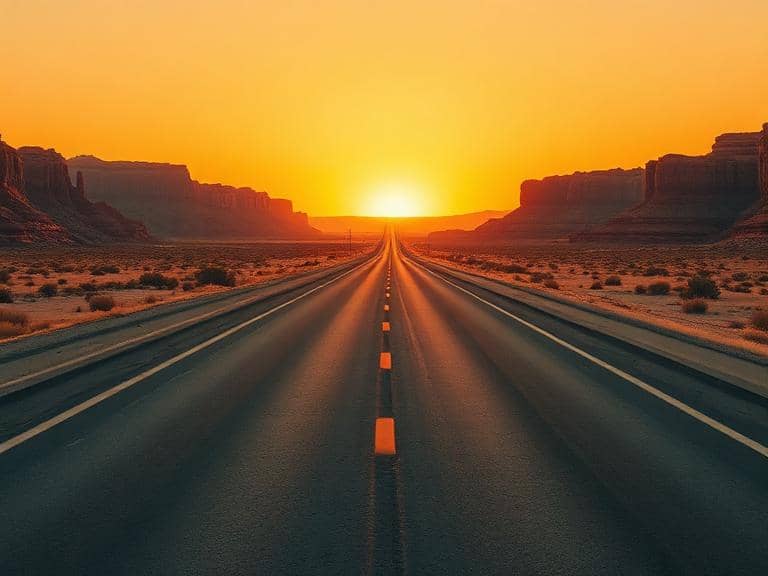
Few cinematic experiences capture the restless spirit of the open road quite like the best road trip movies of all time. These films transform the simple act of driving into profound meditations on identity, freedom, loss, and what it means to truly live. From the dusty American Southwest to the winding highways of South America, road trip films have produced some of the most enduring and emotionally resonant cinema ever made — and this definitive ranked list covers every essential one worth your time.
What separates a great road trip film from a forgettable one isn’t the destination. It’s what happens to the people inside the vehicle while the miles accumulate. The best examples of the genre use movement as metaphor — each highway mile peeling away another layer of pretense until characters arrive somewhere unexpected, not geographically, but emotionally. That tension is what keeps audiences returning to these films decades after release.
27 to 21 — Essential Viewing You May Have Overlooked
27. Road to Perdition (2002) uses a father-and-son fugitive journey across Depression-era America as the backbone of Sam Mendes’ visually stunning crime drama. Tom Hanks plays against type as a mob enforcer, and Conrad L. Hall’s cinematography won a deserved Oscar. The road here is paved with guilt and a father’s desperate attempt at redemption before it’s too late.
26. The Road (2009) strips the road trip film down to its bleakest possible premise — a father and son walking through a post-apocalyptic America toward the coast. Viggo Mortensen’s performance is quietly shattering, and John Hillcoat’s direction never flinches from the horror while keeping the father-son bond at the story’s emotional center. It’s not an easy watch, but it’s an unforgettable one.
25. Mad Max: Fury Road (2015) reimagines the road film as two-hour kinetic spectacle. George Miller’s chase movie across a post-apocalyptic wasteland is essentially one continuous road trip at maximum velocity. Charlize Theron’s Furiosa drives the film’s moral engine while Tom Hardy’s Max is almost a passenger in his own story. It won six Academy Awards and remains the most purely thrilling road film of the 21st century.
24. The Straight Story (1999) is David Lynch’s most unusual and tender work — a G-rated drama about an elderly Wisconsin man who drives a lawnmower to Iowa to reconcile with his ailing brother. Richard Farnsworth received an Oscar nomination for his portrayal of Alvin Straight, delivering a performance of extraordinary stillness. The film’s deliberate pace forces the viewer to ask what moments in a life actually matter.
23. Crossroads (1986) follows a young Juilliard student hitchhiking through the American South in search of a lost Robert Johnson blues song. Walter Hill directs with a feel for Southern landscape, and Ry Cooder’s guitar soundtrack is reason enough to watch. It’s a minor film that delivers genuine pleasures for anyone who loves American roots music and wide-open roads.
22. Kings of the Road (1976) is Wim Wenders at his most expansive — a three-hour black-and-white German road film following two men traveling along the East-West border in a film repair truck. It’s meditative to the point of demanding patience, but rewards committed viewers with something close to poetry about loneliness, masculinity, and the strange comfort of constant motion.
21. Fandango (1985) launched Kevin Costner’s career and deserves far more attention than it receives today. Five college friends take one last road trip together before facing adult responsibilities, including the Vietnam draft. The film balances comedy and genuine emotional weight with surprising skill for a debut feature from Kevin Reynolds.
20 to 15 — Films That Shaped the Genre
20. Green Book (2018) follows African-American pianist Don Shirley and his Italian-American driver Tony Lip on a concert tour through the American South in 1962. Mahershala Ali and Viggo Mortensen both deliver exceptional performances, and the film uses the road trip structure to explore race, dignity, and unlikely friendship. Its Best Picture win remains controversial among critics, but the film’s warmth and craftsmanship are undeniable.
19. Into the Wild (2007) adapts Jon Krakauer’s account of Christopher McCandless, who gave away his savings, abandoned his car, and hitchhiked to Alaska seeking total self-sufficiency. Sean Penn directs with genuine feeling for landscape, and Emile Hirsch captures McCandless’s idealism and fatal inexperience simultaneously. Eddie Vedder’s soundtrack became one of the decade’s most celebrated. The film works as both adventure and cautionary tale.
18. Little Miss Sunshine (2006) took the road film formula and filtered it through indie sensibility. A deeply dysfunctional Albuquerque family piles into a failing VW bus to drive their daughter to a California beauty pageant. The ensemble — Greg Kinnear, Toni Collette, Steve Carell, Paul Dano, Abigail Breslin, and Alan Arkin — operates with perfect comic timing. The final act turns unexpectedly emotional without betraying its satirical setup.
17. Nomadland (2020) won the Academy Award for Best Picture and redefined what a road film could look like in the streaming era. Chloé Zhao’s drama follows Fern, played by Frances McDormand, as she travels the American West in her van following the closure of a company town. Shot among real nomadic communities with non-professional actors, the film achieves documentary authenticity. McDormand’s performance is almost entirely physical — a portrait of self-sufficiency and quiet grief.
16. Hell or High Water (2016) brought the road crime film into the contemporary American West with exceptional skill. Jeff Bridges plays a Texas Ranger pursuing two bank-robbing brothers — Ben Foster and Chris Pine — who are targeting branches of the bank holding a reverse mortgage on their family land. Taylor Sheridan’s screenplay treats all its characters with moral complexity, and the film uses the West Texas landscape as a visual argument about economic abandonment.
15. Duel (1971) — made for television but released theatrically in Europe — remains a masterclass in sustained tension. Steven Spielberg was just 24 when he made this film about a businessman whose drive across the California desert turns into a terrifying game with an unseen truck driver. Dennis Weaver’s mounting panic feels completely real. The film still works completely more than fifty years later, and it announced one of cinema’s greatest directorial careers.
14 to 9 — The Acclaimed Middle Tier
14. Sideways (2004) is one of the finest road films of the 2000s. Alexander Payne follows two middle-aged men — Paul Giamatti’s depressed wine obsessive and Thomas Haden Church’s feckless actor — through California wine country the week before Church’s character marries. The film is simultaneously hilarious and quietly devastating, a portrait of male midlife stagnation that never tips into contempt. Giamatti’s performance is among the most nakedly vulnerable in modern American cinema.
13. National Lampoon’s Vacation (1983) remains the sharpest entry in the franchise John Hughes launched. Chevy Chase’s haplessly optimistic Clark Griswold drives his family from Chicago to a California theme park in a monstrously ugly station wagon. The comedy comes from the collision between Clark’s wholesome ambitions and an America determined to disappoint him at every turn. No sequel has matched the acidic precision of the original.
12. The Motorcycle Diaries (2004) traces the 1952 journey across South America made by a young Ernesto Guevara and his friend Alberto Granado — the trip that helped transform a medical student into a revolutionary. Walter Salles directs with an eye for landscape that rivals any cinematographer working today. Gael García Bernal captures idealism before it hardens into ideology, and the film never romanticizes what Guevara would become.
11. Paris, Texas (1984) is Wim Wenders’ sustained love letter to the American landscape, filtered through a European director’s fascinated gaze. Harry Dean Stanton plays Travis, found wandering the Texas desert, slowly reconstructing his identity and lost family. Sam Shepard’s spare script and Ry Cooder’s aching steel guitar score create something genuinely haunting. The final hotel scene between Stanton and Nastassja Kinski is one of cinema’s great emotional confrontations.
10. Y Tu Mamá También (2001) follows two Mexican teenagers and an older woman on a road trip to a beach that may or may not exist. Alfonso Cuarón’s breakthrough feature is sensual, melancholy, politically charged, and finally devastating. He and co-writer Carlos Cuarón use the road structure to examine class, sexuality, and Mexican society with unprecedented honesty for mainstream Latin American cinema. The film launched Gael García Bernal and Diego Luna as international stars.
9. Badlands (1973) marks Terrence Malick’s astonishing debut. Martin Sheen and Sissy Spacek play a young couple on a killing spree across the American heartland, narrated by Spacek in a dreamy, detached voice that makes the violence all the more disturbing. The film’s visual poetry — gorgeous wide shots of the Great Plains — creates an unsettling contrast with its subject matter that no imitator has managed to replicate.
8 to 5 — Masterworks of the Road Film
8. No Country for Old Men (2007) qualifies as a road thriller of the absolute highest order. The Coen Brothers’ adaptation of Cormac McCarthy’s novel pits Josh Brolin’s unlucky hunter against Javier Bardem’s Anton Chigurh — a figure of near-supernatural menace — across the Texas and New Mexico landscape. The film won four Academy Awards including Best Picture. Its refusal of conventional thriller resolutions remains polarizing and genuinely brave. Tommy Lee Jones’s aging sheriff provides the film’s elegiac dimension.
7. Two-Lane Blacktop (1971) is the road film that separates the devoted from the casual. Monte Hellman’s existential minimalist drama stars musician James Taylor and The Beach Boys’ Dennis Wilson as two unnamed men driving a ’55 Chevy across the country in a race against a stranger in a Pontiac GTO. Almost nothing happens — and that’s precisely the point. The film meditates on competition, emptiness, and the American male’s use of motion as a substitute for meaning. Its final image remains one of the most startling in American film.
6. Bonnie and Clyde (1967) brought European New Wave aesthetics to American storytelling and changed Hollywood forever. Arthur Penn’s crime road movie follows the real Depression-era outlaws with a stylistic boldness that shocked critics and delighted audiences. Warren Beatty and Faye Dunaway’s chemistry remains magnetic, and the film’s choreographed violence announced that American cinema had entered a new and more honest era. It remains essential viewing for anyone interested in how movies evolve.
5. Rain Man (1988) uses the road trip structure to force a profound transformation in Tom Cruise’s Charlie Babbitt, a self-absorbed car dealer who discovers he has an autistic older brother. Dustin Hoffman’s Raymond is a towering performance — detailed, consistent, and entirely human beneath its surface eccentricities. The film won four Academy Awards including Best Picture. The journey from Cincinnati to Los Angeles dismantles Charlie’s selfishness mile by mile, and the ending earns every emotion it generates.
The Top Four Road Trip Films Ever Made
4. The Last Detail (1973) follows two Navy men escorting a young sailor to prison and deciding, on impulse, to show him something of life first. Hal Ashby directs with a feel for working-class America that gives the film lasting documentary texture. Jack Nicholson’s performance is among his very greatest — all coiled energy and surprising tenderness — and Robert Towne’s screenplay crackles with the kind of authentic dialogue that screenwriting schools still use as a benchmark. The film captures a specific American sadness that hasn’t dated a day.
3. Planes, Trains and Automobiles (1987) is the gold standard of road trip comedy and one of the most emotionally complete films John Hughes ever made. Steve Martin’s uptight marketing executive and John Candy’s relentlessly cheerful shower ring salesman attempt to get from New York to Chicago for Thanksgiving as everything that can go wrong does. The film is consistently hilarious — the car rental scene alone is a comedy masterpiece — but its final revelation transforms the entire movie retroactively into something deeply moving. John Candy’s Del Griffith is one of cinema’s great performances of warmth and hidden sorrow.
2. Thelma & Louise (1991) redrew the map of what road films could say about gender, freedom, and consequence. Ridley Scott’s film follows two women whose weekend getaway spirals into a cross-country fugitive run after a traumatic incident at a roadside bar. Susan Sarandon and Geena Davis deliver career-best performances, and Callie Khouri’s Oscar-winning screenplay moves between wit and moral urgency without ever losing its footing. The famous final frame has been analyzed in film schools for more than three decades. Few movies have made the act of driving feel simultaneously so exhilarating and so heartbreaking.
1. Easy Rider (1969) didn’t just launch a genre — it shook American cinema to its foundation and announced that independent filmmakers could say things the studios wouldn’t dare touch. Dennis Hopper’s counterculture landmark follows Wyatt and Billy, two bikers funding a cross-country journey to New Orleans with drug money, encountering America in all its beauty and menace along the way. Shot on real highways with a budget that wouldn’t cover a single day’s catering on a modern production, the film captures something raw and irreproducible: the feeling of a country at war with itself. The ending remains shocking after more than fifty years, refusing the comfort audiences expected and delivering instead a statement about what America does to the people who love it most. Easy Rider is the genre’s foundational text — the film every road movie since has been in conversation with, whether its makers knew it or not.
How to Choose Your Next Road Trip Film
Selecting the right road trip movie depends on what you want from the experience. Viewers seeking philosophical weight and ambiguity should begin with the New Hollywood films — Easy Rider, Badlands, and Two-Lane Blacktop reward patience and willingness to sit with unresolved questions. These films don’t wrap up cleanly, and that’s precisely their power.
For emotional warmth balanced with genuine comedy, Planes, Trains and Automobiles and Sideways stand apart. Both earn real tears while making you laugh consistently. Rain Man offers a more conventional emotional arc but delivers it with exceptional performances. These films work brilliantly for group viewing because they generate genuine conversation afterward.
International road films offer something genuinely different in perspective. Y Tu Mamá También and The Motorcycle Diaries situate the journey within specific political and social contexts, revealing how differently other cultures have understood what the road means. The class dynamics are more visible, the geography more politically charged than in their American counterparts.
For thriller-minded viewers, No Country for Old Men and Hell or High Water both use road conventions to create sustained moral tension. And for pure spectacle completely untethered from realism, Fury Road stands entirely alone.
Frequently Asked Questions About Road Trip Movies
What is the greatest road trip movie ever made?
Critical consensus consistently places Easy Rider (1969) at the top of any serious ranking, given its foundational influence on the genre and American independent cinema. However, Thelma & Louise and Rain Man have equally strong claims based on cultural impact and performance quality. The designation ultimately depends on whether you prioritize historical significance, emotional resonance, or pure cinematic craft.
Are road trip movies always set in America?
No, though the genre has strong American roots. Some of the most celebrated road films were made outside the United States — Y Tu Mamá También in Mexico, The Motorcycle Diaries across South America, Paris, Texas as a German-American collaboration, and Kings of the Road in Germany. The format has proven adaptable across cultures precisely because the connection between movement and self-discovery is universal.
What makes a road trip movie different from a travel film?
Road trip films specifically use the mechanics of ground-level travel — the vehicle, the stops, the fellow travelers, the changing landscape — as both structural and thematic elements. The journey isn’t simply a backdrop but the engine of the story. Travel films tend to be more episodic and destination-focused, whereas road films use the act of moving between places as a direct metaphor for internal change happening to the characters in real time.
Which road trip movies are best for families?
Little Miss Sunshine remains the gold standard for family road films that adults will genuinely enjoy. National Lampoon’s Vacation works well for older children and teenagers. The Straight Story, despite its gentle pace, offers rich material for family discussion about aging, reconciliation, and what matters in a life. Pixar’s Cars, while not on this list, serves younger children effectively.
Are there good road trip movies from the 2010s and 2020s?
Hell or High Water is arguably the finest road-adjacent crime film of the 2010s, and Nomadland won the Academy Award for Best Picture while redefining what a road film could look like in the streaming era. Green Book was a significant mainstream road film despite ongoing critical debate about its historical accuracy. The era produced fewer genre-defining examples than the 1960s through 1990s, but quality films exist for viewers willing to seek them out.
Which road trip movies are based on true stories?
The Motorcycle Diaries is based on Ernesto Guevara’s memoir of his 1952 journey. Into the Wild adapts Jon Krakauer’s account of Christopher McCandless. Bonnie and Clyde depicts real Depression-era criminals with dramatic license. Green Book draws from the real relationship between Don Shirley and Tony Vallelonga. The Straight Story dramatizes Alvin Straight’s actual 1994 lawnmower journey across the Midwest.
What road trip movies are best for solo viewing?
Films with meditative or melancholy tones reward solo watching. Paris, Texas, Two-Lane Blacktop, Nomadland, and Into the Wild all work best with full, undivided attention. Sideways also benefits from solo viewing — its portrait of loneliness and self-sabotage lands significantly harder without the buffer of company.
Conclusion
The road trip movie endures because it taps into something fundamental about how humans understand freedom and personal change. Whether the vehicle is a beaten-up Chevy, a VW bus, two motorcycles, or a lawnmower moving at four miles per hour, the underlying question never changes: who are you when you’re between the places that define you? The 27 films on this list answer that question across fifty years of cinema history, with honesty, humor, violence, tenderness, and sometimes devastating clarity.
From Easy Rider’s counterculture elegy to Nomadland’s quiet portrait of American dispossession, these films collectively map more than half a century of changing anxieties, values, and desires. They are documents of their eras as much as they are entertainment — which is why returning to them feels simultaneously like pleasure and education. The great road trip movies don’t just show you where their characters are going. They show you where we’ve all been.
Whatever your starting point on this list, the only real mistake is staying parked.